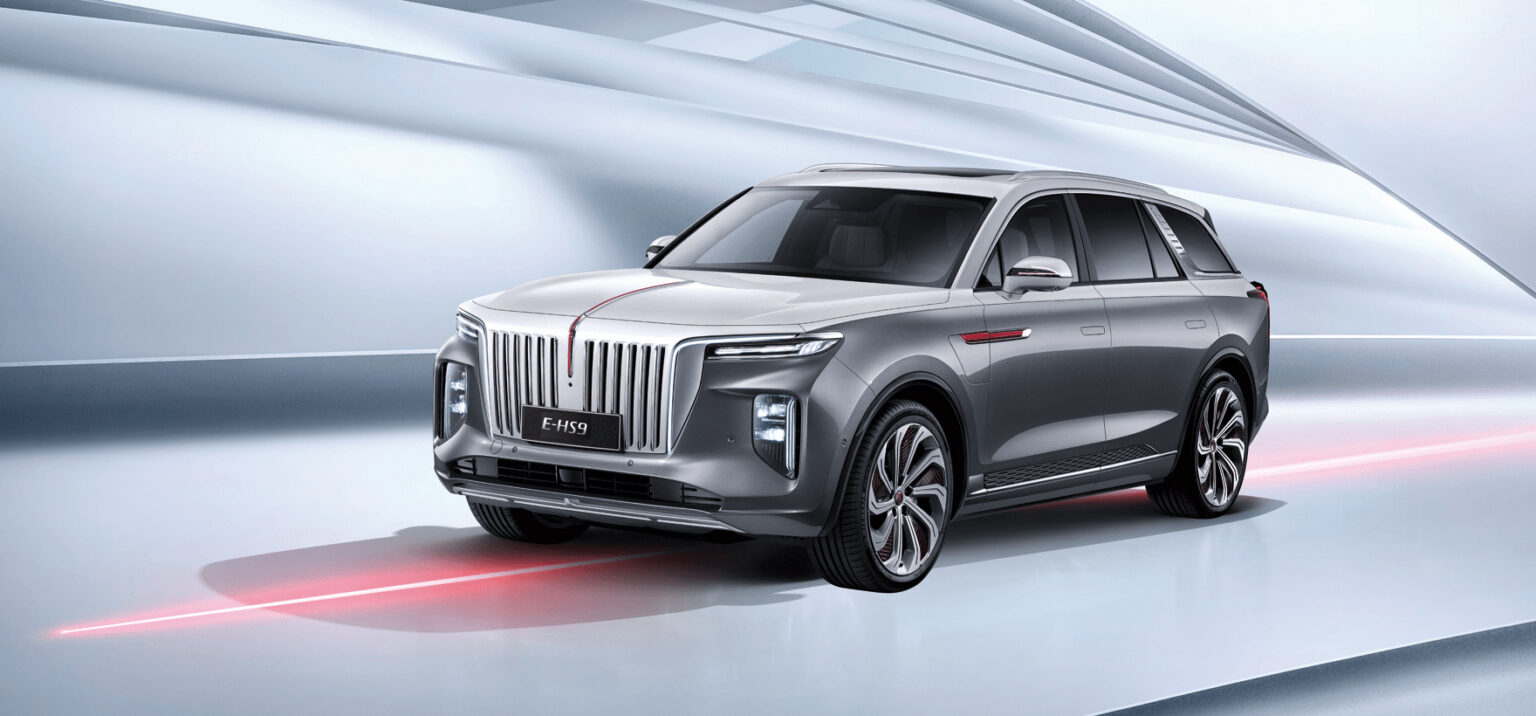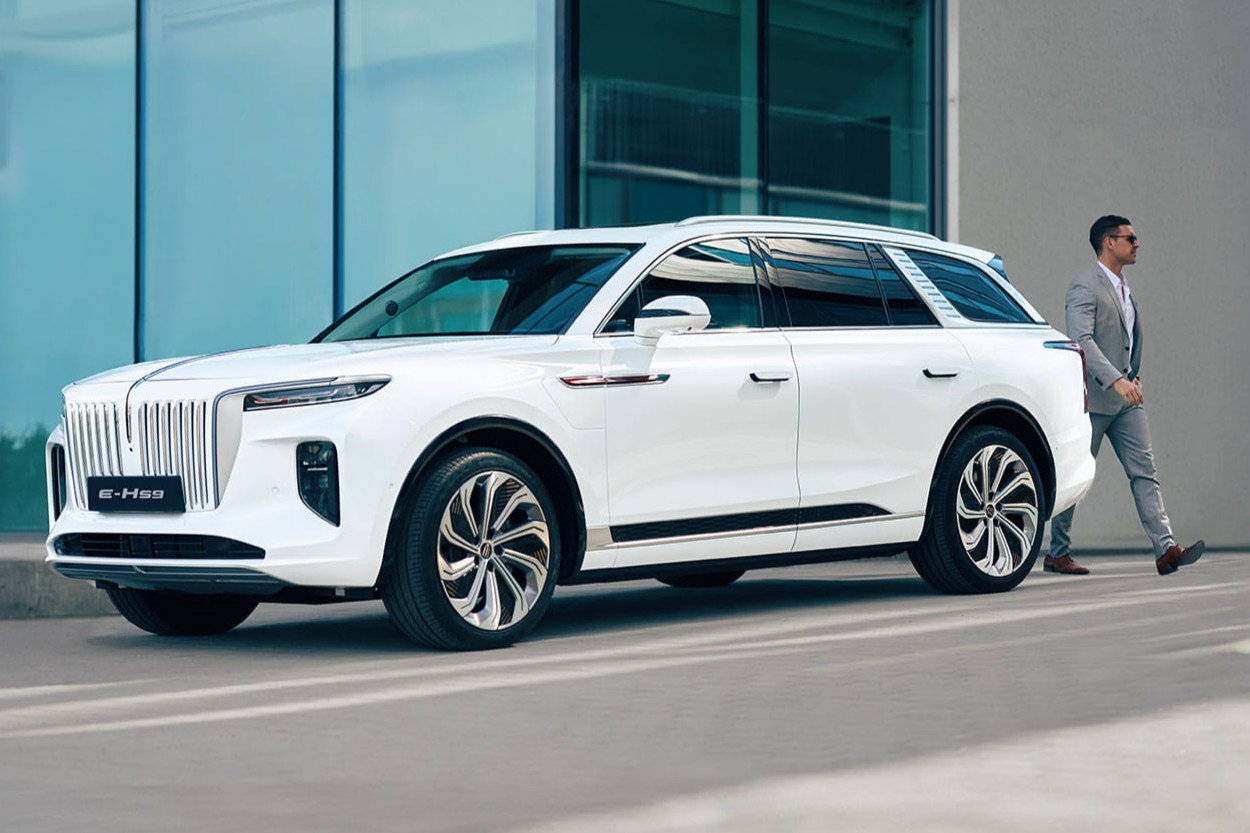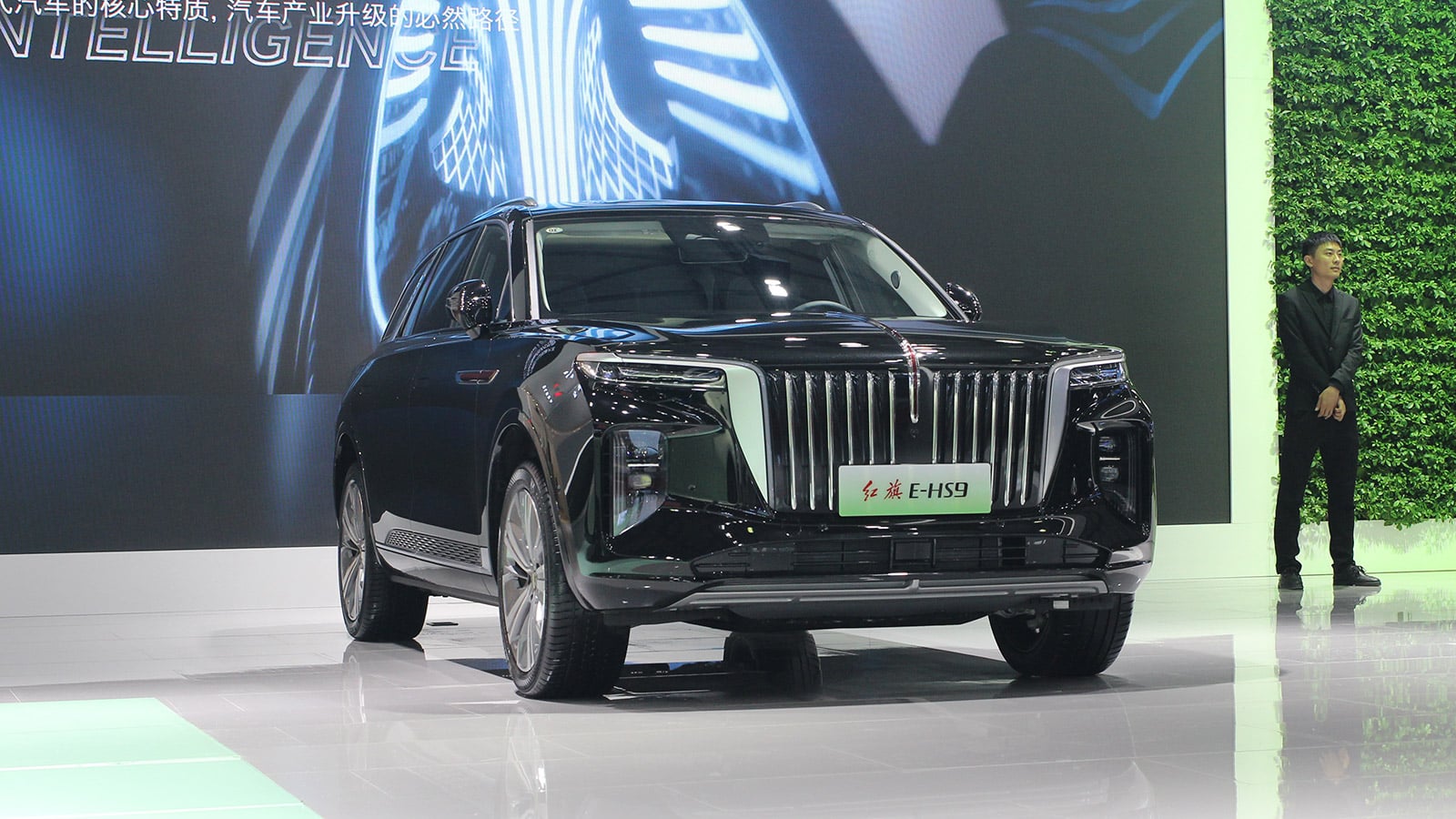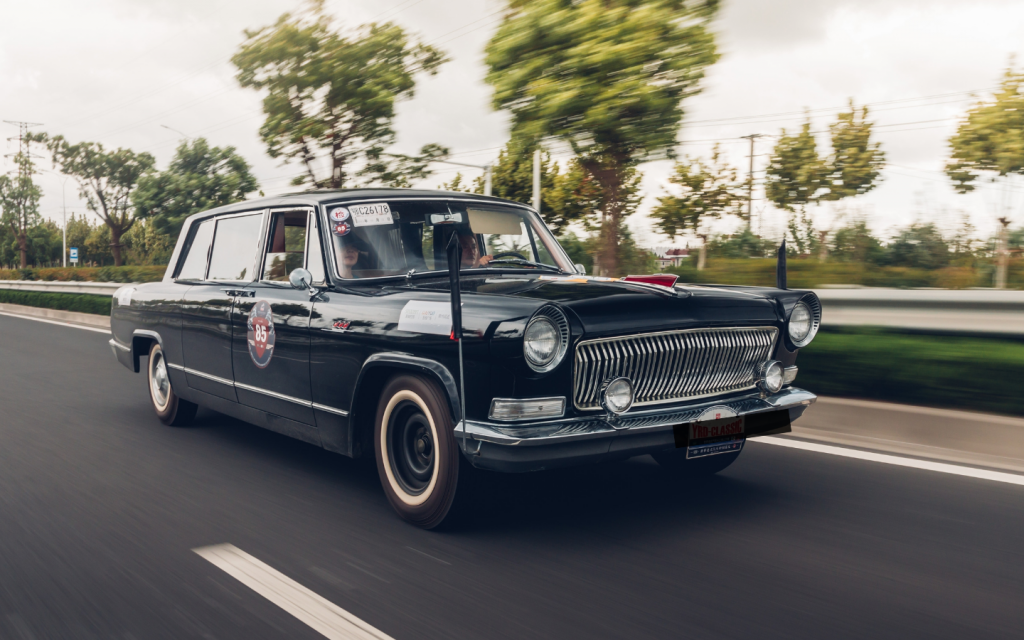
There's a delicious irony in the fact that Hongqi — the marque whose name translates as "Red Flag," the ceremonial carriage of Mao Zedong and now Xi Jinping — is quietly hunting for a production foothold on European soil. According to Reuters, state-owned giant FAW has been eyeing a Stellantis plant in Spain as the beachhead for its continental ambitions. For a brand whose entire identity was forged in the courtyards of Zhongnanhai, the prospect of assembling cars in Zaragoza or Vigo is less a business decision than a geopolitical statement.
For decades, Hongqi existed in a peculiar limbo: revered at home, invisible abroad. Its N701, the armoured limousine that ferries Xi Jinping to summits from Delhi to Washington, is a machine built for protocol rather than showrooms — a rolling assertion of sovereignty that the South China Morning Post has noted is already a match for the American "Beast." But protocol alone does not pay for a factory. What has changed is that Hongqi now builds cars Europeans might actually want, and it builds them with a technical confidence that would have seemed fantastical a decade ago.
The Hardware Is No Longer a Joke
Consider the Tiangong 07, a sedan built on an 800-volt architecture and priced from roughly $25,000, which has just opened pre-sales in China. Consider the 12C ultra-fast charging battery, which Hongqi claims can take a pack from 10 to 70 per cent in three minutes and 41 seconds — a figure that, if it survives independent scrutiny, reframes the entire conversation about charging anxiety. Consider, too, the solar roof technology the company has been developing for additional range, and the EH7 sedan, whose dimensions already place it squarely against European executive rivals. This is no longer a maker of parade floats.
A Spanish Factory Makes Strategic Sense
The European plant, then, is not an act of vanity. It is the logical terminus of a strategy that has been building for years. Hongqi has already committed to a range of electric luxury SUVs for Australia, with a sedan to follow — a market that shares with Europe the regulatory pressures and consumer expectations that make local assembly attractive. Tariffs on Chinese-built EVs have made exporting from the mainland increasingly expensive, and a Spanish factory would neatly sidestep them while positioning Hongqi inside the EU's single market. Stellantis, for its part, has spare capacity and a hungry appetite for partnerships; the marriage is one of convenience, but conveniences have a way of becoming permanent.
The Ambition Is Real, the Skepticism Is Predictable
What makes the gamble genuinely interesting is the brand's stated ambition. Hongqi has said, without much diplomacy, that it intends to take market share from Range Rover and Mercedes. Such talk is easy to dismiss — and much of the European press has duly dismissed it, reaching for the tired "knock-off Rolls-Royce" framing even as the company outsells the real thing two to one in its home market. But the hardcore off-roader it has just launched, and the breadth of its electric lineup, suggest a manufacturer that has moved past imitation into genuine competition. The N701 may be a limousine for heads of state, but the cars that will decide Hongqi's European fate are the ones ordinary buyers will drive.
Can a State Car Ever Feel European?
The deeper question is whether a brand so thoroughly bound to the Chinese state can ever feel native in Europe. Hongqi carries the weight of its symbolism wherever it goes — it is the car of the Communist Party's highest office, the vehicle that appears in every state photograph. In Spain, that history will be either an exotic curiosity or a quiet liability, depending on the political weather. Yet the same was once said of Toyota and Lexus, of Hyundai and Genesis, and the market has a way of reducing ideology to residual values and warranty terms.
For now, the negotiations continue and no deal is signed. But the direction is unmistakable. The marque that once ferried Mao through Tiananmen is preparing to build cars in a country where the red flag means something else entirely — and to compete on merit rather than protocol. Whether Europe embraces it or resists it, Hongqi has already decided that its next chapter will be written in Spanish concrete.