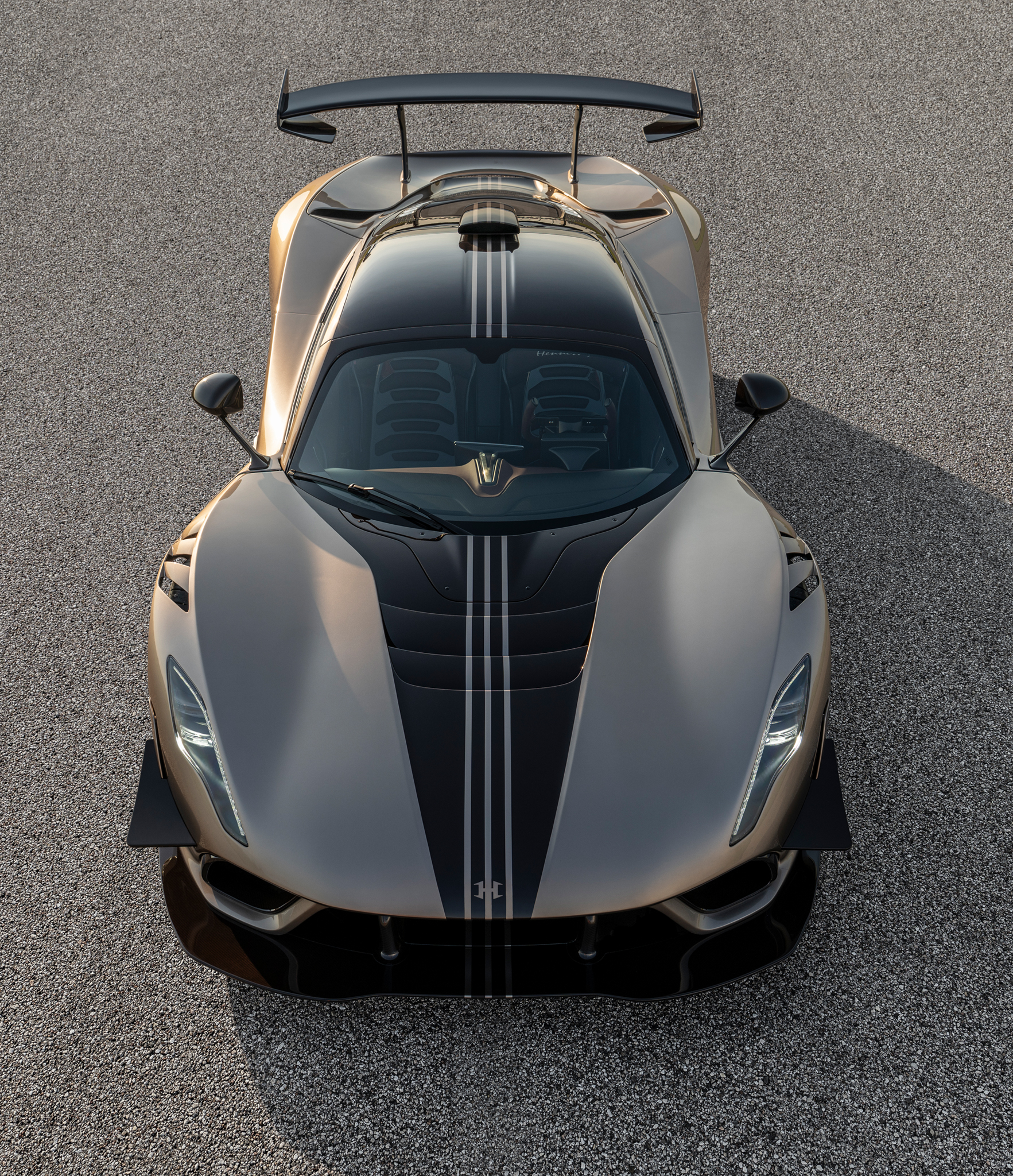
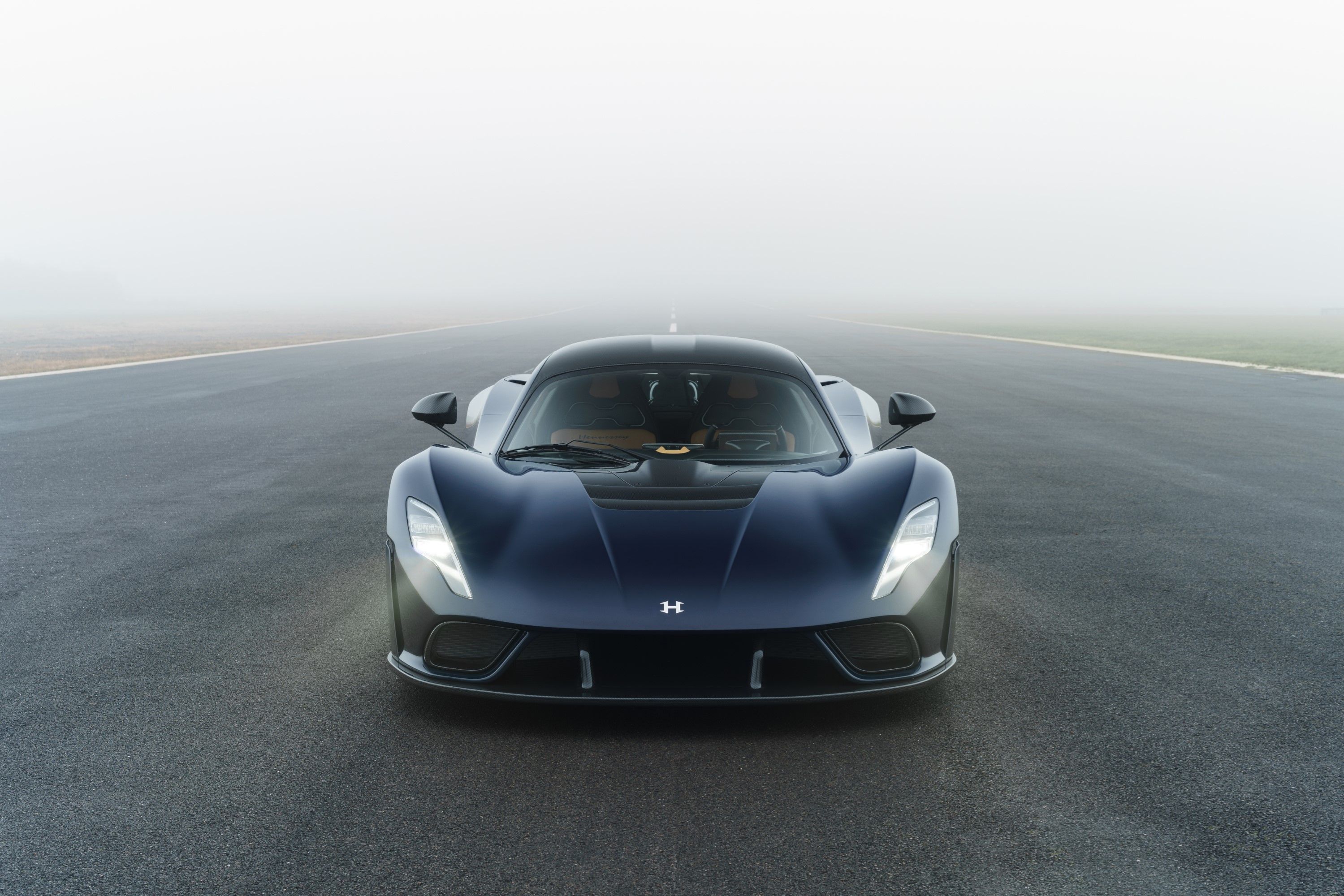
In an era where hypercars arrive wrapped in megawatt batteries, active aerodynamics, and torque-fill algorithms, the most provocative statement in the industry right now is not an electric motor—it is a gate. The Hennessey Blackbird, as revealed by Car and Driver, casts a defiant shadow over the hybrid hypercar establishment with a recipe that feels almost heretical: a naturally aspirated V-8, a six-speed gated manual, and not a single kilowatt of electrical assistance.
While rivals chase lap records with increasingly complex powertrains that blur the line between driver and passenger, Hennessey has chosen to strip away the digital wizardry and present an argument that purity, not power density, defines the ultimate driving experience. This is not a step backward; it is a calculated declaration that the visceral connection between human and machine has been lost in the relentless pursuit of electrified acceleration.
The Case for Natural Aspiration
The Blackbird's powertrain is a masterclass in restraint, at least by the standards of a company that made its name building 1,000-plus horsepower Venom models. By choosing a naturally aspirated V-8, Hennessey deliberately rejects the low-end torque fill and seamless surge that hybrid systems provide. Instead, the engine rewards commitment, demanding the driver chase the tachometer toward a screaming redline where the real power lives.
There is no flatter torque curve to mask mistakes, no electric motor to paper over a missed shift or a poorly chosen gear. This is an engine that demands you work for it—and that's precisely the point. In a landscape where turbocharged hybrids deliver peak thrust with zero theatricality, the Blackbird's linear, building surge toward a stratospheric redline is a reminder that internal combustion can still stir the soul when it isn't diluted by electrical assistance.
The throttle response is immediate, unfiltered, and utterly honest. Every millimeter of pedal travel translates directly into combustion events, not a torque request interpreted by a processor. That honesty extends to the chassis too: without the ballast of a battery pack and electric motors, the Blackbird moves with a lightness and agility that no plug-in hypercar can match.
The Gated Manual: A Mechanical Conversation
The gated manual—a mechanical relic that exposes the linkage and invites deliberate, metallic engagement—forces a level of intention that paddle shifters simply cannot replicate. Each throw is a physical conversation; the notched gate is a reminder that driving is an active discipline, not a passive supervision of automated systems.
There's a reason the gated shift pattern has achieved near-mythic status among enthusiasts. The exposed metal linkage, the satisfying clack as the lever finds its slot, the mechanical feedback that telegraphs exactly what's happening in the gearbox—it all adds up to an experience that no amount of software can simulate. Hennessey understands that the gearshift is not merely a component; it is the primary interface between driver and machine.
This philosophical stance cuts directly against the grain of the current hypercar landscape. Consider the contemporary benchmark: hybrid powertrains producing combined outputs that dwarf the Blackbird's naturally aspirated figure, yet delivering that performance through a layer of electronic mediation. The driver becomes a manager, not an operator.
Less Intervention, More Connection
The Hennessey Blackbird counters with a simpler arithmetic—lighter weight, no hybrid battery pack, and a direct mechanical connection that translates every input into immediate, unfiltered motion. It is a car that respects the driver's skill rather than compensating for its absence. The absence of regenerative braking, complex torque vectoring, and predictive traction control is not a lack of technology; it is a deliberate choice to prioritise feedback over intervention.
There is an undeniable irony that a Texas tuner, famed for pushing outputs to the edge of mechanical sanity, has become the purist's champion. Yet this is precisely the point. Hennessey understands that once acceleration becomes effortless and repeatable, it loses its emotional impact. The hybrid hypercar delivers staggering numbers with clinical efficiency, but the Blackbird delivers drama with every throttle application and each downshift blip.
The sound alone—a pure, naturally aspirated V-8 wail unencumbered by electric whine or artificial augmentation—is a sensory experience that no dual-clutch launch control can replicate. In chasing the future, the industry has forgotten that the soul of a sports car lies not in its output figures but in the dialogue it creates with its pilot.
A Timely Rebellion
The Blackbird is not an argument against progress; it is an argument for intentionality. Hennessey has proven that a modern, road-legal machine can be built without abandoning the principles that made driving a passion rather than a chore. By reviving the gated manual and embracing natural aspiration, the company has created a car that will be remembered not for its numbers, but for the feeling it evokes on a perfect stretch of tarmac.
In a world obsessed with the next technological leap, the Hennessey Blackbird is a timely reminder that sometimes the most advanced thing a manufacturer can do is let the driver take full control. Hennessey has built its reputation on extremes, but the Blackbird represents a different kind of extremity—the radical notion that driving should remain a skill, not a spectator sport. And in an industry hurtling toward automation, that might just be the most rebellious statement of all.