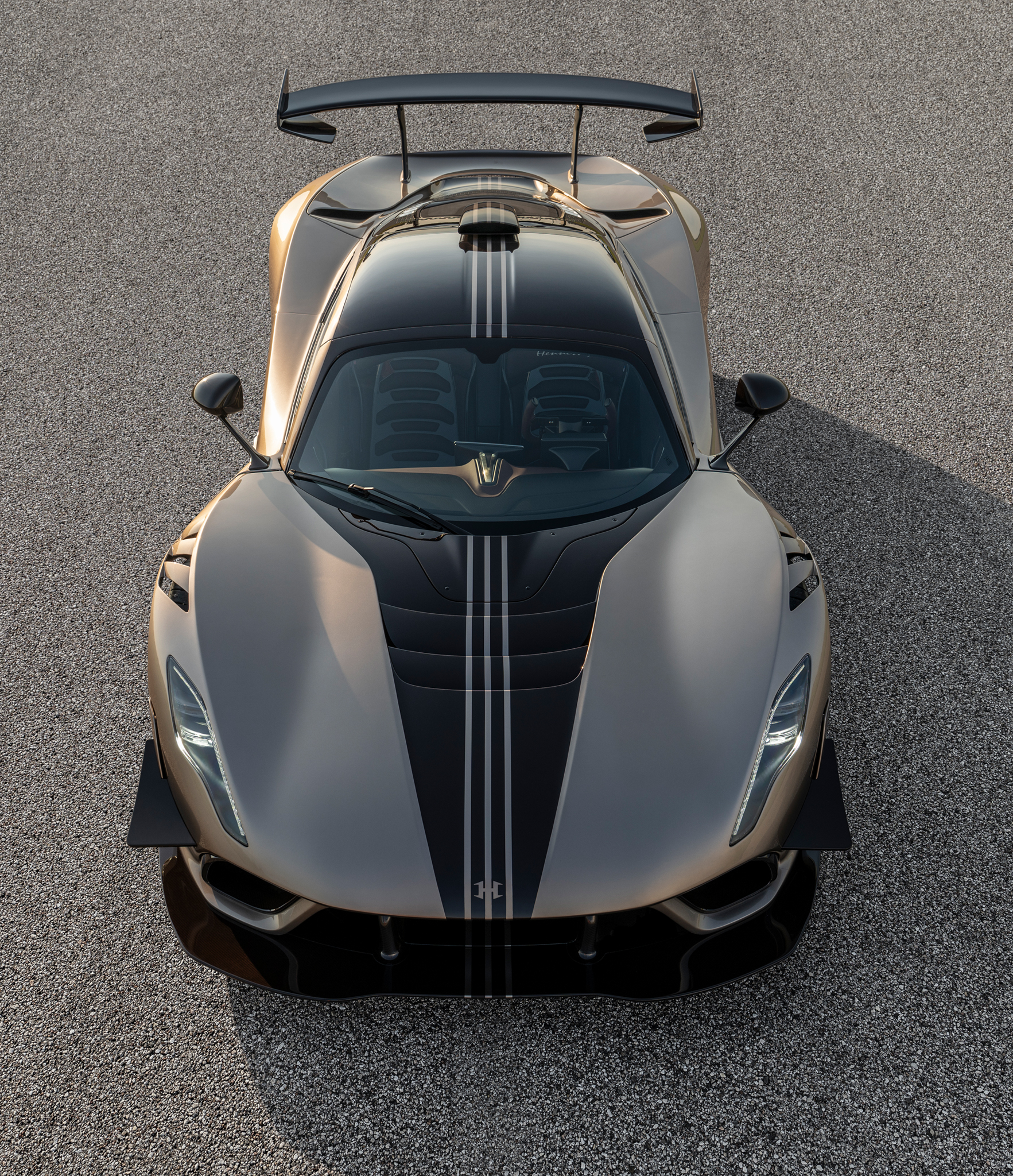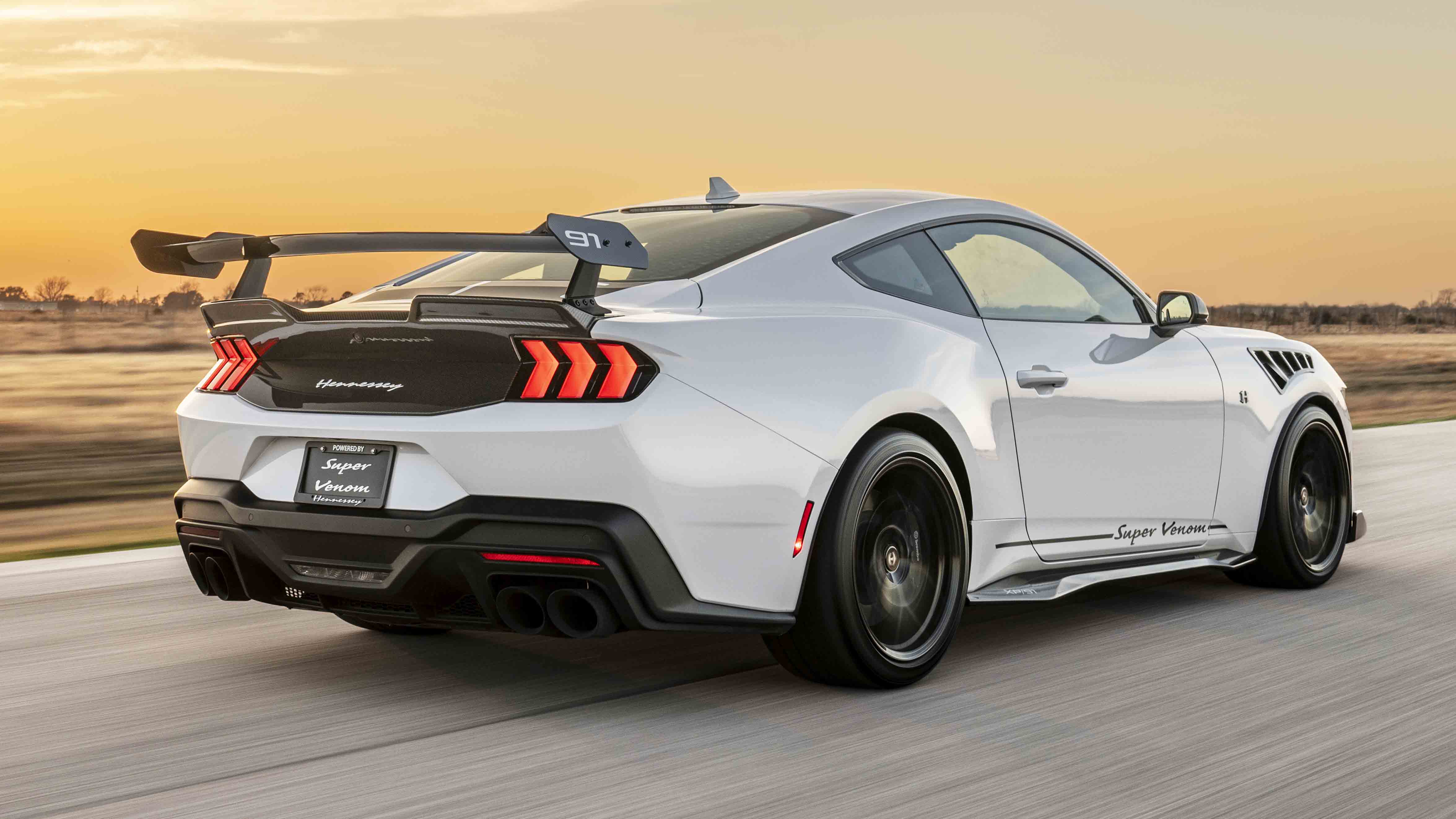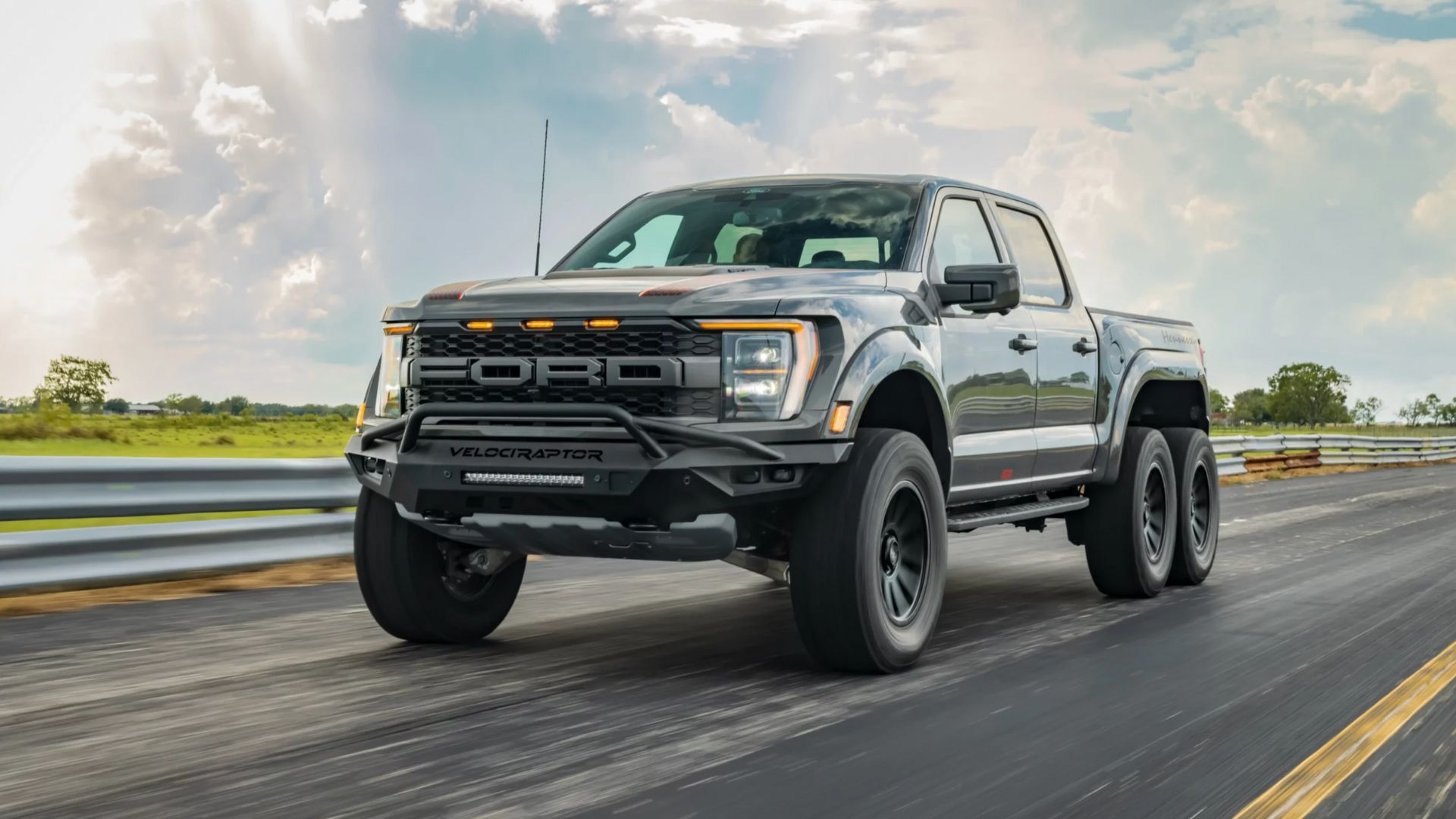
The modern performance car has become a paradox. It is faster than ever, yet somehow less thrilling. Electric powertrains deliver torque with the immediacy of a light switch, screens have colonized every dashboard, and the manual gearbox has been relegated to the status of a nostalgic curiosity, preserved mostly by Mazda and a handful of enthusiast holdouts. Into this sterile landscape strides John Hennessey, a man who has spent three decades building vehicles that treat restraint as a personal insult. His latest creation, the Hennessey Blackbird, is not merely a hypercar. It is a manifesto, and it reads like a middle finger aimed squarely at the screen-obsessed EV era.
The numbers arrive first, as they always do with Hennessey. 850 horsepower. A six-speed manual transmission. A curb weight that hasn't been padded with half a ton of battery cells. In an age when even Ferrari has abandoned the gated shifter and Porsche limits its manual offerings to the lesser trims of the 911, the Blackbird's three-pedal configuration is an act of defiance so deliberate it borders on poetry. This is not a car designed to flatter you with launch control and one-foot driving. It demands engagement. It demands skill. It demands that you actually know how to drive.
The Power of Subtraction
What makes the Blackbird genuinely radical, though, is not what it has but what it lacks. Zero screens. No massive central display. No digital instrument cluster. No touch-sensitive haptic feedback surfaces pretending to be buttons. The cabin is a sanctuary from the relentless digitization of the automobile, a space where the driver's eyes stay on the road and their hands stay on a mechanical shifter rather than a configurable menu. Hennessey understands something the industry's product planners have forgotten: speed is not a feature to be toggled. It is a sensation to be experienced.
Analog Rebellion in a Digital Age
This philosophy places Hennessey in rare company. While the broader automotive world races toward autonomy and electrification, the Texas tuner-turned-manufacturer has doubled down on the visceral. The Blackbird joins a small but growing counterculture of analog hypercars, machines that treat combustion, displacement, and manual intervention not as obsolete technologies but as the entire point. The Luxe Infinity crowd has already dubbed Hennessey's approach "unapologetic excess," and they mean it as the highest compliment. In a market saturated with silent, seamless, soulless speed, excess is a form of authenticity.
The Last of Something Irreplaceable
The timing could not be more pointed. As legacy manufacturers announce end dates for internal combustion and regulators tighten emissions nooses, Hennessey builds a car that would fail every efficiency metric ever devised. Its fuel economy is irrelevant. Its carbon footprint is a punchline. And yet, the Blackbird will likely appreciate in value the moment it leaves the workshop, because collectors understand that the final generation of analog hypercars will be remembered the way we remember the Ferrari F40 or the McLaren F1 — as the last of something irreplaceable. Hennessey is not fighting the future. He is building the artifacts that future generations will mourn.
Defiance Has Its Limits
There is a risk, of course, in romanticizing defiance. A manual hypercar with no screens is a beautiful idea, but it is also a niche product for a wealthy few, a toy for collectors who already own everything else. The Blackbird will not save the manual transmission, nor will it reverse the tide of electrification. But that was never the point. The point is that in an era of algorithmic driving and subscription-based features, someone still believes that the driver should be the one in control.
The Hennessey Blackbird is not a practical car. It is a necessary one. And in a world that keeps trying to automate away the joy of driving, necessary is enough.