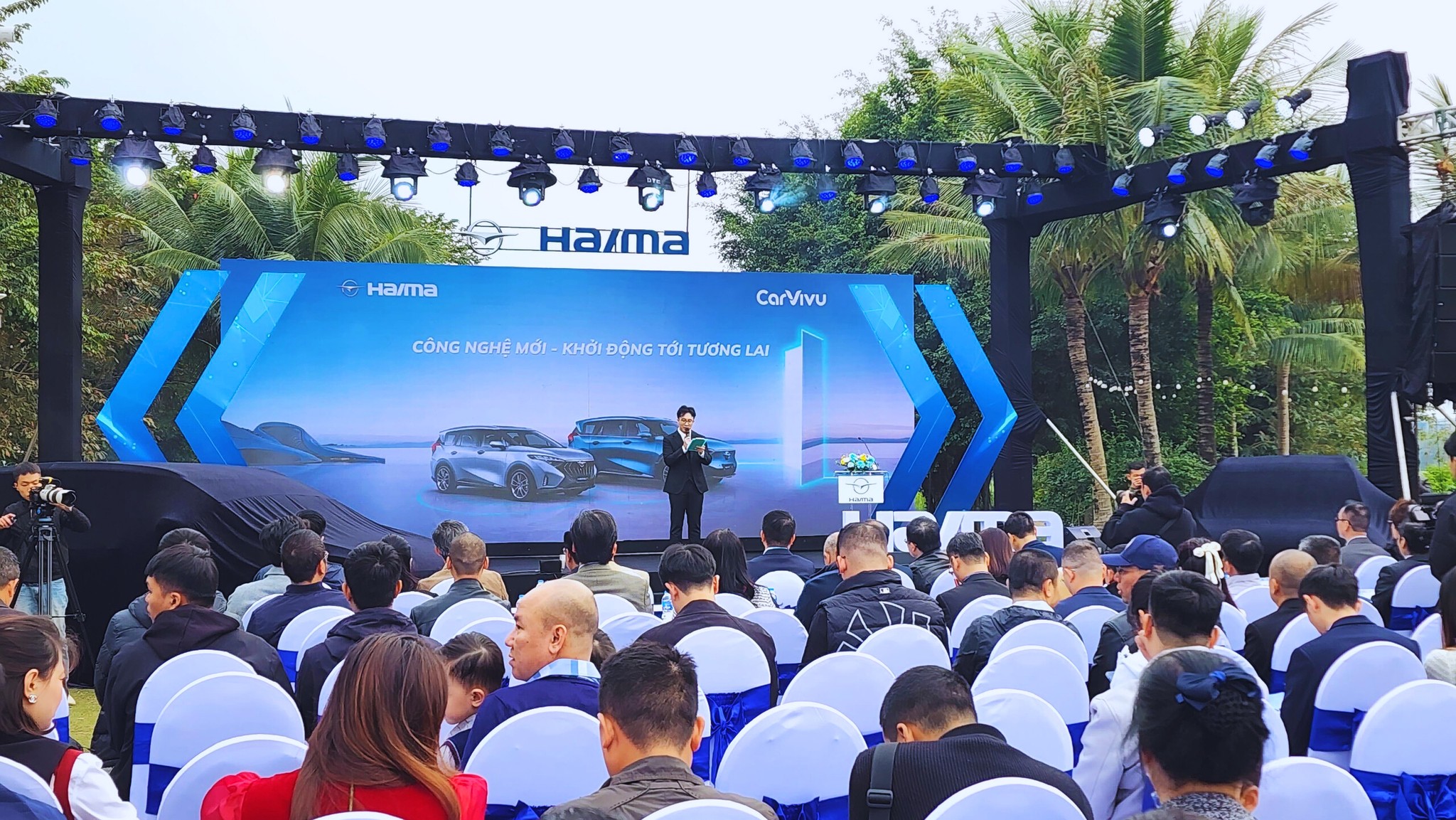
For most of the past decade, Haima Automobile has been an afterthought in the Chinese automotive landscape—a minor player with fading nameplates, thin volumes, and a share price that seemed permanently anchored to the bottom of the Shenzhen exchange. The company was the kind of listing that analysts glossed over and retail investors ignored. Then the calculus changed abruptly: news broke that GAC and FAW had formed a strategic alliance, and shares of both Zotye and Haima surged to their daily limit. In a single trading session, a forgotten penny stock became the centre of a compelling speculative thesis—that Haima is no longer a carmaker to be valued on its own merits, but a production licence and manufacturing footprint waiting to be acquired.
The Scarce Asset Under the Hood
The logic of that thesis rests on a scarce asset. In the wake of a sweeping industry consolidation drive—one that has seen weaker Chinese automakers permanently frozen out of vehicle production qualification—a valid manufacturing licence has become a genuinely precious commodity. When rumours circulated that eight established automakers had lost their production credentials outright, Haima moved quickly to confirm its licence remains valid. That rebuttal was more than a routine public-relations exercise. It was a signal to the market that the company still holds the regulatory key any acquisitive rival would need. In an elimination race where the Chinese auto industry is ruthlessly winnowing its field, the survivors are not necessarily the most innovative or the most profitable—they are the ones holding licences, plants, and capacity that larger groups covet.
Why the GAC–FAW Alliance Matters
That is precisely why the GAC–FAW alliance matters so much to Haima's investment case. When two of China's largest state-owned automakers join forces, the immediate read-through is consolidation at the top. But the second-order effect is arguably more significant: a newly enlarged, cash-rich combine with a mandate to rationalise capacity has every incentive to absorb distressed assets rather than build from scratch. Haima, with its existing production infrastructure and its modest but real manufacturing base, fits the profile of a bolt-on acquisition almost perfectly. The daily-limit move in its shares was not a reflection of improved fundamentals at Haima itself; it was the market beginning to price the probability that someone else will soon be doing the valuing.
A Name in Search of a Meaning
There is a certain irony in the noise surrounding the company. Search for Haima today and you will surface a bewildering array of unrelated results—a viral video, a genomic study of bacteria from the Haima cold seep in the South China Sea, and even Haima Therapeutics, an Ohio-based biotech developing freeze-dried synthetic platelets. None of it has anything to do with the automaker, yet it underscores a peculiar truth: Haima the brand has become a name in search of a meaning, its identity diffuse and its future contingent on decisions made in boardrooms far from its own. For a company in its position, that ambiguity is both a liability and an opportunity.
The Optionality Play
The opportunity lies in optionality. A Haima acquired by a larger group would not be valued on its current sales trajectory but on the strategic value of its assets—its licence, its plants, its place in a consolidating market. The risk, of course, is that the merger wave recedes, the rumours fade, and the stock settles back into the obscurity from which it briefly emerged.
For the moment, though, Haima has done something it has not managed in years: it has made itself interesting. In a sector where attention is currency, that alone is worth watching—and for a marque still holding the keys to its own factory gates, the road ahead, however uncertain, is at least no longer a dead end.