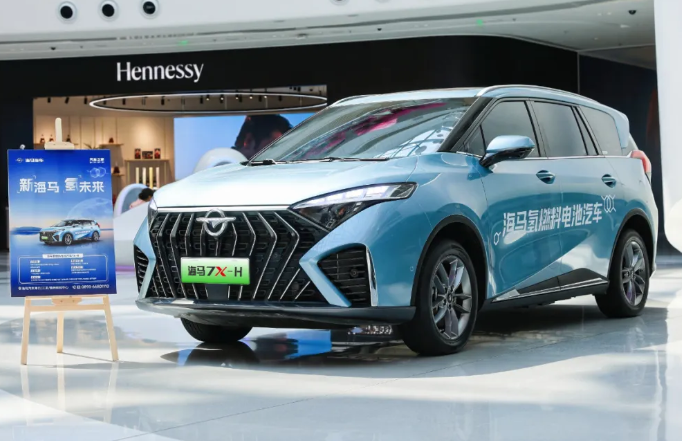
In the brutal consolidation now reshaping China's automotive industry, the most valuable thing a struggling carmaker can own is not a factory, a brand heritage, or even a loyal customer base. It is a piece of paper. For Haima Automobile, a marque that has drifted to the margins of the world's largest car market, that piece of paper—a valid vehicle production license—has quietly become the company's single most precious asset, and quite possibly its only meaningful path to survival.
The news cycle offered a telling reminder of this reality. When rumors swept the Chinese media that eight established automakers had permanently lost their vehicle production qualifications, Haima was among the companies compelled to issue a public confirmation that its license remains valid. The very fact that such a rumor could move markets—and that Haima's shares hit the daily limit amid speculation about a new wave of Chinese automaker mergers and acquisitions—reveals how the industry now values these regulatory credentials. In an era of aggressive capacity cuts, a production license is no longer a bureaucratic formality. It is a scarce, tradeable, and strategically vital commodity.
The Policy Engine Behind the Scarcity
To understand why, one must appreciate the policy environment Beijing has constructed. Chinese regulators have spent years trying to cool an overheated market plagued by overcapacity, with dozens of brands chasing shrinking margins. New production licenses for conventional internal-combustion vehicles have been effectively frozen for years, making existing qualifications extraordinarily difficult to obtain through official channels.
For ambitious players—whether established state-owned giants, cash-rich technology firms, or would-be electric vehicle entrants—the fastest route to manufacturing often runs through acquiring a licensed company rather than applying for a new permit. This dynamic transforms laggards like Haima from liabilities into acquisition targets.
Ownership, Alliances, and the New Arithmetic
Haima's position is further complicated, and in some ways strengthened, by its ownership structure. The company has long been entangled with Hainan's provincial interests and, more recently, with the ambitions of Xiaomi, which has pursued its own automotive manufacturing plans. Speculation has repeatedly linked Haima's production capacity and qualifications to larger strategic players seeking a foothold. Whether or not those particular deals materialize, the underlying logic is sound: a valid license attached to an underutilized plant is precisely the kind of asset that consolidating automakers covet.
The strategic alliance between GAC and FAW, and the market's feverish reaction to it, underscores the mood. Beijing appears to be encouraging—or at least permitting—a wave of mergers and restructuring designed to concentrate resources among fewer, stronger players. In such a climate, the survivors will not necessarily be the best-run companies, but the ones holding something others need. For Haima, that something is the legal right to build cars at all.
A Gateway, Not a Volume Player
There is a certain irony here. A brand that has struggled for years to compete on product, design, and scale now finds its leverage in the driest possible corner of the business: regulatory compliance. Yet this is the new arithmetic of the Chinese auto industry. As the elimination race intensifies, the value of a license rises in inverse proportion to a company's commercial fortunes. Haima may never again be a volume player, but it can be a strategic prize—a gateway for a better-capitalized partner seeking instant manufacturing legitimacy.
The road ahead remains uncertain. Licenses can be revoked, policies can shift, and prospective suitors can walk away. But for now, Haima's most bankable asset is not on the showroom floor. It is filed away in a regulator's database, quietly conferring the right to produce vehicles in the world's most competitive automotive market—a right that, in today's China, money alone cannot easily buy.