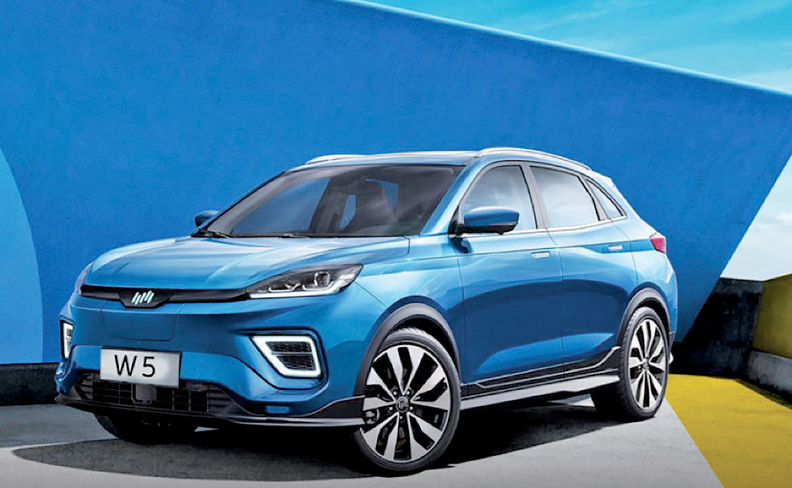
Great Wall Motor built its name the hard way—body-on-frame SUVs and pickups engineered for the rough roads and rural expanses of northern China, machines that prized durability over sophistication. For two decades that toughness-first philosophy served the company well, turning Haval into one of the most recognisable SUV nameplates in the world's largest car market. But the ground is shifting beneath every legacy manufacturer, and Great Wall's latest move suggests the company knows ruggedness alone won't carry it into the next decade.
The clearest signal yet is the deepening of its strategic partnership with Forvia, the French tier-one supplier formed from the merger of Faurecia and Hella. It marks a pivot away from a toughness-first engineering culture and toward one organised around next-generation mobility—a meaningful change of direction for a brand whose identity was forged in chassis strength rather than software.
A Supplier Relationship, Reengineered
The expanded collaboration, announced this week and reported across the trade press, broadens an existing relationship into new global markets and new technological territory. Forvia and Great Wall have worked together for years, but the new agreement elevates the partnership from a conventional customer-supplier arrangement into something closer to a joint development enterprise.
The stated ambition—accelerating global growth and next-generation mobility—reads like standard corporate boilerplate, yet the substance behind it matters. Forvia brings deep expertise in interiors, emissions control, electronics and, crucially, the software-defined cockpit and advanced driver-assistance hardware that modern SUVs increasingly depend on. Great Wall brings scale, manufacturing reach and an aggressive international expansion plan stretching across Southeast Asia, the Middle East, Latin America and Europe.
From Wading Depth to Screen Real Estate
What makes this pivot noteworthy is how sharply it departs from Great Wall's traditional brand DNA. The Tank sub-brand, with its ladder-frame chassis and off-road hardware, represents the old philosophy in its purest form. The new philosophy lives in vehicles like the Wey line and the growing family of electrified Haval models, where the differentiator is no longer approach angle or wading depth but screen real estate, over-the-air update capability and the seamlessness of the digital experience.
Partnering with Forvia on a global scale is an acknowledgement that Great Wall cannot build that future entirely in-house, at least not at the pace the market now demands. Software, sensors and smart surfaces are not core competencies honed over decades of building trucks. Buying that capability through a deepened supplier alliance is a pragmatic shortcut—and a telling one.
The European Credibility Bridge
The global dimension of the partnership deserves particular attention. Great Wall has been vocal about its export ambitions, and Europe in particular represents both an opportunity and a gauntlet. European buyers and regulators are demanding, and the Chinese manufacturer's early forays have been met with the scrutiny any new entrant should expect.
Forvia's European footprint and its established relationships with regulators and premium OEMs give Great Wall a credibility bridge—a way to demonstrate that its vehicles meet the continent's expectations for safety, connectivity and refinement. The partnership effectively imports a measure of European engineering legitimacy into a brand still widely perceived outside China as a value proposition rather than a technology leader.
Timing the Consolidation Wave
There is also a quiet strategic logic in the timing. The global supplier landscape is consolidating, and tier-one firms are increasingly choosing their partners carefully as they allocate engineering resources toward electrification and software. By deepening ties with Forvia now, Great Wall secures priority access to scarce development capacity and positions itself as a long-term strategic account rather than a transactional customer. For Forvia, the arrangement offers exposure to one of the few Chinese manufacturers with genuine global ambitions in the SUV segment—a hedge against softening demand elsewhere.
None of this guarantees success. Great Wall's transformation will be judged not by press releases but by the vehicles that reach showrooms over the next several product cycles. The company must prove it can absorb Forvia's technology without diluting the value-for-money proposition that built its following, and it must do so while defending its home market against fierce domestic competition.
Yet the direction of travel is unmistakable. The brand that once sold itself on the strength of its chassis is now investing in the intelligence layered on top of it. For a company named after the world's most famous defensive structure, Great Wall Motor has concluded that the best defence in the modern car market is a very different kind of engineering—and it has chosen its partner accordingly.