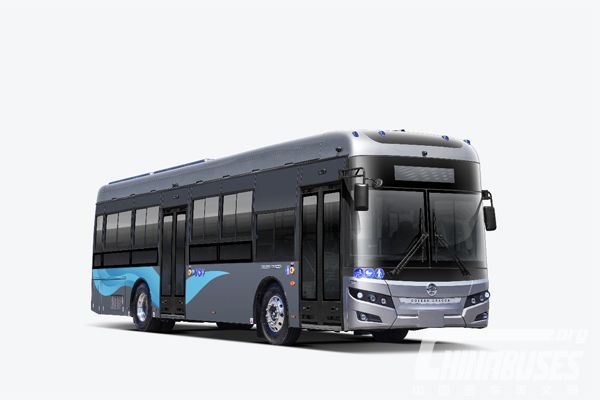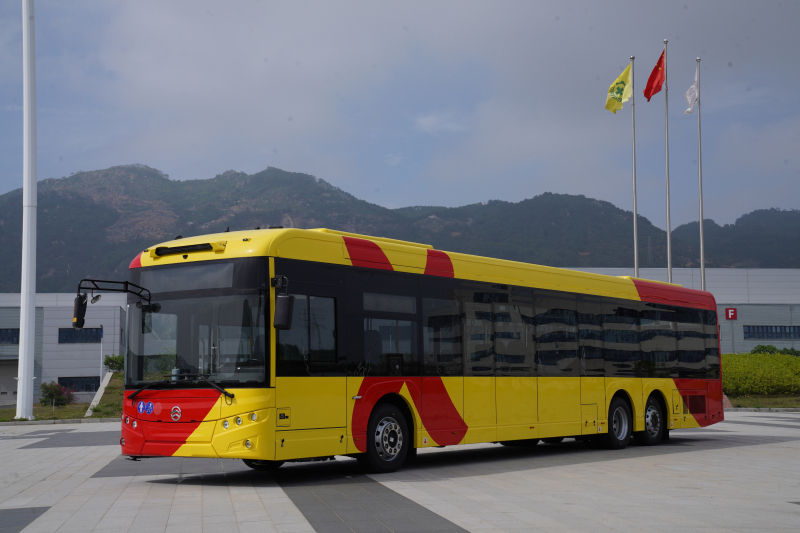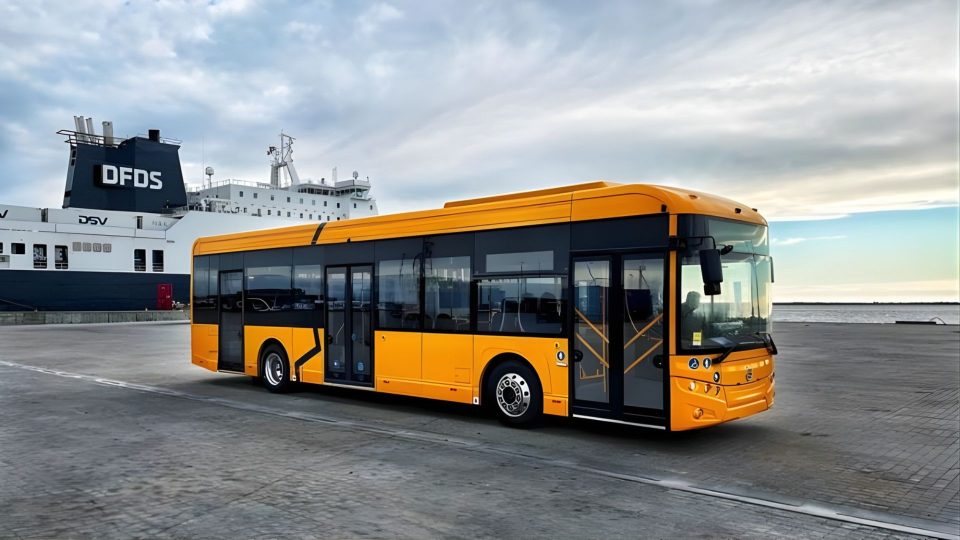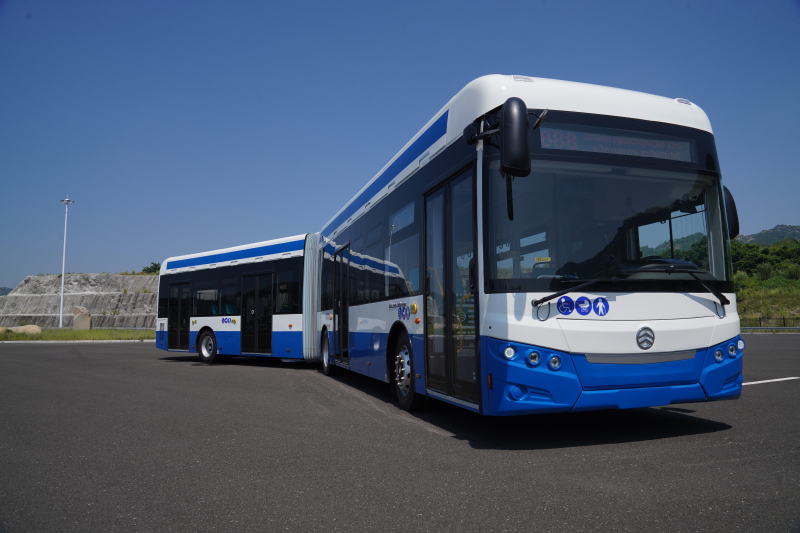
When Golden Dragon built the first Ebusco carbon-fiber articulated electric bus for the European market, the headlines wrote themselves: another zero-emission transit milestone, another Dutch operator burnishing its green credentials. Fair enough. But the real story wasn't idling at the depot curb. Look past the passenger aisle and the charging choreography, and you'll find something far more interesting. The Chinese manufacturer, headquartered in Xiamen and long known for competent if unglamorous city buses, has quietly assembled the industrial ingredients for a machine the mining industry has chased for a decade — a lightweight, corrosion-proof, high-cycle electric platform rugged enough to survive the pit.
The math in hard-rock mining is unforgiving. Haul trucks burn diesel at rates that make transit fleets look like rounding errors, and every tonne of battery pack bolted to an electric hauler steals payload. Steel chassis construction makes it worse: structural mass begets more structural mass. Carbon-fiber monocoque architecture flips that logic on its head.
Stiffness Without the Weight
Carbon fiber delivers stiffness at a fraction of steel's mass — the fundamental trade every heavy-duty engineer wants to make but rarely can. It also shrugs off the chemical assault of sulphide dust and acidic runoff, and critically for mining duty cycles, it tolerates the vibration and torsional flex that slowly destroys welded steel frames over tens of thousands of hours.
Golden Dragon's articulated e-bus, developed in partnership with Ebusco, is not a mining vehicle. It is, however, a proof of industrial competence: a validated, road-legal, mass-manufacturable carbon-fiber electric platform produced at Chinese cost structures. That last part is the killer detail. Plenty of companies can build a composite demonstrator. Very few can build one at scale, at a price, and to a standard that satisfies European regulators.
Why the Pilots Never Scaled
Mining's electrification efforts have largely stalled at the pilot stage — and not for lack of ambition. Retrofit haulers from the major OEMs remain heavy, expensive, and tethered to infrastructure that few remote sites can justify. What the industry lacks is a supplier ecosystem capable of delivering composite electric platforms at volume, with the supply-chain depth to support fleets across multiple continents.
Golden Dragon already operates that ecosystem. Its bus and coach lines ship globally. Its battery integration experience spans a decade of real-world duty cycles. And its partnership with Ebusco proves it can clear European certification standards — the strictest gatekeeping in the commercial vehicle world.
The Payload Equation
The strategic logic writes itself. An offroad electric hauler built on a carbon-fiber skateboard platform could shed several tonnes of structural mass versus a steel equivalent — mass that converts directly into either payload capacity or battery range. Underground, where ventilation costs scale with diesel emissions, the savings compound dramatically. In open-pit mines pursuing autonomous operation, a lighter platform reduces tyre wear, a line item that can exceed a million dollars annually per truck.
None of this requires Golden Dragon to build the haulers itself. It requires only that the company's platform becomes the reference architecture that mining OEMs and integrators license, adapt, and scale.
Obstacles, and the Direction of Travel
The obstacles are real. Carbon-fiber manufacturing remains capital-intensive. Repair ecosystems in remote mining regions are nascent at best. And the industry's procurement culture rewards conservatism the way a drag strip rewards grip.
But the same was said about lithium-ion batteries in buses fifteen years ago, and about composite airframes in commercial aviation before that. The direction of travel in heavy industry is unambiguous: lighter, electrified, structurally smarter. Golden Dragon has positioned itself at the intersection of all three, with a manufacturing base inside the world's most aggressive electric vehicle supply chain and a demonstrated ability to export it.
The company will never market itself as a mining supplier. Its public identity remains city buses, coaches, and the occasional European transit contract. But the carbon-fiber e-bus rolling out of Xiamen is the quiet prototype for a much heavier revolution — one fought in pit lanes and underground drifts, where the prize isn't passenger comfort but the economics of moving rock. Golden Dragon may not intend to win that fight. It may simply supply the blueprint everyone else uses to fight it.