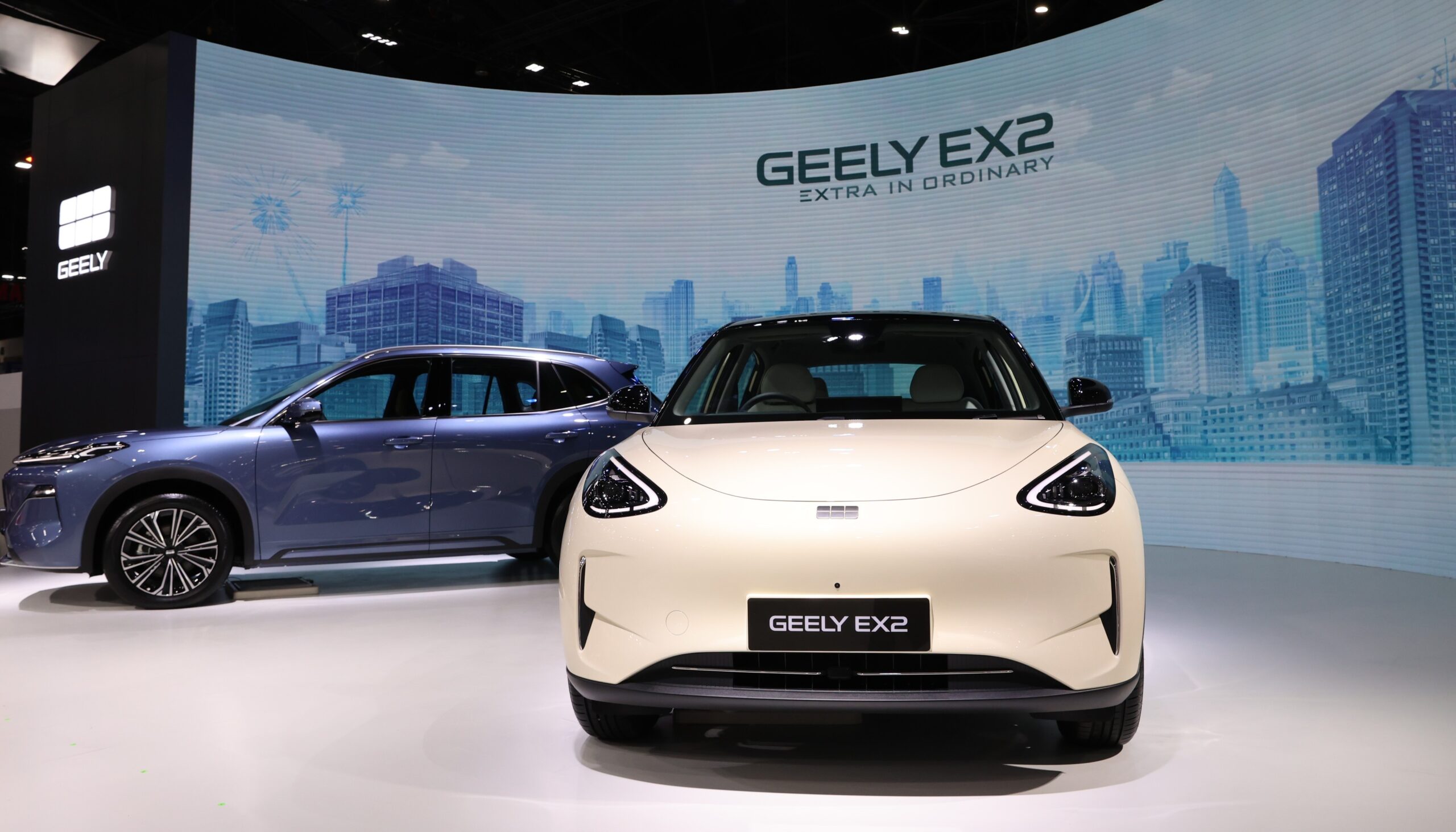
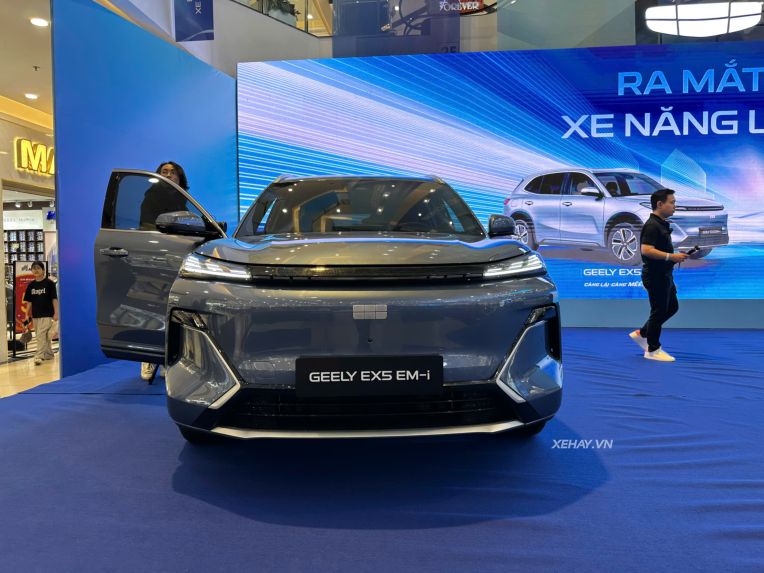
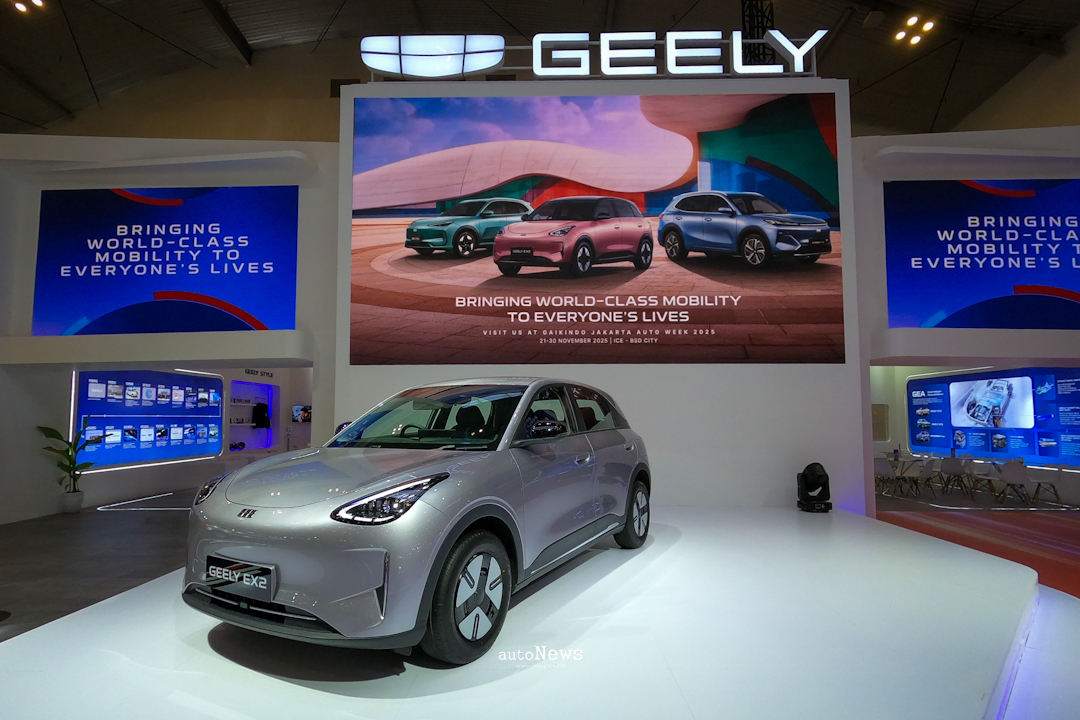
The most telling number in the British car market this year doesn't come from a legacy giant, nor from a government zero-emission mandate spreadsheet. It comes from a brand most UK buyers had never sat in a year ago. Geely, which only began selling cars in Britain in late 2024, has now overtaken both Honda and Mazda in UK registrations — a result delivered in just eleven months. A marque with no inherited dealer network, no decades of brand equity and no nostalgic glow in the minds of British motorists has outsold two Japanese institutions that have been fixtures of these islands for generations. Whatever one thinks of the pace of Chinese expansion into Europe, this is not a slow burn. It is a land grab.
The scale of the upset is best understood by what Geely did not have. Honda and Mazda possess loyal customer bases, established servicing infrastructures and model histories stretching back to the age of the Mini. Geely arrived with a single proposition — the EX5 electric SUV — priced aggressively and specified generously, and let the arithmetic do the talking. That it has worked so swiftly says less about the brilliance of any one product than about the brittleness of incumbency in a market where buyers are increasingly indifferent to badge heritage and acutely sensitive to monthly costs.
The Iceberg Beneath the Sales Chart
Yet the UK result is only the visible tip of an industrial iceberg. Geely is not a scrappy challenger in the mould of a start-up; it is a sprawling conglomerate whose reach now touches almost every corner of the global car business. Its Horse Powertrain joint venture with Renault has just unveiled a 13-in-1 plug-in hybrid off-road drive system delivering a frankly absurd 4,920 Nm of wheel torque, while the same partnership's turbo engine has been demonstrated running fully submerged — a piece of theatre designed to reassure a sceptical European public about durability. Meanwhile, Beijing has approved Geely's acquisition of 34 per cent of Ford España, and the group's Xingyuan EV has rolled past its one millionth unit. This is a company operating at a scale that makes a UK sales chart look like a rounding error.
Charging, Chips and the Supply-Chain Gambit
The technical ambition is equally unrestrained. Geely is chasing BYD with 1,800 kW charging hardware that Autocar reports could reach British forecourts, and Reuters confirms that vehicles from Geely's brands will ship with Google built-in services outside China — a canny concession to Western expectations of infotainment. Its Smart #2, due for a Chinese launch on 5 November with a 410 km CLTC range, signals continued product velocity, while a reported interest in Nio's Shenji M97 chip and a major battery-swapping partnership with Nio suggest Geely intends to control its own supply chain rather than rent one.
The Safety Assumption, Busted
Perhaps most damaging to the old certainties is the safety record. The lazy European assumption — that Chinese EVs are cheap because they are compromised — took another hit as Geely aced Euro NCAP, alongside GAC and Leapmotor. Add to that the New York Times' report that American officials now privately concede Chinese cars could be enormous in the US, and you have a picture of a company whose momentum is being felt from Coventry to California. Germany's auto industry, as Der Spiegel notes, is already in dire straits amid the Chinese surge.
None of this guarantees permanence. Overtaking Honda and Mazda in a single year is a remarkable feat, but sustaining it requires dealer throughput, residual values and the mundane machinery of trust — the very things incumbents squander slowly rather than lose at once. Still, the warning is unmistakable. Britain has spent a century treating Japanese reliability as the benchmark and German engineering as the summit. In eleven months, a Chinese conglomerate has quietly demonstrated that the benchmark is now whoever ships the most compelling car at the sharpest price, fastest. Honda and Mazda have just been told so in their own sales figures.