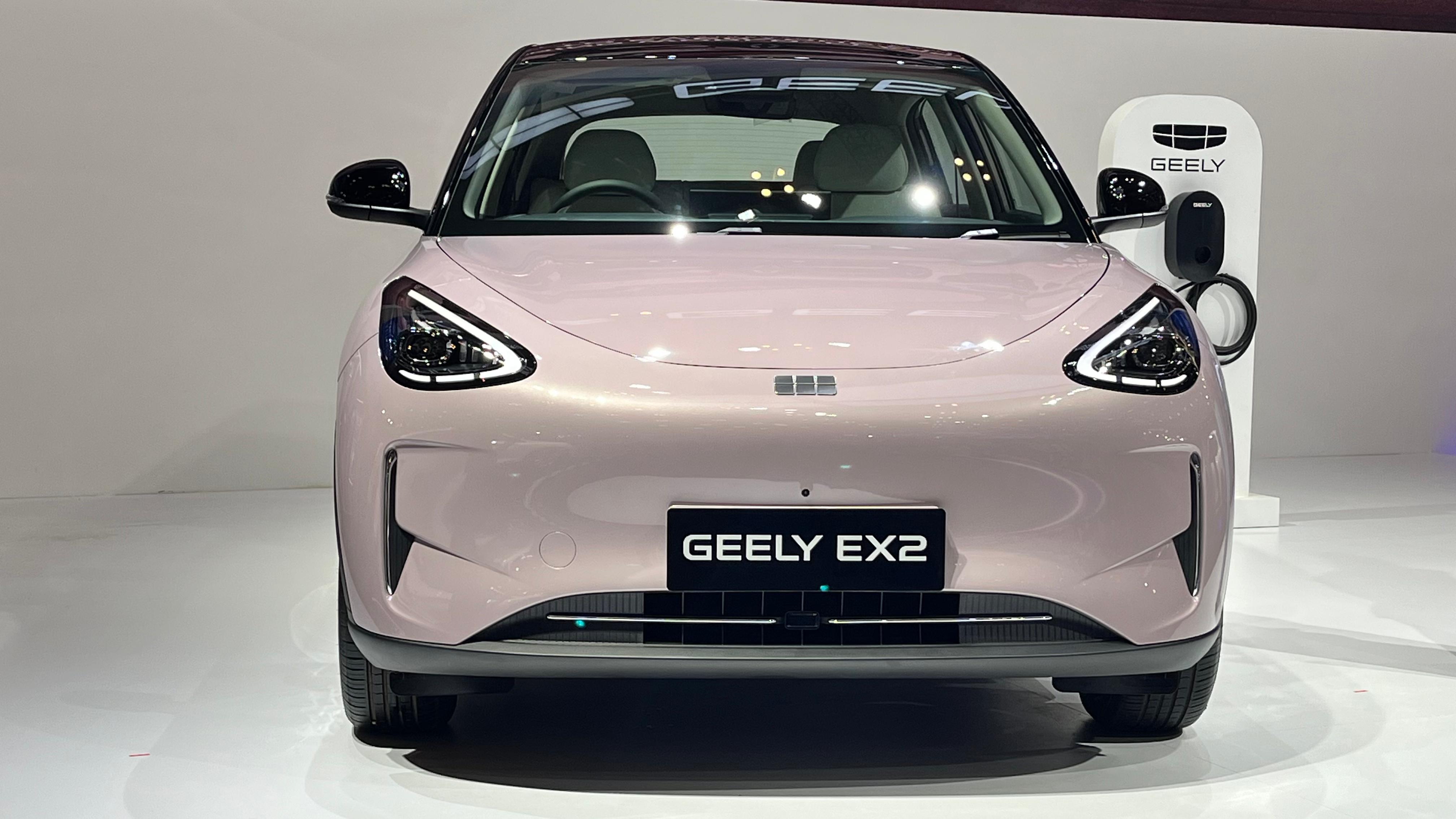
In 2027, the most consequential Chinese car launch in North America won't happen in the United States. It will happen roughly ninety minutes north of the Washington state line, in dealerships stretching from Vancouver to Halifax, where Geely — the Zhejiang giant that quietly owns Volvo, Polestar, Lotus, and a stake in Mercedes-Benz — has confirmed it will begin selling vehicles in Canada. Reuters, the Wall Street Journal, and Motor1 all reported the same essential fact: the brand's mainstream line will arrive north of the border first, with no models, prices, or dealer network named yet. For American enthusiasts, the announcement carries a peculiar sting. The sedan, the SUV, the plug-in hybrid they will read about, watch on YouTube, and see parked at a Whistler trailhead will be, for the foreseeable future, legally unbuyable at home.
The asymmetry is the story. Canada has effectively opened a door that Washington is trying to weld shut. Under its existing tariff schedule, Chinese-built electric vehicles can enter Canada at a 6.1 percent duty — a rate that, per Autonocion, has already admitted some 49,000 low-cost Chinese EVs into the country. Compare that with the United States, where the Biden administration's Section 301 tariffs quadrupled duties on Chinese EVs to 100 percent, and where successive administrations have layered on software bans and national-security reviews aimed at keeping Chinese automakers out entirely. Geely's Canada-first strategy is not a rounding error. It is a direct response to two diverging trade regimes on the same continent.
A Product Offensive, Not a Compliance Car
What makes the sting sharper is that Geely is not arriving with a compliance car and a prayer. The company's product offensive this year has been aggressive and technically credible. The Galaxy Cruiser 700 and the Battleship 700 — the latter reportedly drawing 10,000 orders in twelve minutes at launch — signal a brand willing to fight BYD and GWM head-on in the off-road SUV segment, with specs that read like a provocation: over 1,100 horsepower in some configurations, 800mm of water-wading capability, and a starting price under $27,000 in its home market. Geely has also inked a battery-swapping agreement with NIO, and it will bring the Monjaro EM-i to the Paris Motor Show — evidence of a company building a genuinely global engineering and infrastructure story, not just an export pipeline.
Canada as the Test Kitchen
Canada, then, becomes the test kitchen. Geely has already proven it can build dealer networks at speed, opening 100 dealerships in Australia in eighteen months as EV demand climbed. A market of Canada's size, with a favorable tariff regime, a strong EV adoption curve, and no domestic automaker to protect in the same way Washington protects Detroit, is a logical first beachhead. If Geely's Canadian launch lands well — if the products are competitive, the service network holds up, and the brand avoids the political crossfire that has damaged other Chinese entrants — it will have built the reference case it needs for the next, harder conversation about the United States.
The Optics of a Closed Border
That conversation is not imminent. The 2027 Canadian launch will unfold against a U.S. policy environment that is actively hostile to Chinese vehicle imports, and no amount of Canadian success will change the politics in Washington overnight. But it will change the optics. American shoppers will see Geelys on Canadian roads, read Canadian reviews, and confront a simple question: why is a car good enough for Vancouver but forbidden in Seattle? The answer, for now, is tariffs and politics — not engineering. And that is precisely the kind of answer that becomes harder to defend every year the border stays closed.