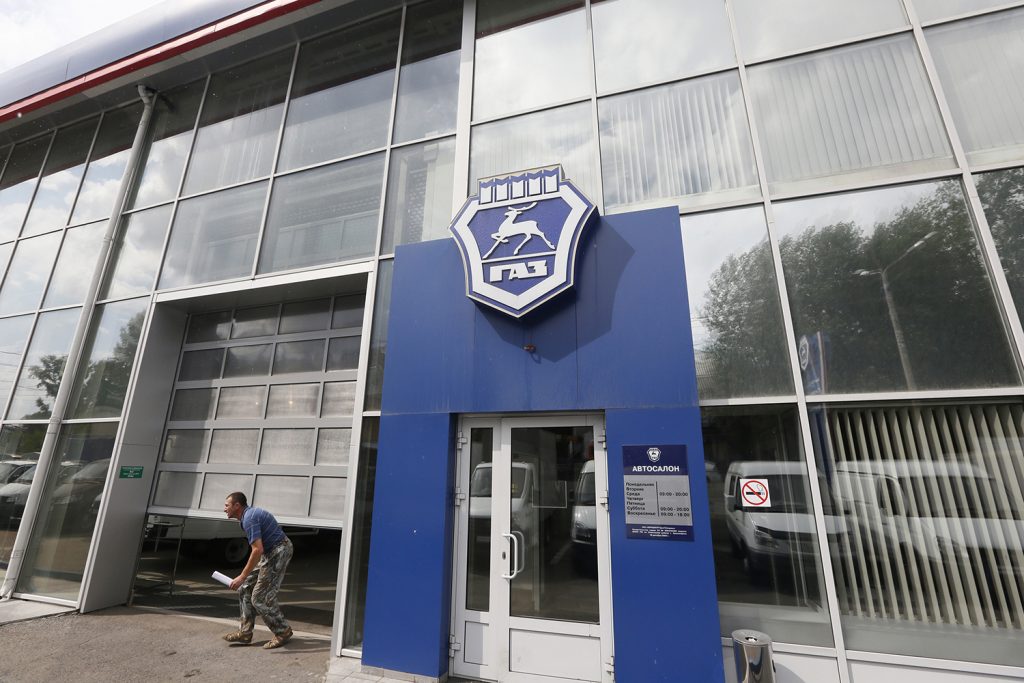
For ninety years, GAZ Group has built its reputation on a single, unglamorous premise: moving people and goods across the worst roads Russia can offer, cheaply and without complaint. The GAZelle and its heavier siblings became the connective tissue of a sprawling economy—vehicles defined less by aspiration than by endurance. That legacy makes the company's latest engineering turn all the more improbable. GAZ, a manufacturer whose very name is shorthand for utilitarian pragmatism, has begun producing LNG-powered buses—a development that would have seemed eccentric a decade ago but now reads as a calculated act of corporate survival dressed in the language of energy experimentation.
The logic behind the pivot only becomes legible when set against the pressures closing in on the company. This is not a manufacturer chasing a green halo. It is a manufacturer reading the room.
The Squeeze
GAZ Group has spent recent years navigating a tightening lattice of Western sanctions, with OFAC repeatedly revising the general licenses that define what the company may and may not do—narrowing authorized activities and layering on reporting requirements that make every transaction a compliance exercise. The broader financial picture is hardly reassuring: industry coverage has documented the company "rolling towards bankruptcy," and reports of halted assembly lines suggest a manufacturer operating under acute material and capital constraints. Add to that the sprawling litigation against Volkswagen—a $348 million claim followed by a Russian court ordering the German automaker to pay roughly $193 million in damages—and you have a firm whose energies are being consumed by legal and financial trench warfare.
Why Gas, Why Now
Against that backdrop, liquefied natural gas is not merely an environmental gesture. It is a domestically sourced fuel in a country with vast reserves, a way to sidestep dependence on imported components and conventional diesel logistics, and a technology story that plays well with state priorities around energy sovereignty. For a company whose survival strategy increasingly hinges on import substitution, LNG offers the rare combination of political alignment and genuine engineering ambition.
The buses themselves—heavy-duty, offroad-capable machines designed for terrain that would humble a city coach—extend the GAZ tradition of building for conditions rather than showrooms, but with a fuel system that signals a break from the past.
Two Fronts, One Imperative
What makes the strategy genuinely curious is how it coexists with GAZ's parallel push into export markets that seem to have little to do with gas propulsion. The company has been courting Cambodia with notable persistence, exploring local assembly opportunities and positioning Phnom Penh as a potential manufacturing hub, while also introducing the GAZelle NEXT in Serbia. These are the moves of a manufacturer rebuilding commercial bridges where Western ones have burned—diversifying geographically while diversifying technologically. The LNG bus program and the Southeast Asian investment tour are, in effect, two expressions of the same imperative: find new fuels and new customers before the old ones disappear entirely.
Engineering Under Siege
There is a certain irony worth noting. A company once synonymous with the dependable diesel workhorse is now betting part of its future on cryogenic fuel systems, while simultaneously suing a global rival for damages and lobbying for relief from sanctions that constrain its access to the very components such advanced vehicles require. The LNG buses are a statement of intent, but they are also a test of whether GAZ can execute sophisticated engineering under conditions that would stall most manufacturers outright. Whether this pivot matures into a durable commercial line or remains a symbolic flagship depends on forces well beyond the factory floor—on courts, treasuries, and the willingness of foreign partners to engage with a sanctioned industrial giant.
For now, the experiment stands as one of the more unexpected chapters in Russian automotive history: a sanctions-battered builder of humble vans, redirecting its engineering ambition toward natural gas and offroad buses, and finding in energy experimentation a rationale for continued existence. It is survival, certainly—but survival with a surprising amount of imagination attached. And it is a reminder that GAZ's oldest principle still holds: build for the conditions you actually face, not the ones you wish you had.