For years, the budget ute segment has carried an unspoken stigma: buy cheap, drive cheap, and accept that your vehicle will never quite look the part in the car park at the trailhead. Foton, the Chinese commercial vehicle specialist steadily expanding its footprint across Australia, South Africa, and now the United Kingdom, appears determined to dismantle that assumption piece by piece. The brand's recently released range of factory-backed accessories for its Tunland pick-up line is not merely a catalogue expansion — it is a calculated strike at the heart of the aftermarket establishment, and it deserves far more attention than it has received.
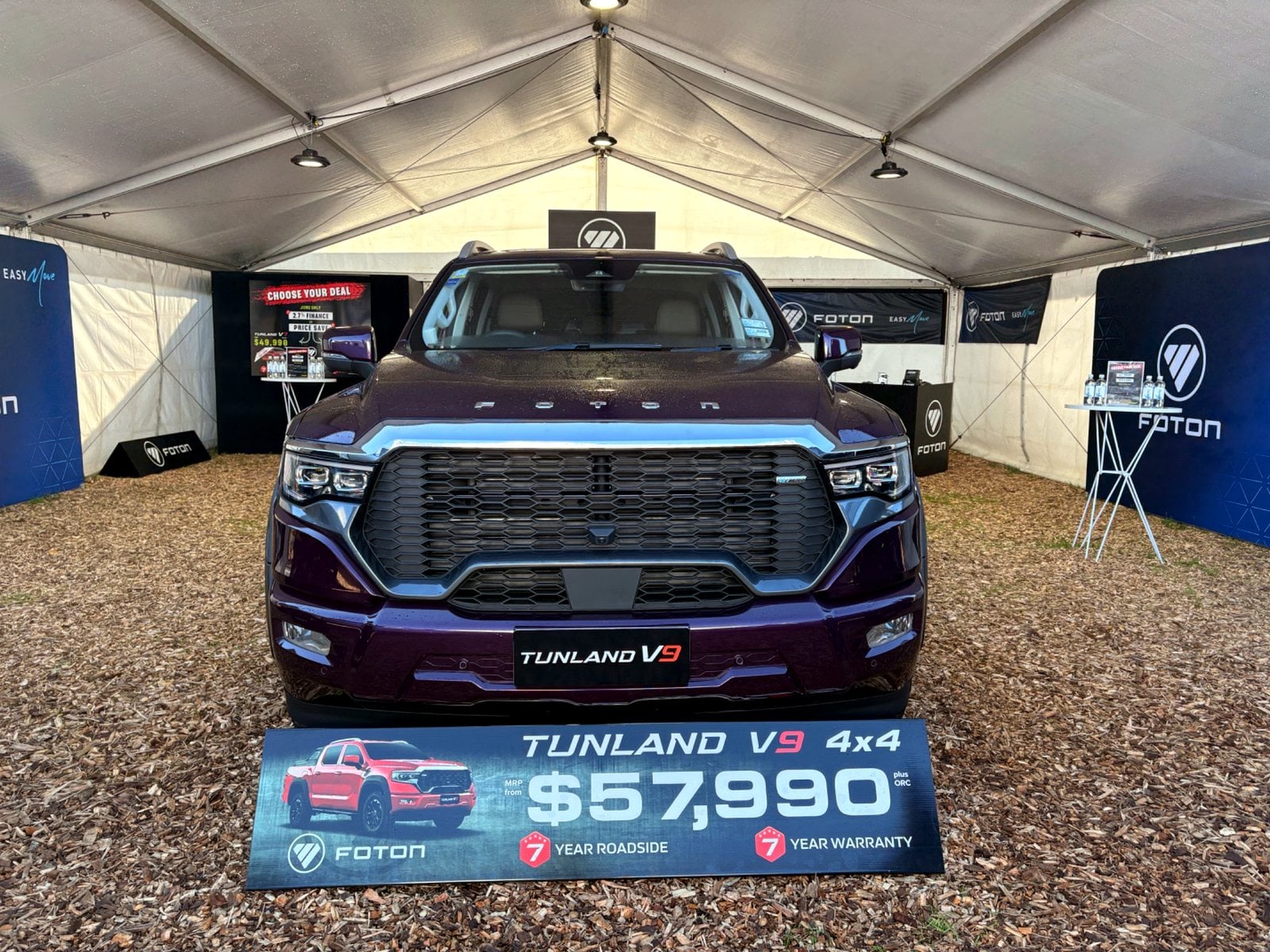
The logic behind the move is straightforward and, frankly, overdue. Foton has spent the past several years building credibility on value: the Tunland V9, for instance, has been praised for delivering big-pickup swagger on a one-tonne budget, a proposition that resonates powerfully with buyers who need genuine workhorse capability without the finance-pounding premium of a Ranger or Hilux. But value alone does not win hearts in the offroad community, where visual presence, functional authenticity, and the promise of a credible build matter as much as raw capability. By offering an official accessory range, Foton is effectively handing buyers the tools to transform a sensible purchase into a statement — and doing so with the reassurance of factory warranty support rather than the lottery of third-party fitment.
Momentum Meets Timing
The timing is shrewd. Foton's global momentum is unmistakable: the brand recently set a new sales milestone in South Africa, a market where its growth reflects a broader shift in buyer sentiment, and it has been expanding its Australian dealer network with purpose. The BAIC Foton partnership continues to gather pace across Africa, and the brand showcased its full product strength at IAA TRANSPORTATION 2026.
Closer to the passenger-vehicle space, the Tunland V7 and V9 have been previewed in Malaysia, while the Tunland PHEV — a plug-in hybrid rival to the BYD Shark 6 and Ranger PHEV, boasting a claimed 800Nm of torque and 3.5-tonne towing — signals that Foton intends to compete on specification as well as price. An accessory range sits neatly within this narrative: it is the final piece of the ownership proposition, the element that turns a transactional purchase into a long-term relationship.
Restraint as a Design Language
What makes the accessory strategy particularly credible is its restraint. This is not a scattergun approach of dubious cosmetic add-ons. Factory-backed accessories for a vehicle like the Tunland carry an implicit endorsement: they have been engineered, tested, and validated alongside the vehicle itself.
For the buyer who wants a bull bar, a snorkel, a tray canopy, or an uprated suspension package without venturing into the uncertain territory of aftermarket fitment and warranty disputes, that matters enormously. It is the difference between a ute that merely tolerates modification and one that is designed to accommodate it — a distinction that speaks directly to how a vehicle feels once it leaves the showroom and hits the tracks.
The Lifestyle Platform
There is a broader market truth here that Foton has grasped more quickly than some of its budget-brand rivals. The modern ute buyer — particularly in Australia and South Africa — does not simply purchase a vehicle; they purchase a platform for a lifestyle. The accessory catalogue is the menu from which that lifestyle is ordered.
Brands that treat accessories as an afterthought cede that territory to the aftermarket, forfeiting both margin and brand loyalty. Foton's decision to compete directly on this front suggests a maturing understanding of its customer base, one that recognises aspiration as a legitimate component of the value equation.
The Road Ahead
None of this guarantees success. The Tunland still carries the burden of an unfamiliar badge in markets where decades of brand equity shape purchasing decisions, and the arrival of accomplished plug-in hybrid rivals like the BYD Shark 6 raises the competitive bar considerably.
But the accessory range represents a meaningful shift in posture. It signals that Foton is no longer content to compete solely on the sticker price — it intends to compete on the complete ownership experience, from the showroom floor to the first weekend on the tracks. For a brand still building its reputation, that is precisely the kind of ambition that turns a budget alternative into a genuine contender — and proof that in the modern ute market, philosophy is built one accessory at a time.