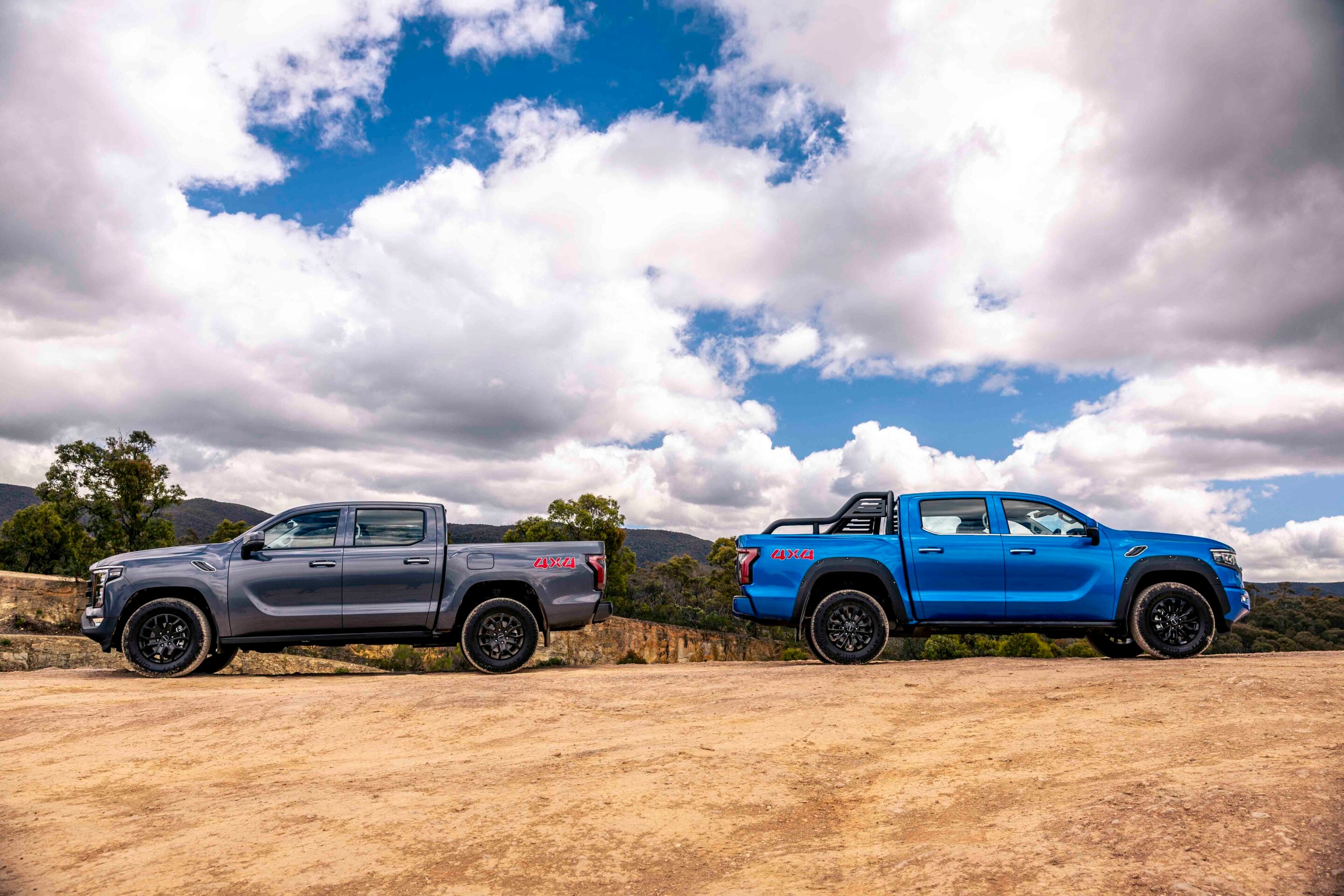
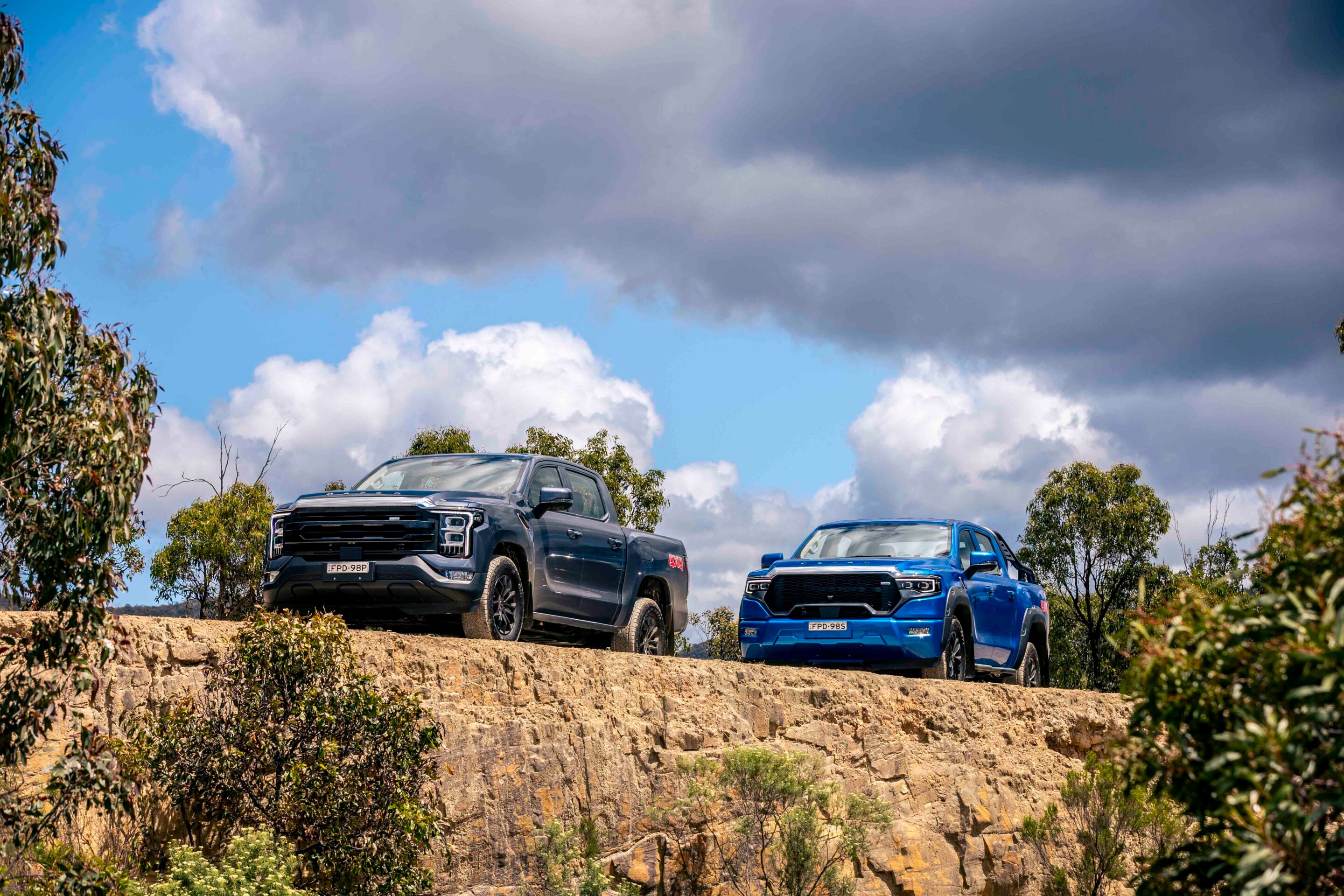
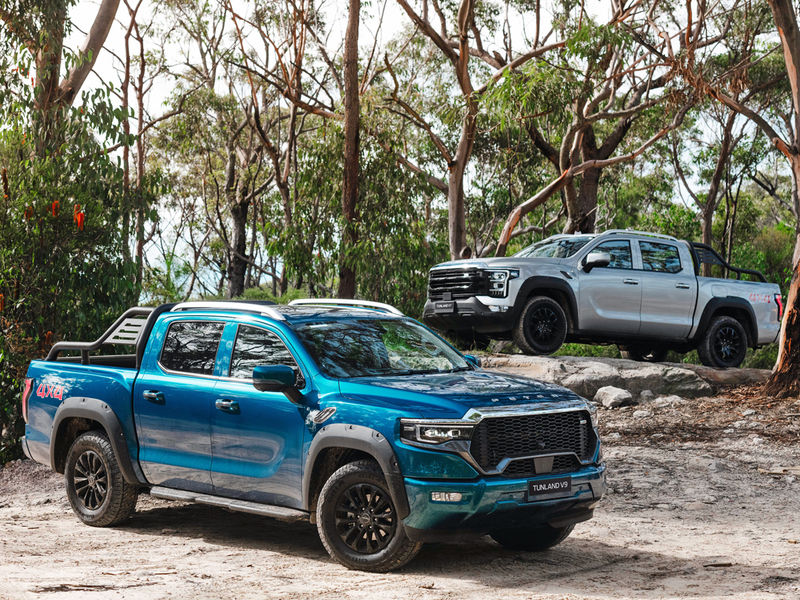
Walk around the Foton Tunland V7 or V9 and the references land before you've completed the first lap. There's the broad, upright grille treatment, the squared-off wheel arches, the blocky shoulder line that terminates in a tailgate seemingly engineered to swallow a pallet of bricks without complaint. None of it is accidental. Foton has deliberately borrowed the visual grammar of the Ford Ranger and the Ram 1500 — two of the most recognisable pick-ups on earth — and wrapped that language around a Chinese-built, mildly hybridised utility vehicle that undercuts both on price. The strategy is as old as the motor industry itself, but rarely has it been executed with such unapologetic directness.
The Tunland V9 leans hardest into the American idiom. Its front end is dominated by a tall, near-vertical fascia and a grille that seems to have been measured against a Ram's, while flared arches and chunky cladding telegraph off-road intent before a single wheel has turned in anger. The V7 reads as the more restrained sibling — closer to the Ranger's proportions, tidier in its detailing, aimed at buyers who want the presence without the theatre. Both share the same underlying proposition: that the visual cues of credibility can be acquired, and that a buyer cross-shopping on a budget will respond to a shape they already trust.
The Grammar of Familiarity
It's worth being clear about what this borrowed design language is and is not. It is not plagiarism in any legal sense; the surfaces are Foton's own, the proportions are adjusted, and the result is a distinct vehicle rather than a clone. Nor is it a substitute for genuine capability. What it is, is a shortcut to a psychological threshold. The ute segment is unusually conservative — buyers reward familiarity, and a vehicle that looks like it belongs beside a Ranger at a worksite or a Ram at a boat ramp clears a hurdle that a more idiosyncratically styled Chinese contender might stumble over. Foton has understood that in this corner of the market, looking the part is not vanity; it is a prerequisite.
A Design Push With Commercial Timing
The timing of this design push is instructive. Foton is in the middle of a concerted international expansion, and the Tunland V-series is its spearhead in right-hand-drive markets from Australia to South Africa to the United Kingdom, where the marque has signalled its intention to launch. Recent first-drive coverage has framed the range as "one for work and one for play," a neat summary of the V7/V9 split, while Malaysian previews have highlighted the mild-hybrid powertrain and an estimated entry point around RM129,000. In South Africa, Foton has been setting sales milestones, and in Australia it has been quietly expanding its dealer network. The styling, in other words, is doing commercial work: it is the first argument Foton makes to a sceptical buyer, and it is a persuasive one.
An Industrial Pedigree Behind the Posturing
There is a broader context here that deserves acknowledgement. Foton is not merely a passenger-vehicle aspirant; it is an industrial player with serious truck ambitions, showcased most recently at IAA Transportation 2026 in Hannover, and it has entered joint production of Mercedes-Benz Trucks in China with Daimler Truck AG. That commercial-vehicle pedigree lends the Tunland's rugged posturing a certain authenticity — this is a company that knows how to build working vehicles, even if its pick-up line is newer to Western showrooms. The Ford-and-Ram styling, then, is less a costume than a dialect: Foton is speaking the visual language of the segment it wishes to join, and doing so with enough conviction to be taken seriously.
Whether that conviction translates into lasting credibility is the open question. Borrowed design can win the first glance, but it cannot carry a brand through a second generation. The Tunland V7 and V9 are compelling precisely because they arrive at a moment when Chinese utes are shedding their budget-only reputation and competing on presence as much as price — and presence, in this segment, is inseparable from the shapes buyers already trust. Foton has chosen to make its opening argument in the most familiar accent available, and in a market as conservative as the double-cab, that may prove to be the smartest decision of all.