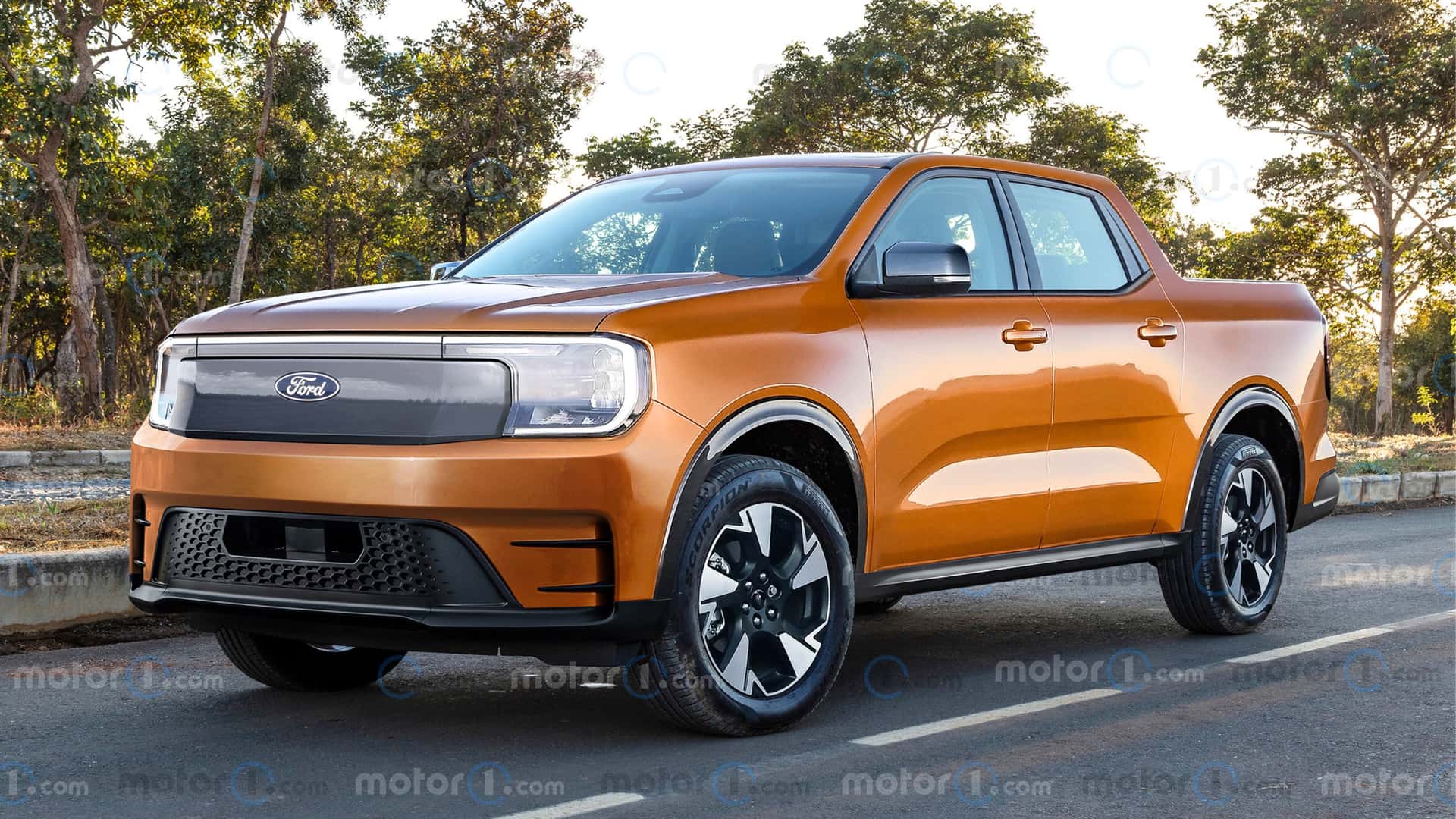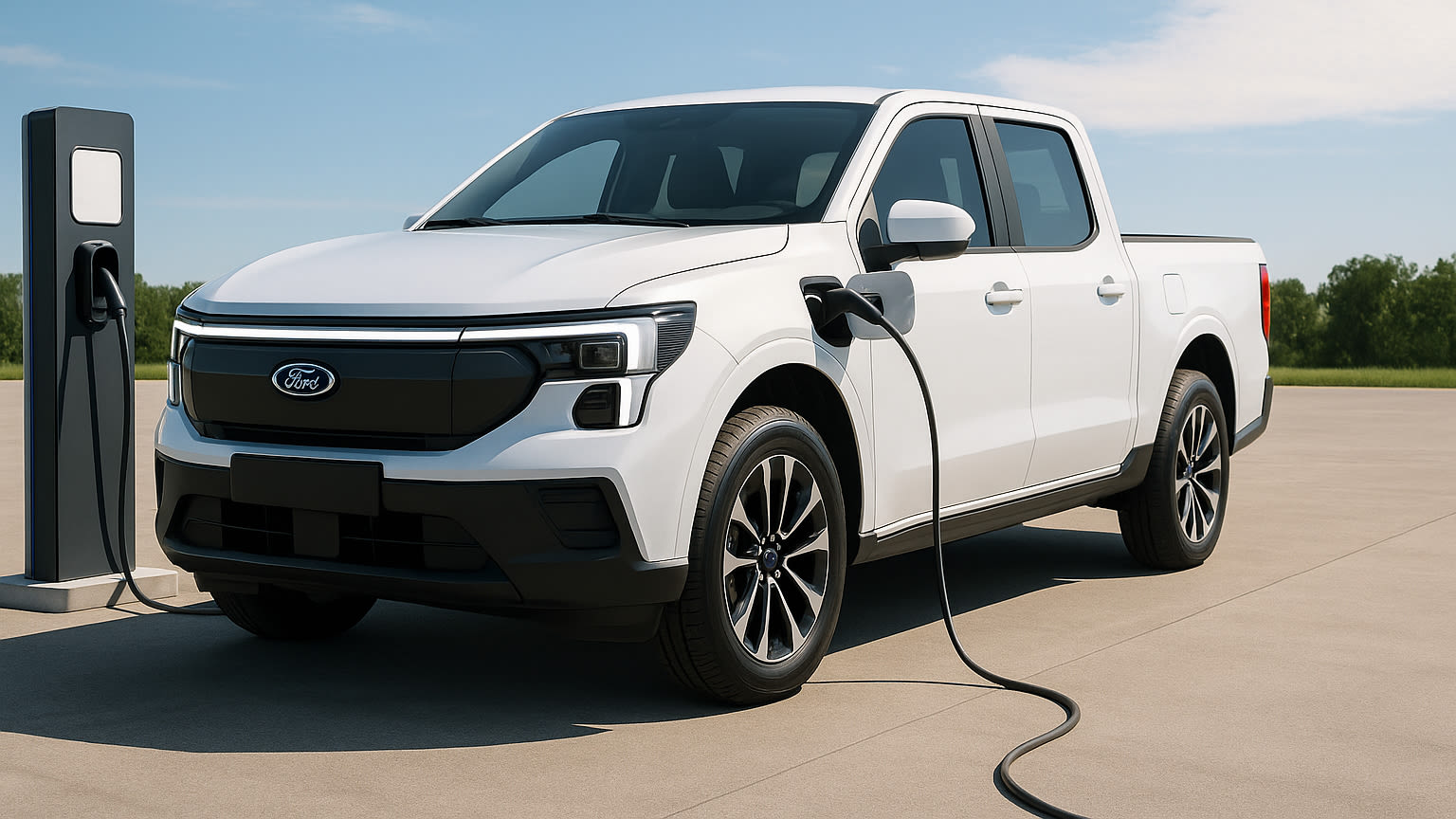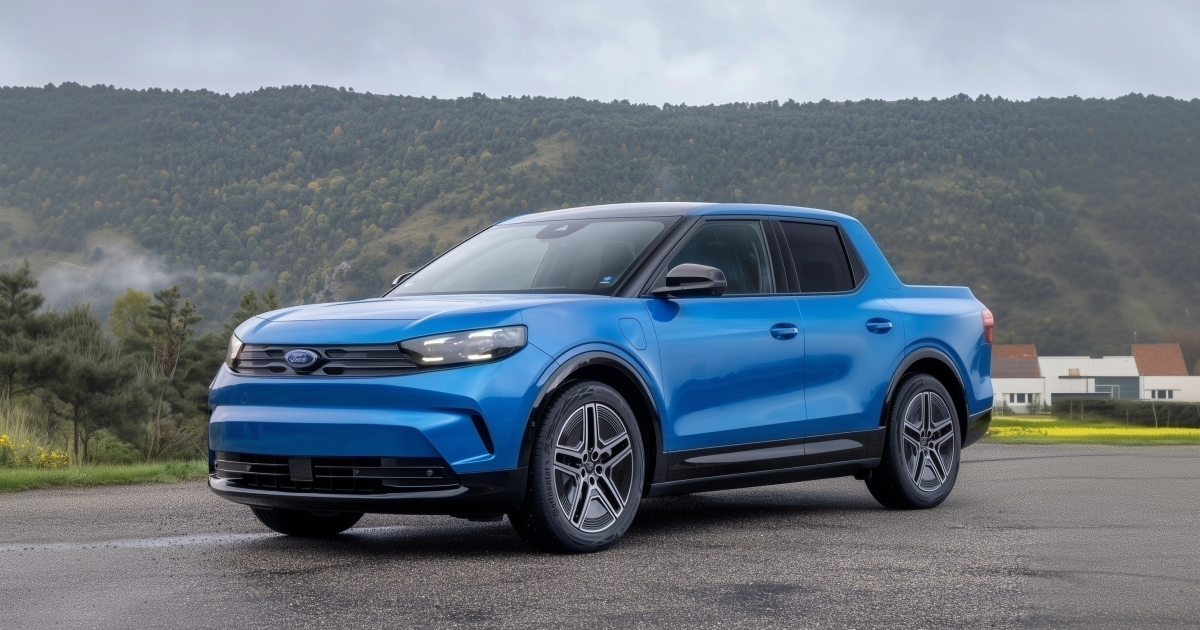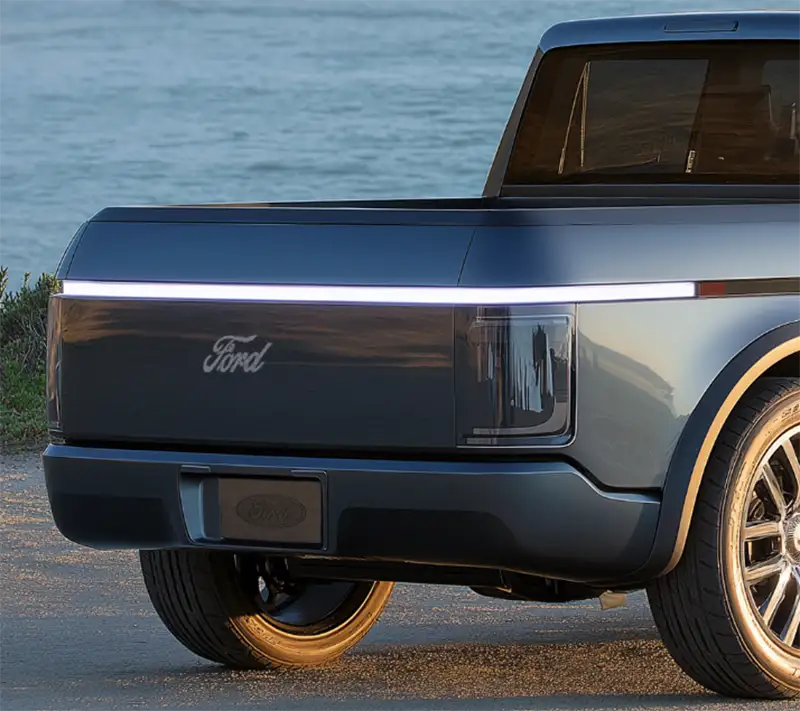
For decades, Detroit’s gospel was simple: the sedan is the soul of the American automaker—a rolling emblem of family values, commute efficiency, and brand loyalty. Ford shattered that scripture with a blunt-force decision to cull nearly every car in its lineup, betting the farm on trucks, SUVs, and the unshakeable hunch that Americans would rather haul mulch than hug apexes. It looked like a retreat into cash-cow conservatism, a gamble that critics dismissed as surrender. But the recent chatter swirling around a $30,000 Fathom EV truck reveals the truth: Ford’s strategy was never about clinging to the past. It was about repositioning the entire company for a future where the internal combustion engine is a footnote, and the electric pickup is the new family sedan.
The news cycle this week has been a whirlwind of Blue Oval noise, from Maverick price cuts on its most exciting trims to a new president for Ford Energy with a power company pedigree. But the most telling signal comes from MotorTrend’s deep dive into what features Ford might cram into that sub-$30K Fathom EV truck—a vehicle that, if executed properly, could redefine the entry point for electric ownership. The Fathom isn’t just another EV; it’s a calculated move to undercut the Tesla Cybertruck’s absurdist pricing and the Rivian R1T’s luxury pretensions. At that price point, Ford isn’t selling a truck. It’s selling a gateway drug to the Blue Oval’s entire electrified ecosystem—a strategy that hinges on the realization that the average buyer doesn’t want a stripped-down econobox. They want a vehicle that looks like it can conquer a job site on Monday and a trailhead on Saturday, without demanding a six-figure salary.
The Maverick Playbook, Writ Large
Let’s be clear about what this means for the automotive landscape. The Maverick already proved that Ford understands the value of a low-cost, high-utility vehicle; the hybrid’s base price staying put while other trims get slashed is a masterclass in market psychology. But the Fathom EV truck is a different beast entirely. It’s not a compact car with a truck bed—it’s a full-size proposition at a mid-size price. The clues MotorTrend uncovered suggest Ford is going to strip away the gimmicks: no four-wheel steering, no tank-turn theatrics, no retractable tonneau covers that cost more than a used Honda Civic. Instead, the focus lands on the essentials—range, payload, towing, and a cabin that doesn’t feel like a penalty box. That’s the real play here. Ford isn’t trying to out-tech Silicon Valley; it’s trying to out-value everyone.
The timing is impeccable, too. As the broader market grapples with interest rates and a softening EV demand curve, a $30K Fathom would sit in a sweet spot that no legacy automaker currently occupies. The Chevrolet Silverado EV starts at nearly double that. The base F-150 Lightning, even with federal incentives, still hovers in the mid-$40K range for a decent configuration. The Fathom would be the first electric truck that a middle-class family could realistically finance without stretching their monthly budget into the danger zone. It’s the return of the affordable workhorse, but with a lithium-ion heart. And Ford knows that the folks who bought the original F-150 in 1975 aren’t the target audience—it’s their grandchildren, who grew up on smartphones and care more about software updates than valve timing.
Beyond the Truck: An Energy Play
Of course, this isn’t just about the Fathom. The broader news around Ford’s energy division and the appointment of a new president with a power company background signals that the company is thinking beyond the vehicle itself. An EV truck is only as good as the grid that charges it, and Ford is positioning itself to be a player in the energy management space—home backup, vehicle-to-grid, and solar integration. The Fathom at $30K isn’t just a product; it’s a gateway to a subscription of power services, a futuristic play that turns a depreciating asset into a revenue stream. That’s the kind of forward-thinking that the old sedan-centric Ford could never have pulled off.
Meanwhile, the Raptor T1+ continues to dominate the Dakar Rally and Vegas-to-Reno desert races, proving that Ford’s off-road credibility remains intact. The Mustang, despite the endless fan fiction about a mid-engine supercar, remains a halo product that will never return to four-door duty. Ford has accepted that the four-door sedan is a museum piece, and in its place, it’s building a lineup that’s arguably more relevant to the American psyche: rugged, electrified, and affordable.
The Verdict
The Fathom EV truck is the clearest expression of that philosophy yet. It’s not a compromise. It’s a declaration that the future of the American family vehicle is not a sedan, not an SUV, but a truck that doesn’t require a second mortgage. Ford has traded the rearview mirror for a windshield view, betting that the heart of the heartland beats electric—and that the people who drive it want capability, not complexity. If the Fathom delivers on its promise, it won’t just be a product launch. It’ll be the moment the Blue Oval stops apologizing for killing the sedan and starts celebrating what it built in its place. And that’s a bet worth watching.