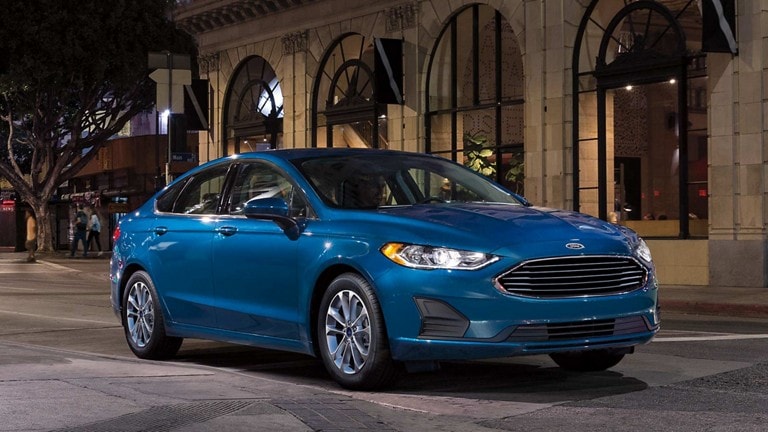
Every few months, the same wistful fantasy ripples through the automotive internet: bring back the Ford sedan. Resurrect the Taurus. Revive the Fusion. Give us a four-door that isn't a crossover in disguise. It's an appealing daydream — and a dangerous one, because it mistakes nostalgia for strategy at precisely the moment Ford needs clarity about what it actually is.
The evidence of Ford's true center of gravity lives everywhere except the showroom sedans that no longer exist. This week's news cycle reads like a portrait of a company defined by trucks, performance, and industrial muscle — not by the family four-door it abandoned.
The Truck Wars Are the Real Battlefield
Start with the F-150, still trading blows with the Ram 1500 Warlock in head-to-head comparisons. The outcome remains genuinely contested — a reminder that Ford's crown jewel is under constant siege, not resting comfortably on its throne.
Then consider the heavier artillery. GM has confirmed it is developing an 8.3-liter Duramax turbodiesel V8 explicitly aimed at hunting the Super Duty. That's a shot across the bow, and it reframes the heavy-duty wars as an arms race Ford cannot afford to lose by looking backward.
This is the real story. Ford's identity is being contested in the trenches of pickup dominance, in the electrification of its truck line with the coming Fathom, and on the racetrack, where the GTD PRO program outlasted Chevrolet in an epic battle at Indianapolis. These are the arenas where the brand's future is being written. A revived sedan would contribute nothing to any of them.
Heritage Is Not Demand
The nostalgia impulse is understandable. Sedans carry emotional weight, and Ford built some genuinely great ones. But the market spoke, and Ford listened — perhaps too eagerly, killing its car lineup while rivals hedged.
Now the temptation is to read every Gran Torino revival concept or 1968 Shelby Mustang GT500KR auction listing as a signal that the sedan should return. It isn't. Those stories are about heritage, not demand. Confusing the two is how brands lose their way — mistaking the warm glow of memory for the cold arithmetic of the showroom.
Coherence, Not Body Styles
There is a deeper problem the sedan fixation obscures. Ford's identity crisis isn't about body styles; it's about coherence. The company wants to be a truck leader, an EV pioneer, a performance icon, and a blue-collar everyman brand all at once. Those ambitions don't always pull in the same direction.
Investing in Kentucky manufacturing growth and deepening its industrial footprint is a bet on trucks and utility vehicles, not on a romantic return to the family four-door. Every dollar spent chasing sedan nostalgia is a dollar not spent defending the F-150 against a resurgent Ram, or the Super Duty against GM's looming diesel monster.
The cultural noise around the brand only muddies the water further. Headlines about Harrison Ford's on-set moods or a decertification petition at a Henry Ford health facility have nothing to do with product strategy — yet they illustrate how diffuse the "Ford" name has become. The company cannot afford a diffuse identity when its rivals are sharpening their weapons with singular focus.
A Decision, Not a Sedan
What Ford needs is not a sedan. It needs a decision. It needs to recommit fully to the segments where it already wins and where the margins actually live. The Mustang franchise, the truck dynasty, the electrified future, the racing pedigree — these are the pillars. The sedan is a ghost, and chasing ghosts is a luxury a company fighting on this many fronts cannot afford.
Nostalgia feels like heritage. In Ford's case, it is closer to a distraction — one that keeps the brand looking in the rearview mirror while the competition pulls ahead.