For more than a century, Fiat built its identity on the humble three-box sedan. From the original 124 to the soberly handsome Linea, the Italian marque understood that for vast swathes of the world — Latin America, the Middle East, Southern Europe — a practical booted car was the price of entry into middle-class motoring.
That era is now over, and Fiat has finally stopped pretending otherwise. The clearest evidence isn't a press release announcing a discontinuation. It's the Multiplay, the concept Stellantis unveiled this week under the banner of "challenging conventions to transform mobility, the FIAT way." Read the subtext and you'll find a brand that has quietly walked away from the sedan entirely.
A Concept That Refuses to Wear a Boot
The Multiplay is many things — a design manifesto, a modular people-mover, a statement of intent — but a saloon it is not. It leans into the boxy, utilitarian, family-first packaging that has become Fiat's de facto house style, the same philosophy that turned the Panda into an institution and the 500 into a fashion object.
What it conspicuously lacks is a boot. There is no three-box silhouette, no chrome-trimmed trunk lid, no pretence of executive respectability. Fiat has decided that the future of affordable motoring is tall, flexible, and unapologetically practical — and that the sedan, once the backbone of its global lineup, no longer earns a place in that vision.
The Lineup Already Told Us
This shouldn't surprise anyone paying attention. Look at what Fiat actually sells today. The Tipo, the brand's last true mainstream sedan in Europe, has been allowed to wither into a footnote, its hatchback sibling doing the heavy lifting while the saloon variant fades from showrooms.
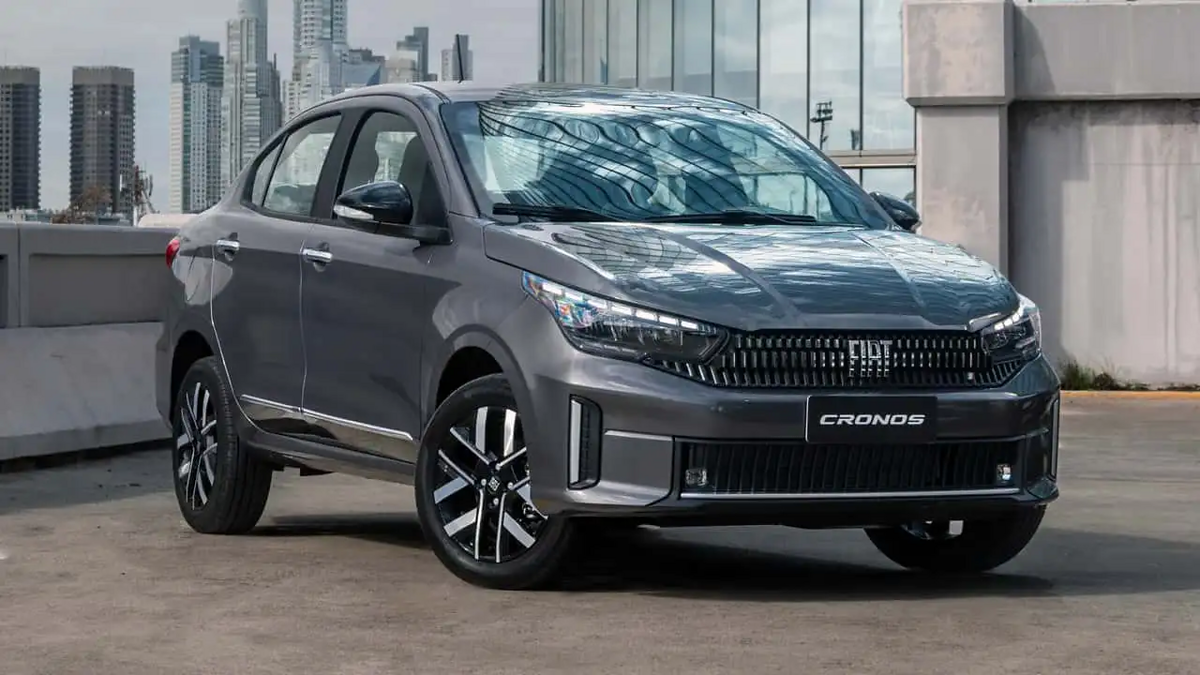
In South America, where the Cronos soldiers on, the car survives less as a strategic pillar and more as a regional necessity, a legacy product kept alive by local demand rather than corporate conviction. Meanwhile, every genuinely new idea emerging from Turin — the Topolino micro-quadricycle now disrupting the American golf-cart market, the reworked Topolino racing barchetta, the revived 500 Jolly yachting concept — points in the opposite direction. Fiat is racing toward small, characterful, emotionally charged mobility, not the anonymous family four-door.
The Economics of Walking Away
The economics explain the retreat. Sedans occupy the most brutally competitive, least profitable corner of the mass market, squeezed from above by crossovers and from below by hatchbacks that offer nearly the same space for less money.
For a brand like Fiat, which cannot out-engineer the Germans or out-scale the Japanese, fighting for sedan share is a losing game. Far smarter to own the cheap crossover hatchback space, as the rebadged and repositioned model making headlines this week demonstrates, and to chase the margins that come with personality rather than volume. The 500, after all, now commands six-figure sums in certain guises — proof that Fiat's future value lies in desirability, not dutiful practicality.
Heritage Isn't a Product Plan
There's a certain irony in the timing. Fiat's heritage is steeped in the sedan, and the 131 Abarth — celebrated this month with a 50th-anniversary chronograph — remains one of the great rally saloons. But nostalgia is not a product plan.
The Multiplay signals that Fiat has chosen its lane: modular, tall, flexible, and utterly indifferent to the three-box template that defined its first hundred years. The sedan didn't die with a bang. It died with a concept car that simply didn't bother to include one.
For a century, Fiat's genius was reading what ordinary families actually needed and selling it back to them with just enough charm to make the compromise feel like a choice. The sedan was that answer for generations. The Multiplay is the same instinct pointed in a new direction — taller, stranger, more flexible, and built for a market that no longer measures respectability in cubic feet of trunk space. The badge hasn't changed. The philosophy behind it just finally caught up with the times.