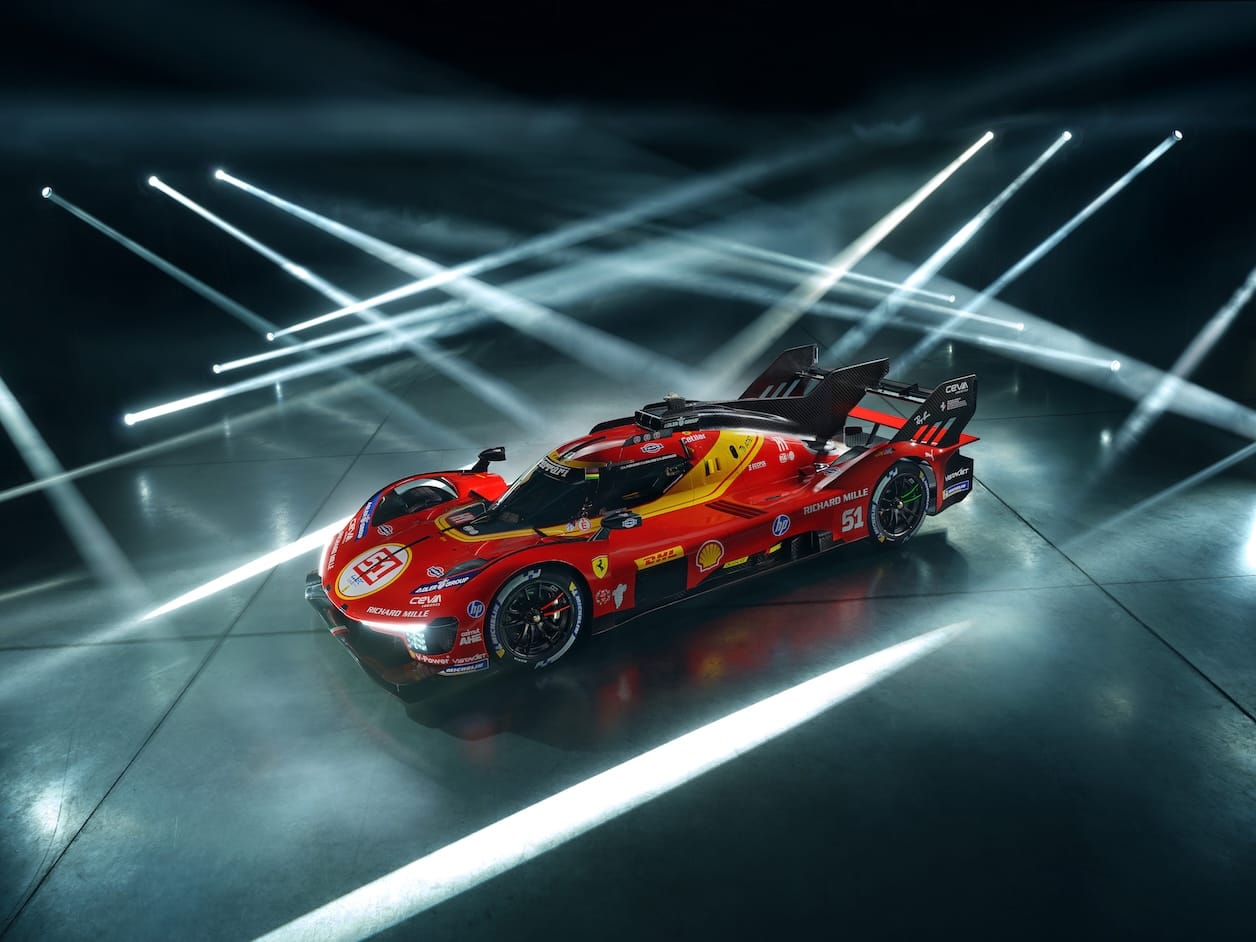
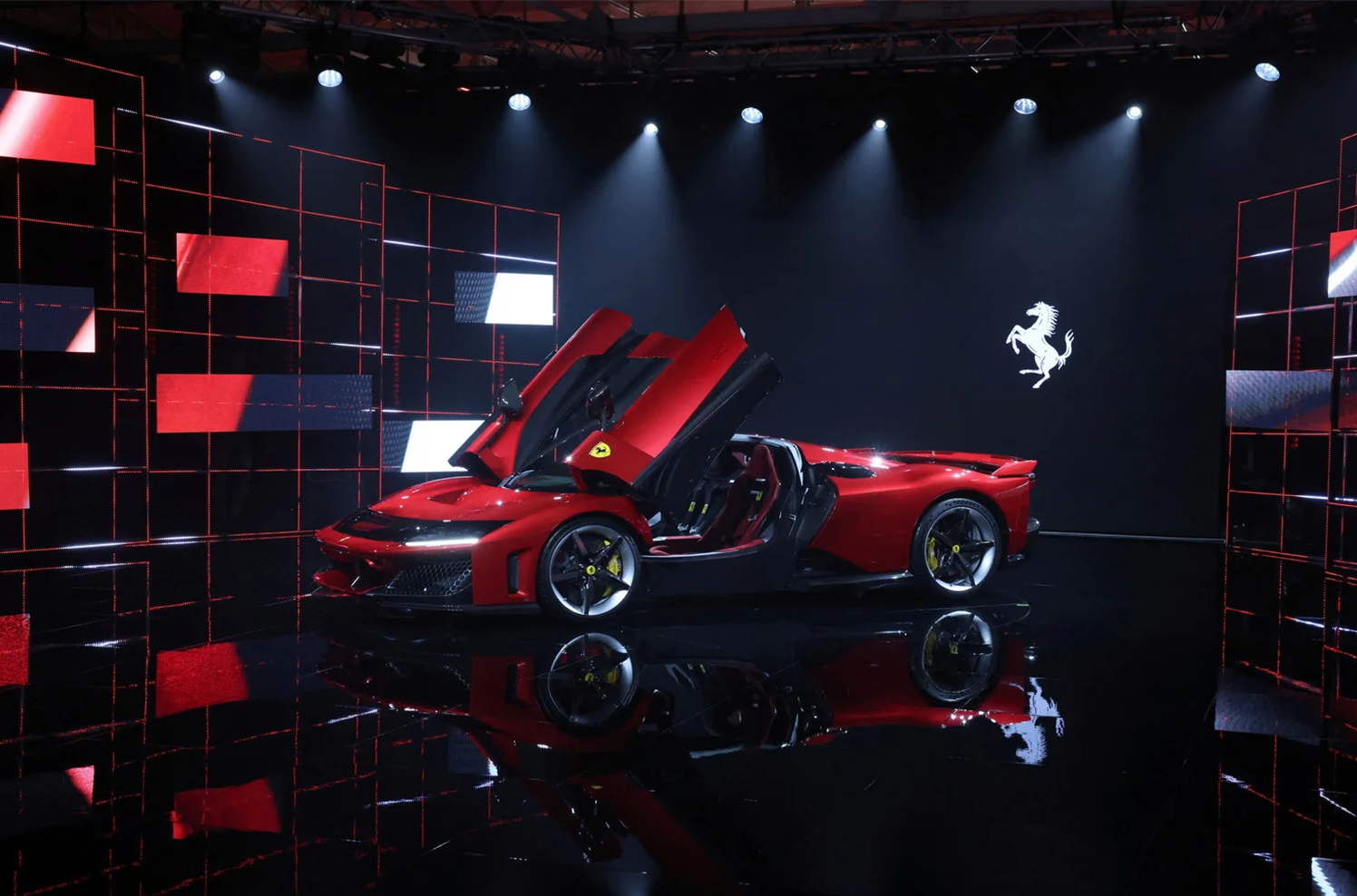
There was a time when Ferrari's worth was measured in lap times and scarlet legend. Today it is measured in something far more unforgiving: market capitalisation. With reports circulating that the marque's value is approaching a jaw-dropping $20 billion, the Prancing Horse finds itself in rarefied air—worth more than many of the industrial giants that once dwarfed it. That number, seductive and dangerous in equal measure, is quietly redrawing the blueprint for every supercar Maranello chooses to build.
For enthusiasts, the figure is more than a headline. It is the invisible hand behind the product plan—the reason the configurator matters as much as the crankshaft, and the reason the next decade of Ferrari will be shaped as much by shareholders as by stylists.
Scarcity as Strategy
The first consequence is scarcity as strategy. A company valued at $20 billion cannot afford to be a volume manufacturer, and to its credit, Ferrari has no intention of becoming one. Every additional unit sold dilutes the exclusivity that underpins both the sticker price and the share price. This is why the modern product plan reads like a carefully curated gallery rather than a production schedule: the Icona series, the Supercars like the SF90 and its successors, and the forthcoming electric Luce, each occupying a deliberately narrow niche. The valuation has turned restraint into a discipline—and a financial imperative.
Monetising Every Contact Point
Yet growth must come from somewhere, and the market's expectations are relentless. The answer, increasingly, is personalisation. Ferrari's extraordinary margins owe less to the base price of a 296 GTB than to the tailoring lavished upon it—the bespoke liveries, the heritage leathers, the carbon fibre specified at the configurator. As the valuation climbs, so does the pressure to monetise every point of contact with the customer. The supercar itself becomes a platform for a broader luxury ecosystem, and the strategy shifts from selling cars to cultivating collectors.
The Racing Ledger
There is, of course, a motorsport dimension that cannot be ignored, for Ferrari remains the only team to have competed in every Formula 1 season since the championship's inception. The recent United States Grand Prix laid bare the tension at the heart of this dual existence: Fred Vasseur's admission of two costly moments that denied a double podium, and analysis suggesting the US upgrade package exposed where the car remains lacking. Charles Leclerc's personal circumstances even prompted speculation about reserve drivers—a reminder that in the modern era, the racing team is both sporting institution and shareholder asset. Every strategic call, from tyre choice to driver succession, now carries an implicit line on the balance sheet.
Heritage as Capital
The valuation has also sharpened Ferrari's approach to its own history. The reverence for models like the 365 GTC/4—celebrated as far more than a discount Daytona—and the cottage industry of tributes such as the exquisite 308 reimagining demonstrate that heritage is not nostalgia but capital. Limited-run revivals and certified pre-owned programmes monetise the past with the same precision applied to the present. A company worth $20 billion understands that its archives are as valuable as its assembly lines.
Perhaps most telling is the balancing act embodied by the electric Luce. Here is a marque whose identity is fused with the sound and fury of the combustion engine, preparing to electrify without alienating the faithful. The valuation demands growth into new markets and new technologies; the brand demands that growth never feel like dilution. It is a tightrope walk worthy of the company's most celebrated drivers, and one that will define the next decade as surely as any championship.
What emerges is a Ferrari that is no longer merely a carmaker but a luxury house with a racing habit—publicly traded, fiercely guarded, and answerable to investors who have never smelled a cold-start V12 on a winter morning. The $20 billion figure is not an end point but a mandate. It tells Maranello that scarcity must be engineered, heritage must be harvested, and every supercar must justify not only its own price but its place in a portfolio scrutinised by the world's most demanding shareholders. The Prancing Horse still gallops, but it now runs on a track measured in basis points as well as lap times—and the strategy underwriting its stride has been rewritten accordingly.