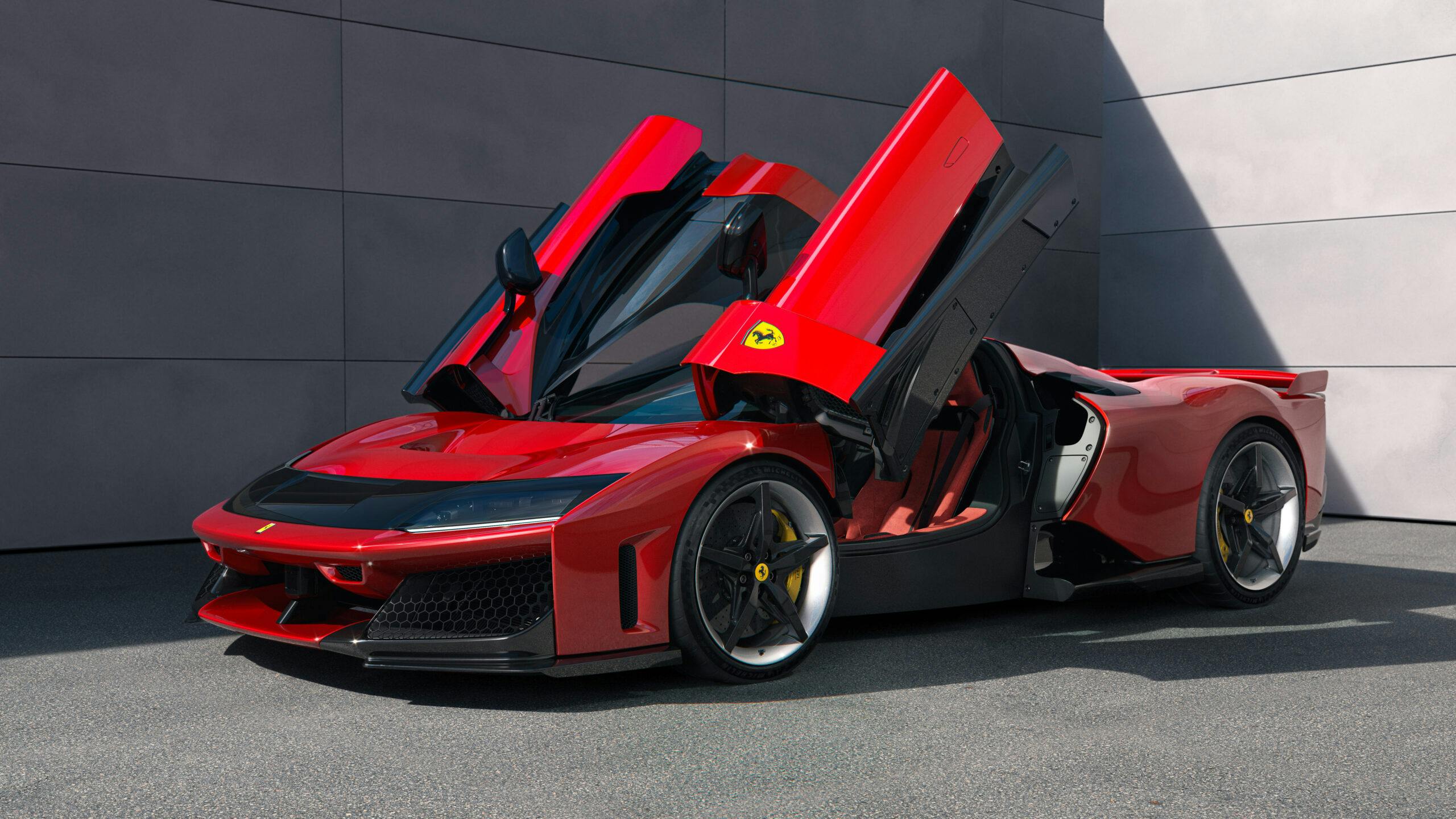
For nearly eight decades, Ferrari has been defined by a single, intoxicating proposition: the marriage of combustion and asphalt, the alchemy by which Maranello transforms petrol into emotion. Every prancing horse that rolls out of the gates at Via Abetone Inferiore is a declaration that speed, sculpted in scarlet, is an art form. And yet the most audacious engineering statement the company has made in years will never touch a road. It will not lap Fiorano, will not thunder down the straight at Monza, and will not be measured in the zero-to-sixty sprint. It will fly across the water.
The project is called Hypersail, and it represents Ferrari's first serious foray into the world of competitive sailing—a realm as technically unforgiving and aerodynamically obsessive as Formula One itself. The company recently unveiled the completed hull of the vessel and, with it, the suite of technologies that will, in Ferrari's own words, make the boat fly. That phrasing is not marketing hyperbole. It is a literal description of the hydrofoil architecture that lifts the craft clear of the water's surface, trading buoyancy for pure aerodynamic and hydrodynamic efficiency. The parallels to Ferrari's racing DNA are not incidental; they are the entire point.
Weaponising Physics, Not Just Building Cars
What makes Hypersail so compelling as a piece of brand storytelling is the way it reframes what Ferrari actually is. We tend to think of the marque as a manufacturer of cars, but that has always been a partial truth. Ferrari is, at its core, a company that weaponises physics—a place where wind tunnels, composite laboratories, and simulation departments exist to shave tenths of a second from a lap.
The transition from a chassis that hugs the tarmac to a hull that rides above the waves is less a departure than a lateral move. The same obsession with downforce, drag reduction, and structural rigidity applies. The same engineers who agonise over the aerodynamic balance of an SF-25 single-seater can turn their attention to the flow of air over a sail and the lift generated beneath a foiling hull. The medium changes; the mentality does not.
A Crowded Moment, A Longer Ambition
This is, of course, a crowded moment for the Ferrari narrative. The Formula One team is in the throes of a significant development push, with major upgrade packages expected to reshape its competitiveness against rivals—a storyline that dominates the motorsport press and keeps the tifosi in a state of perpetual, hopeful agitation. Meanwhile, the commercial machine grinds on: buyback programmes, expansion into new markets, and a cultural footprint so wide that a K-pop idol's behind-the-scenes photographs from the paddock can send the internet into a frenzy.
Ferrari, in other words, has no shortage of distractions. That it would nonetheless commit serious resources to a sailing project speaks to a longer, more strategic ambition.
Future-Proofing an Identity
The Hypersail venture is best understood as Ferrari's attempt to future-proof its identity. The automotive world is being dragged, however reluctantly, toward electrification and autonomy—territories where the romance of the internal combustion engine offers diminishing returns. By planting a flag in elite sailing, Ferrari stakes a claim to a broader definition of performance luxury, one that transcends the automobile without abandoning the principles that built it.
It is a hedge against irrelevance, but a beautifully conceived one. The boat is not a vanity project or a corporate yacht with a badge slapped on the transom; it is a genuine engineering platform, developed with the rigour the brand reserves for its racing programmes, and intended to compete at the highest level of the sport.
Racing Improves the Breed—On Water, Too
There is something almost poetic in the symmetry. Enzo Ferrari built his empire on the notion that racing improves the breed—that the crucible of competition forges technology that eventually reaches the customer. Hypersail extends that creed beyond the garage. The research into lightweight composites, advanced aerodynamics, and energy management that a foiling racing yacht demands will inevitably feed back into the road cars, just as F1 telemetry and hybrid systems already have.
The prancing horse, it turns out, is equally at home rearing above the surf as it is galloping across the tarmac. And for a brand perpetually in search of the next frontier, the open ocean may prove to be the most radical proving ground of all.