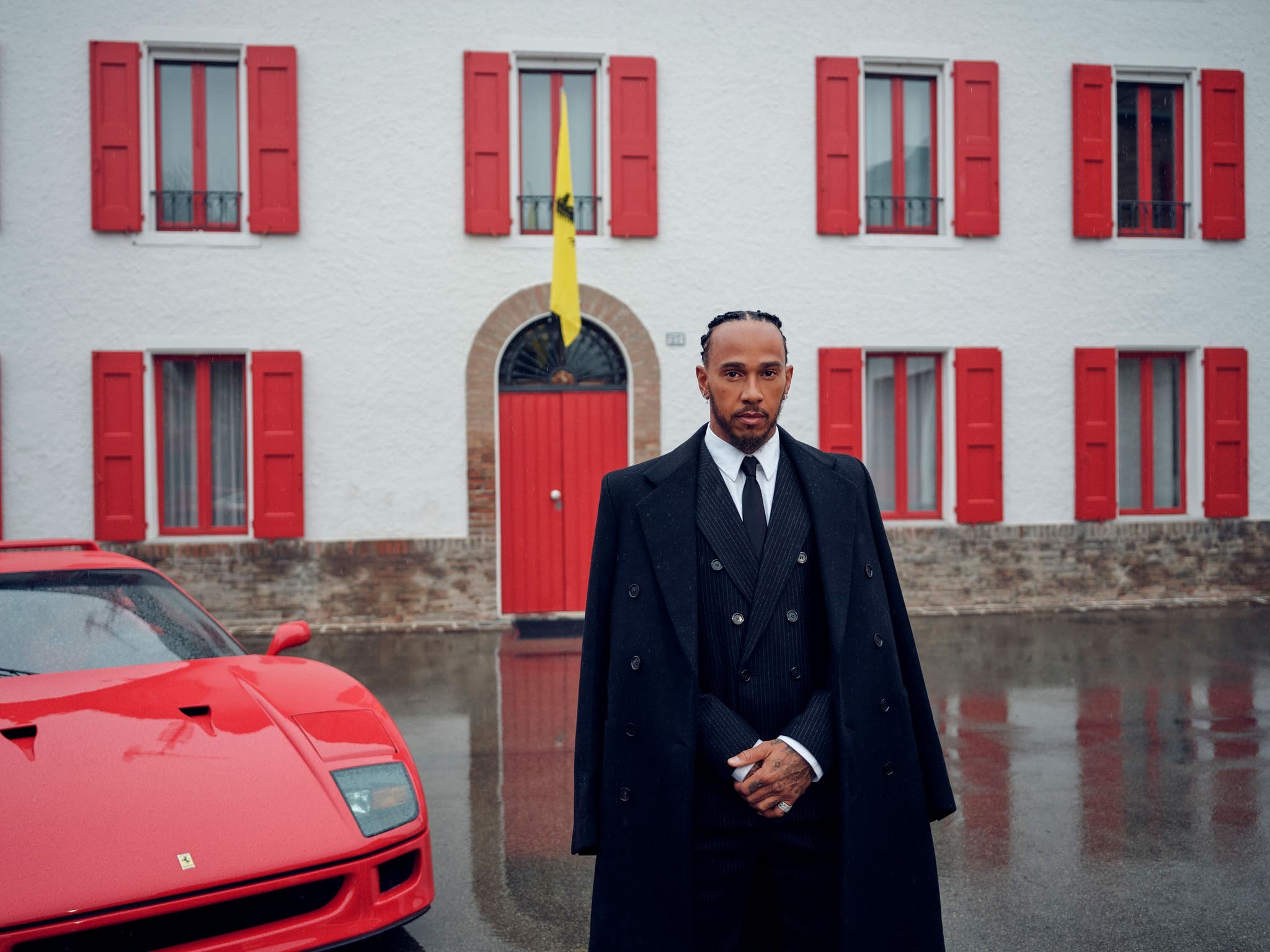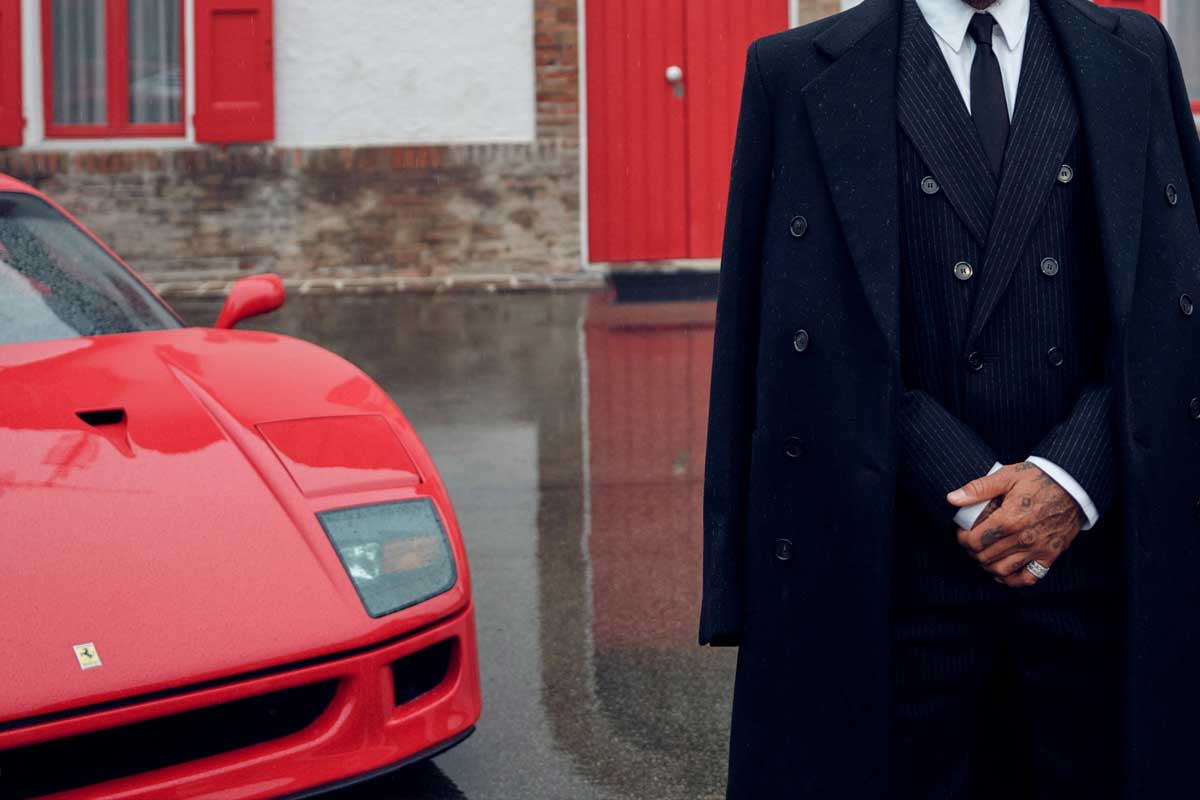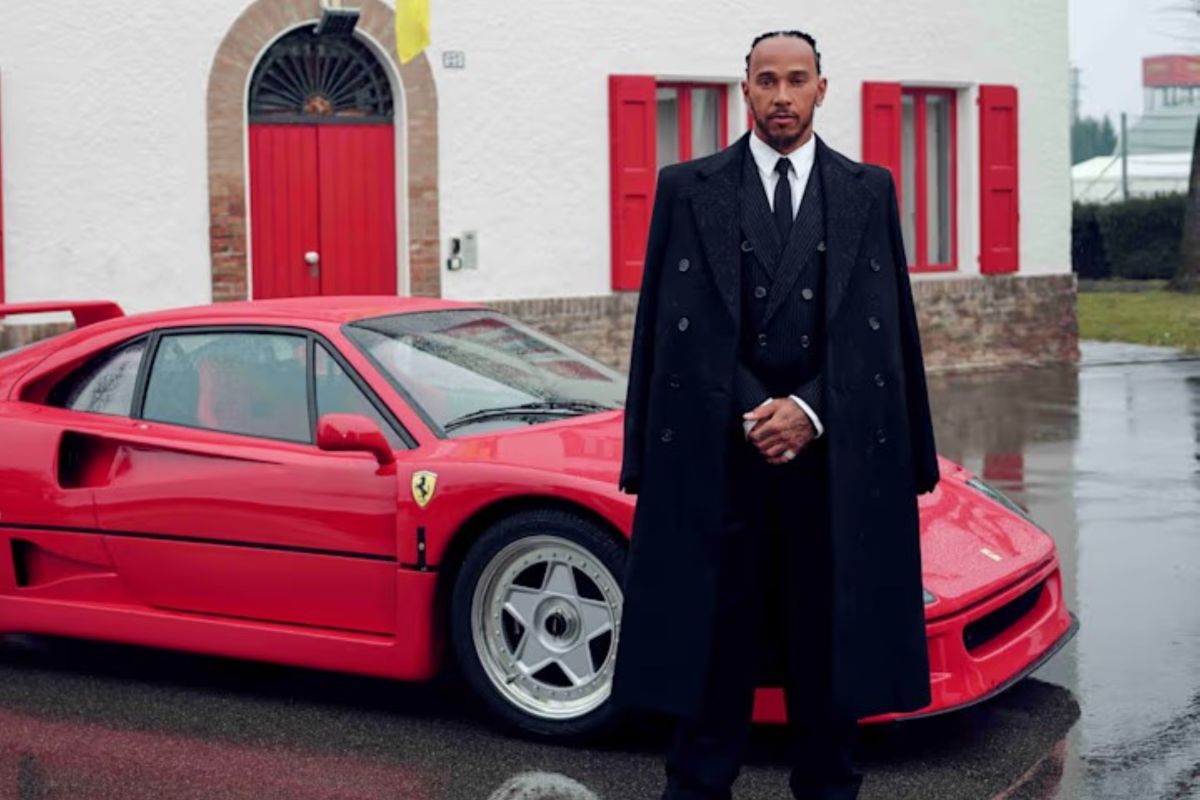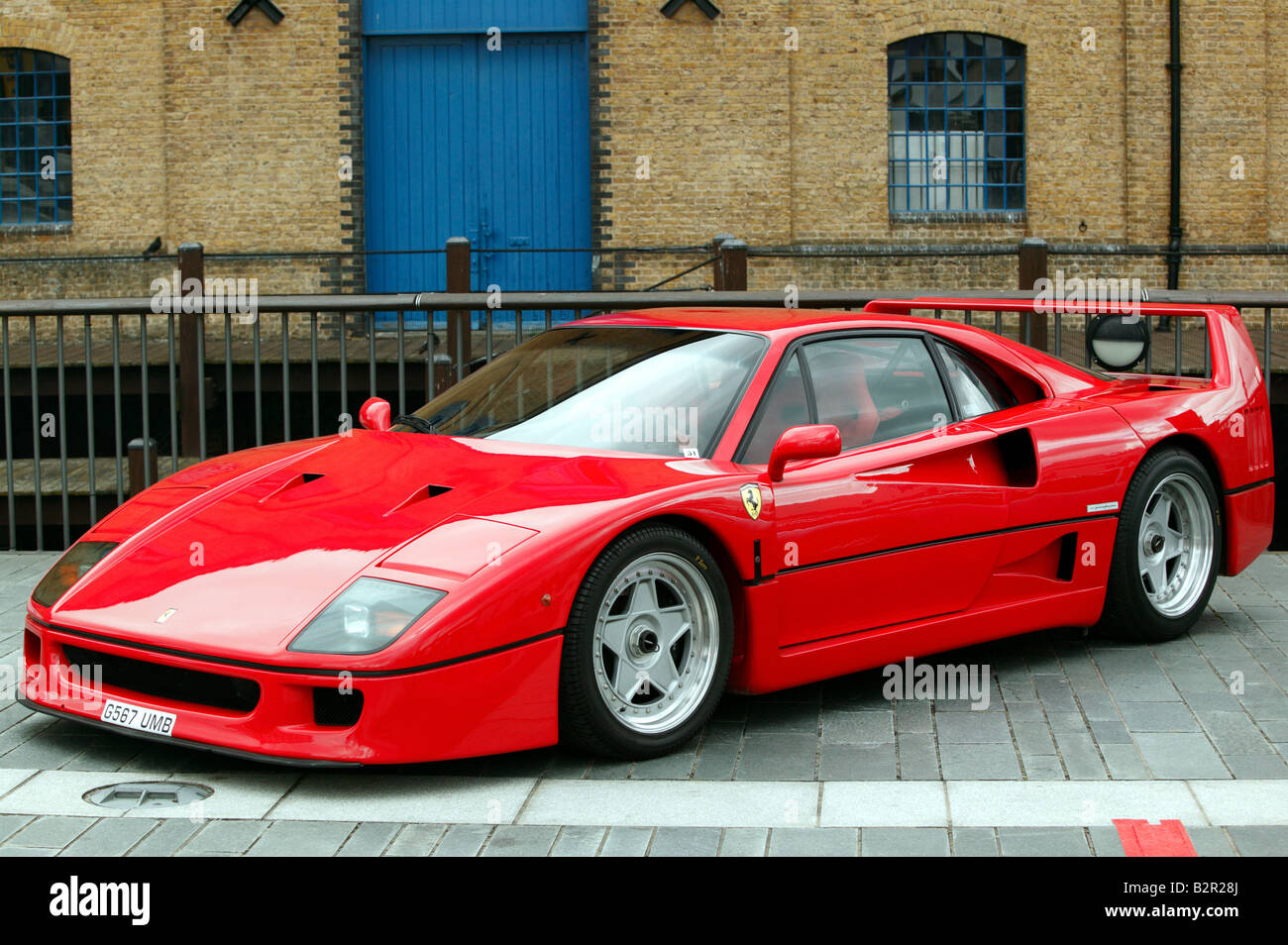
Some barn finds are lucky. This one borders on the miraculous. When Lewis Hamilton revealed the full restoration of his Ferrari F40 — a car showing just 43 miles from new — the motoring world did more than admire a pristine supercar. It watched the opening statement of a new era in Ferrari collecting, one in which the marque's most famous modern owner is quietly rewriting the rules of what these machines are actually for.
Because a 43-mile F40 isn't just rare. It's a paradox. Launched in 1987 as the last Ferrari personally approved by Enzo himself, the F40 was never designed to be a garage ornament. It was a weapon.
A Weapon, Not an Ornament
Start with the numbers, because they still land like a slap. 478 horsepower. Twin turbos. No ABS. No power steering. A kerb weight that made the whole thing feel less like a car and more like a loaded spring waiting to uncoil. The F40 didn't cosset its driver — it challenged him. It rewarded commitment and punished hesitation, and it asked for a level of engagement that modern supercars have spent three decades engineering out of the experience.
The vast majority of F40s were driven hard, raced, crashed, rebuilt, and cherished in motion. That was the point. To find one that has barely turned its wheels is to find a machine suspended in time — and to restore it, rather than simply preserve it under glass, is a statement of intent. Hamilton didn't lock it away in a climate-controlled vault. He made it whole again, documented the process, and shared it with the world.
That is the behaviour not of a speculator, but of a custodian.
Pushing Back Against the Trophy Trade
This matters, because Ferrari collecting has spent two decades drifting toward the financialised and the sterile. Low-mileage cars became trophies, traded like equities, their worth measured in auction premiums rather than driving memories. The F40 sits at the very centre of that culture, routinely commanding seven figures precisely because so few survive unmolested.
Hamilton's restoration pushes back against the logic that originality-for-profit trumps originality-for-use. His F40 is still astonishingly original. Still extraordinarily low-mileage. But it has been returned to a condition where it can exist as a functioning automobile rather than a static asset — a car again, not a certificate.
The Timing Says Everything
The timing is revealing. Ferrari is in the midst of its most expansive transformation in decades — an era defined by the polarising Purosangue, the forthcoming Luce EV whose design Jony Ive has publicly defended, and a Formula 1 programme in which Hamilton himself is now embedded.
On track, he and Charles Leclerc have been salvaging results in a car that isn't always the fastest, and Hamilton has been candid that Ferrari must close a power unit gap before 2027. Off track, he is doing something subtler: modelling a relationship with Ferrari's heritage that treats it as living culture rather than dead capital.
That the restoration arrives alongside the Purosangue Handling Speciale — a sharper, louder version of Maranello's controversial SUV — is a coincidence worth noting. Ferrari is simultaneously pushing into new segments and reasserting its foundational myths. Hamilton, uniquely, straddles both. He drives for the modern team and curates the historic one, and his F40 sits at the intersection of those identities.
A Template for the Next Generation
For collectors, the signal is clear. The next generation of significant Ferraris won't be defined solely by mileage, documentation, or auction provenance. They will be defined by stories of stewardship — cars that were saved, understood, and used as their makers intended.
A 43-mile F40 restored by the most famous driver of his generation is not merely a headline. It is a template.
Ferrari's collector era is changing, and the man who will shape its next chapter is already behind the wheel.