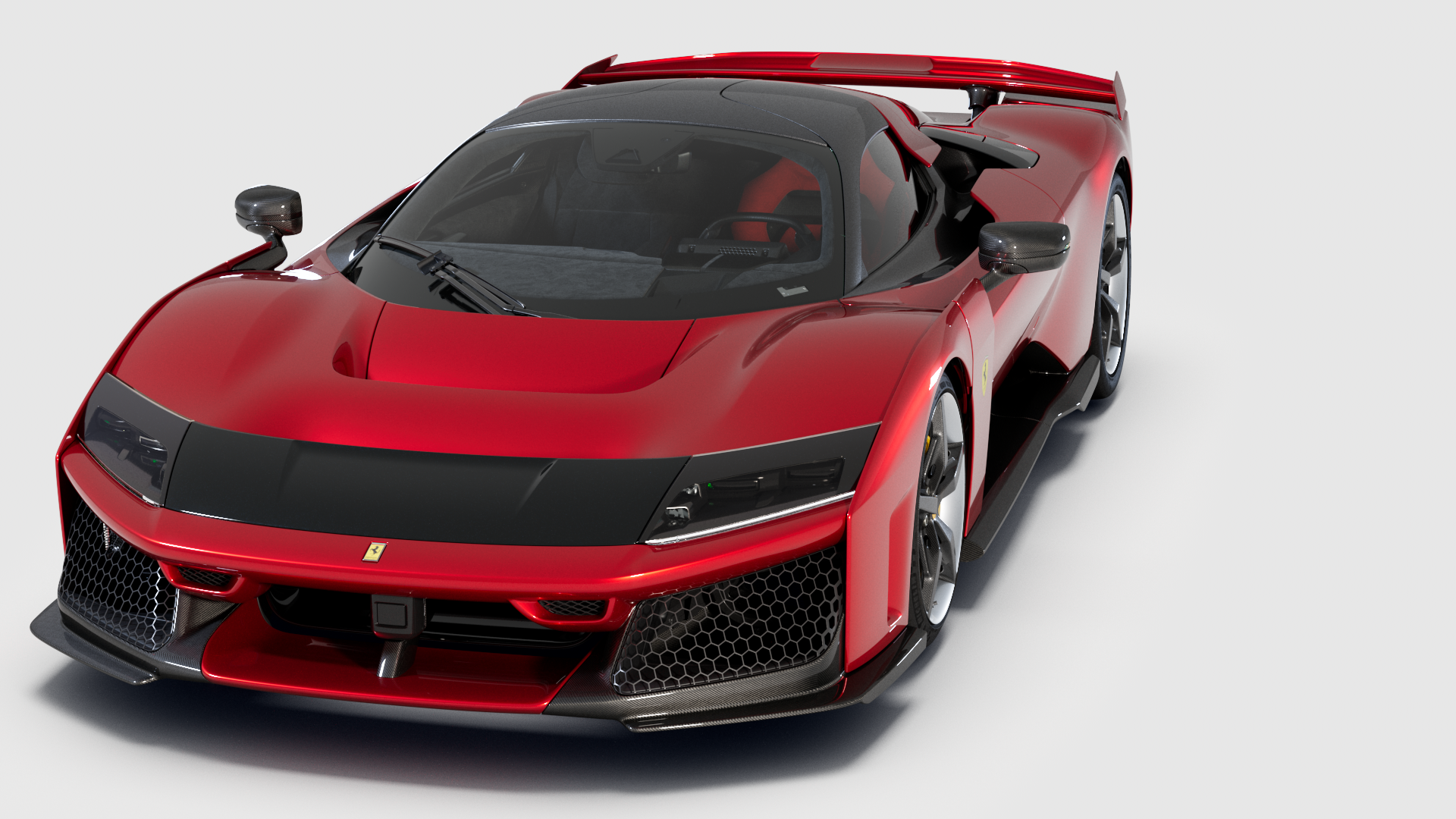
Supercars have always been measured in numbers, and the numbers attached to the Ferrari F80 are, by any honest reckoning, absurd. Nearly 1,200 horsepower from a hybridised V6. A claimed 0–100 km/h time that slips beneath the threshold of rational comprehension. Enough downforce to make a fast lap of Fiorano feel like a physics experiment conducted without permission.
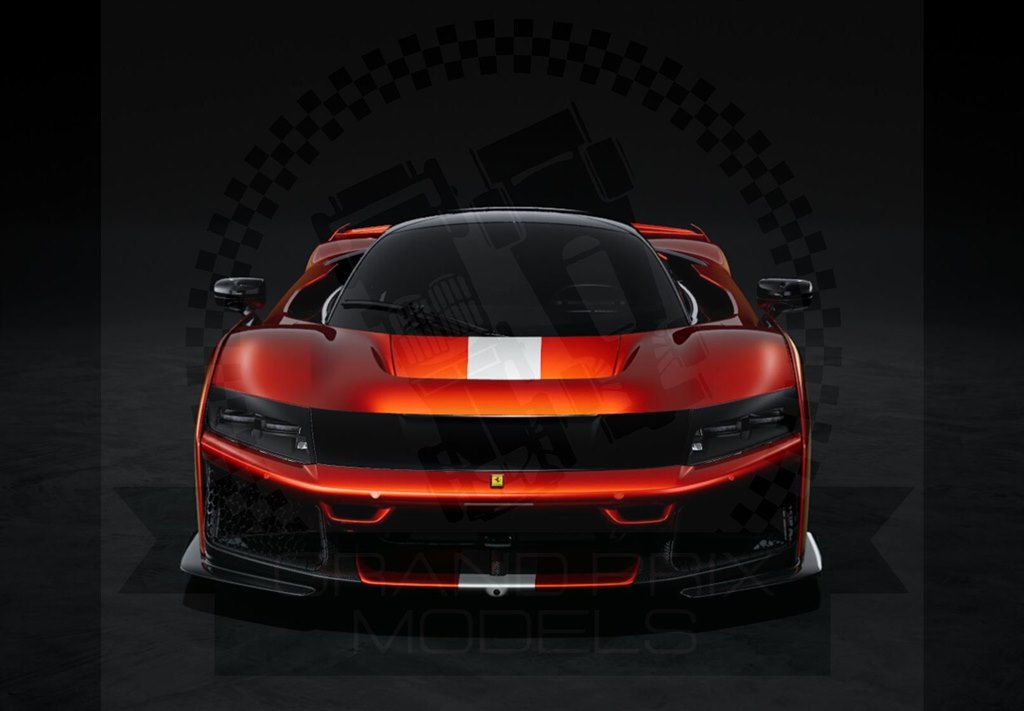
And yet the F80 that turned heads in London recently was not remarkable for any of that. It was remarkable because it was orange.
Not resale orange. Not heritage orange. Lucky Orange — a one-off specification, mixed for a single client, wrapped around Maranello's newest hypercar like a secret told in confidence. The spec was spotted in the wild, photographed, dissected and admired across every corner of the internet, and in doing so it quietly announced something the industry has been circling for years: at the very top of the market, specification has become the story. Speed is the price of entry. Rarity is the point.
A Tale of Two Ferraris
There is a useful irony here. In the same news cycle, Mercedes overtook Ferrari as Formula 1's most successful engine builder. Charles Leclerc was urging the Scuderia to bring upgrades to close a gap that had grown uncomfortable in Baku. And Ferrari's World Endurance Championship campaign at Fuji unravelled so completely that the team's own summary — "everything that could go wrong went wrong" — read like a haiku of despair.
On track, Ferrari is engaged in a relentless, public, numbers-driven war of milliseconds against rivals who are, this season, frequently winning it. On the road, the marque is playing an entirely different game, and playing it better than almost anyone.
The Canvas
The F80 is the perfect canvas for that game. It is a hypercar built in the lineage of the F40, the F50 and the LaFerrari — machines whose values are now governed less by lap times than by provenance and configuration. Every one of those cars was fast. The ones that command telephone-number prices today are the ones that were specified unusually, delivered to someone interesting, or finished in a colour nobody else had the nerve to choose.
The F80, arriving in an era when the entire production run is spoken for before the configurator goes live, simply formalises what was always true. The allocation is the commodity. The paint is the signature.
Why the Outlier Wins
This is not vanity for its own sake. It reflects a genuine shift in what ultra-wealthy collectors are buying. A generation of owners raised on auction results has learned that a Ferrari is not a depreciating indulgence but a store of value — and that within any given model, the outlier specs outperform. A standard car is a car. A Tailor Made car, built to a single client's taste through Maranello's bespoke programme, is a document. It carries a name, a correspondence, a set of choices that can never be repeated.
When the WSJ argues that the least expensive Ferrari is the one worth having, it is making the romantic version of this argument. The F80's Lucky Orange spec makes the financial one.
Exclusivity as Strategy
Ferrari understands this intimately, and it is why the company's future — electric Luce, hypercar, limited series, Icona — is being constructed around exclusivity rather than outright pace. The $40 million paid for a model of the brand's first EV tells you where the market's imagination currently lives. Not under the engine cover. In the specification sheet.
Which is not to say speed no longer matters. Ferrari will keep chasing lap times in F1 and at Le Mans, and it should. But the F80 in Lucky Orange offers a cleaner truth about the modern marque: the fastest car in the room is rarely the most wanted one. The one that exists exactly once always is.