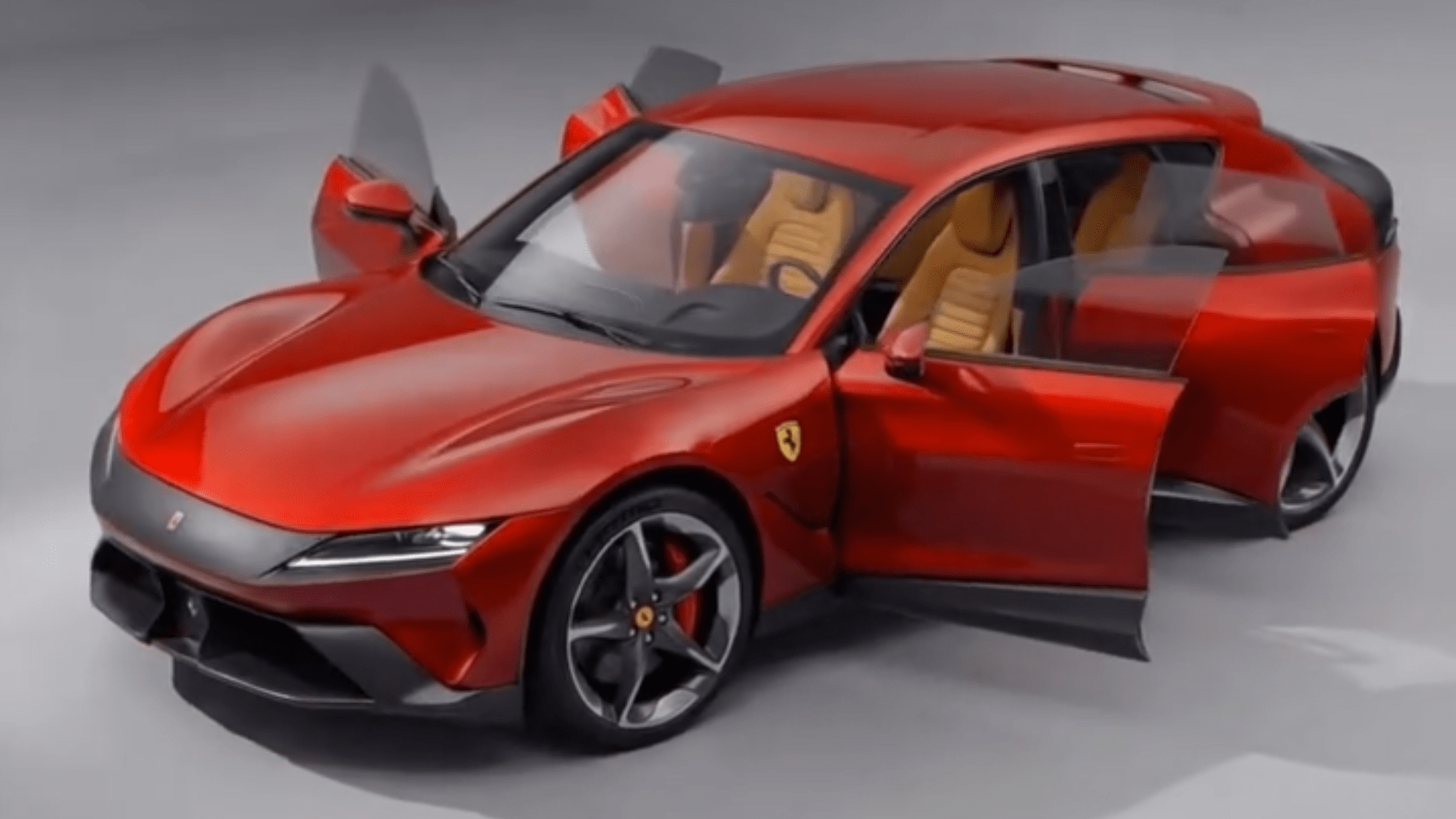
Ferrari has barely switched on the lights in its Maranello design studio, and already the vultures—sorry, the visionaries—are circling. The Luce, the brand’s first fully electric supercar, carries a $639,000 price tag and the weight of seventy years of internal combustion heritage on its silent shoulders. It’s the most controversial machine to wear the Prancing Horse since... well, ever. And before a single example has graced a collector’s garage, the aftermarket is sketching its own interpretation of what Maranello’s electric future should look like. The result? A fascinating collision between legacy, technology, and the unkillable human desire to make things louder—or at least, look like they should be.
Here’s the paradox that defines the modern exotic car ecosystem: when a manufacturer makes a seismic shift—especially one as profound as silencing the V12—the tuning houses don’t retreat. They sharpen their pencils. The Luce’s initial reveal drew a peculiar response from the faithful. The design is sleek, undeniably aerodynamic, and thoroughly modern. But there’s a smoothness to it, an almost organic restraint that reads a little too “EV generic” for a brand that built its reputation on visual violence. This is precisely where the aftermarket sees its opening.
Reclaiming Aggression in a Silent Era
The latest renderings emerging from the design underground are not subtle. They graft the razor-sharp intakes of the SF90 XX Stradale onto the Luce’s flanks, add splitter extensions that wouldn't look out of place on a Le Mans Hypercar, and replace the subtle rear diffuser with a carbon-fiber sculpture of theatrical intent. Never mind that the packaging beneath has no need for such aerodynamic theatrics—this is about reclaiming a sense of menace that silence inherently lacks.
One prominent render circulating through specialist circles shows the Luce draped in deep matte Rosso Corsa, punctuated by blacked-out canards and a fixed rear wing echoing the FXX-K Evo. It’s aggressive, unapologetic, and screams speed even at a standstill. This is the future Ferrari paradox in its purest form: a machine that must look violent to compensate for the absence of its own roar. The irony is delicious. The traditional performance modifications—exhausts, engine tuning, forced induction—are utterly obsolete on an EV. The aftermarket’s radical vision for the Luce is almost entirely cosmetic. But cosmetic with purpose.
Bridging the Analog-Digital Divide
The tuners’ ambitions, however, extend far beyond aero packages. There’s talk of bespoke interior overhauls that strip away the Luce’s minimalist, tech-heavy cabin in favor of something more familiar—exposed carbon fiber, heritage plaid inserts, and a physical gauge cluster that mimics the classic dials of the F40. This is pushback against digital minimalism, a cultural statement as much as a stylistic one.
The Luce represents a generational shift not just in propulsion, but in the interface between driver and machine. The aftermarket is attempting to bridge that divide, offering a version of the Luce that feels familiar to those who’ve spent their lives worshipping internal combustion. They’re not trying to make the car faster; they’re trying to make it feel less alien. It’s a fascinating acknowledgment that the biggest challenge of Ferrari’s electric future isn’t battery range or motor output—it’s emotional connection.
The Canvas of Individuality
The financial implications are equally intriguing. A $639,000 electric Ferrari is already a speculative asset, but a limited-run body kit or bespoke interior conversion could push an already stratospheric price into the realm of true art investment. Ferrari’s history is littered with examples where external ateliers overshadowed the factory’s own efforts—the Zagato-bodied 550s, the Novitec-tuned F8 Tributos that command premiums on the used market. The Luce, as a low-volume, high-tech flagship, is the perfect canvas for this kind of individualistic expression.
The aftermarket’s radical vision is not a rejection of Ferrari’s electric leap. Rather, it’s a declaration that the spirit of Maranello’s custom coachbuilding tradition will survive the death of the engine note. These renderings, which materialized within days of the official reveal, demonstrate an inexhaustible appetite for personalization that no amount of battery chemistry can extinguish.
Whether Ferrari embraces this external creativity or fights it through strict homologation and software locks remains to be seen. The Luce is likely packed with over-the-air updates and proprietary diagnostics that could make third-party modifications a warranty nightmare. But the sheer speed of the aftermarket’s response proves that the desire to make a Ferrari personal—to make it unmistakably yours—transcends the powertrain beneath the skin.
The Luce may be the first Ferrari that makes no sound, but in the hands of the aftermarket, it will certainly make a statement. The only question left is whether the final, modified product will be a desecration of the brand’s purity or the most honest representation of its future. One thing is certain: the Prancing Horse has entered a new era, and the coachbuilders, tuners, and dreamers are already galloping ahead.