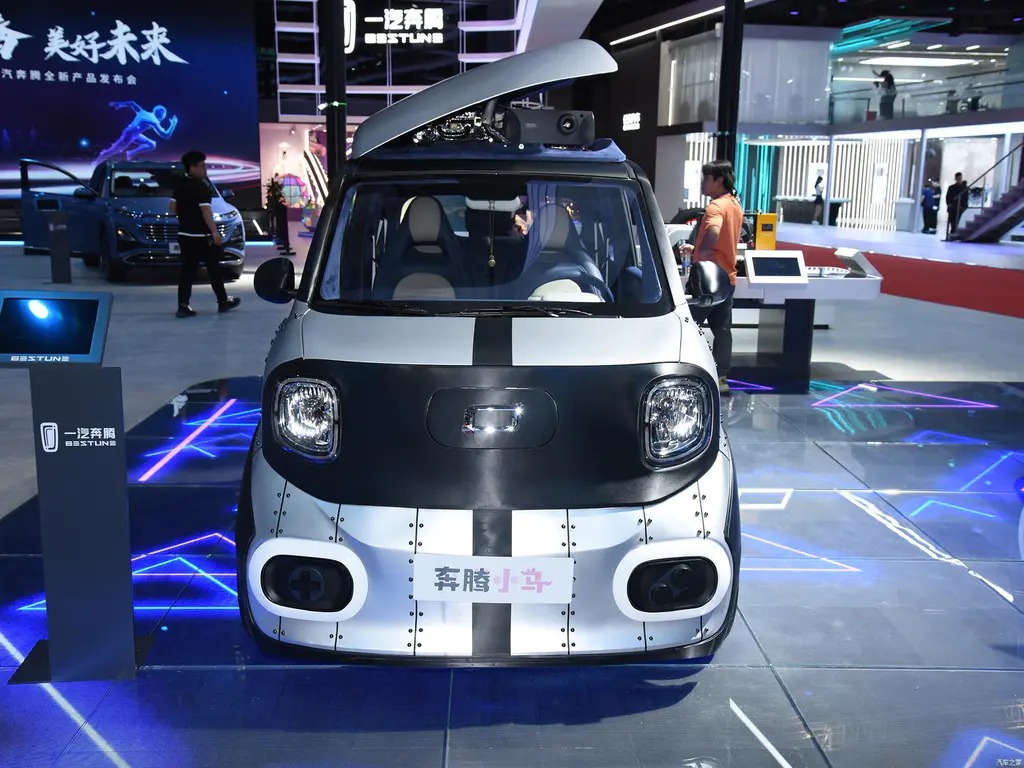
When the first images of the FAW Pentium surfaced from Beijing, the automotive press did what it always does with novelty: it smirked. A sedan with an anime girl projected above the dashboard? It felt like a Tokyo motor show cosplay stunt, a gimmick designed for a viral clip rather than a serious engineering statement. But dismiss it too quickly and you miss the point. The Pentium’s holographic companion—a floating, gesturing virtual idol capable of responding to voice commands and synchronising with the car’s infotainment system—is not a frivolous extra. It is the most visible proof yet that Chinese automakers have leapfrogged Western and Japanese rivals in one crucial domain: the emotional and interactive layer of the cabin. While Silicon Valley obsesses over autonomous driving sensors and European brands refine leather stitching, FAW has quietly bet that the future of mobility is not just about getting from A to B, but about who—or what—keeps you company along the way.
This is a radical departure from the traditional cockpit philosophy, where the screen is a tool and the driver is a supervisor. The Pentium’s hologram, which uses a proprietary optical projection system to render a 3D character without a physical display, transforms the dashboard into a stage. It is not merely a voice assistant with a face; it is a personality with moods, reactions, and a synthetic presence that learns your preferences—from music tempo to route anxiety—and adjusts its banter accordingly. Critics will rightly point out that a cartoon avatar cannot replace a human passenger, and they are correct. But that is not the ambition. The ambition is to fill the silence of a commute with a responsive, non-judgemental entity, a digital co-pilot that makes the cabin feel inhabited rather than occupied. For a generation raised on virtual streamers and anime fandoms, this is not absurd. It is intuitive.
The Strategic Shift Beneath the Neon Surface
Beneath the neon surface lies a more profound strategic shift. FAW, one of China’s oldest state-owned automotive giants, is not chasing the German luxury playbook. Instead, it is exploiting a homegrown advantage: the world’s most sophisticated ecosystem of AI-driven entertainment content. Chinese consumers do not treat the car as a sanctuary from digital life; they expect the car to be the most advanced node in their connected world. The Pentium’s hologram taps into that by integrating with domestic streaming platforms, gaming interfaces, and social media feeds—not through a clunky mirroring system, but as a native feature. The anime girl does not just tell you the weather; she can react to the climax of a drama you are streaming on the centre screen, or cheer when you hit a new high score in an in-car game. This is not a gimmick. It is a user interface philosophy that treats the vehicle as a living media console, not a glass box with wheels.
Why the Global Industry Is Playing Catch-Up
The global industry has been slow to grasp this. German and Japanese automakers still treat in-car entertainment as a secondary concern, a distraction from the purity of driving. Meanwhile, Chinese brands like FAW Pentium, along with peers like Nio and Xpeng, have understood that for the world’s largest car market, the journey is increasingly a content consumption event. The hologram is the differentiator that makes the Pentium stand out in a crowded field of electric and hybrid sedans, where specs on range and horsepower are converging. It is a signal of confidence—FAW believes it can win customers not on torque curves, but on the quality of a simulated conversation. And the early response suggests they are right. Social media buzz has been enormous, with young buyers sharing clips of their holographic passengers dancing to music or offering deadpan commentary on traffic jams.
The Safety Calculus and a Long-Term Vision
Yes, there are legitimate safety questions. A moving, glowing figure in the periphery of a driver’s vision could be a distraction, and FAW has limited the hologram’s gestures during active driving to subtle head nods and lip movements. But that cautious design reveals a deeper truth: this is not a short-term marketing trick but a long-term product roadmap. The Pentium’s hologram is the first iteration of a system that will eventually incorporate facial recognition, biometric stress detection, and even augmented reality overlays. The anime girl is just the friendly face of a much larger computational engine. So while Western magazines snicker at the dashboard idol, they should pay closer attention. Every major technological leap in the car—from the touchscreen to the voice assistant—looked frivolous at first. FAW Pentium has simply done what no legacy automaker dared: it made the emotional interface the hero of the car. And in doing so, it has declared that the next great battleground of the auto industry will not be horsepower or battery chemistry, but the art of keeping you entertained, engaged, and never alone.