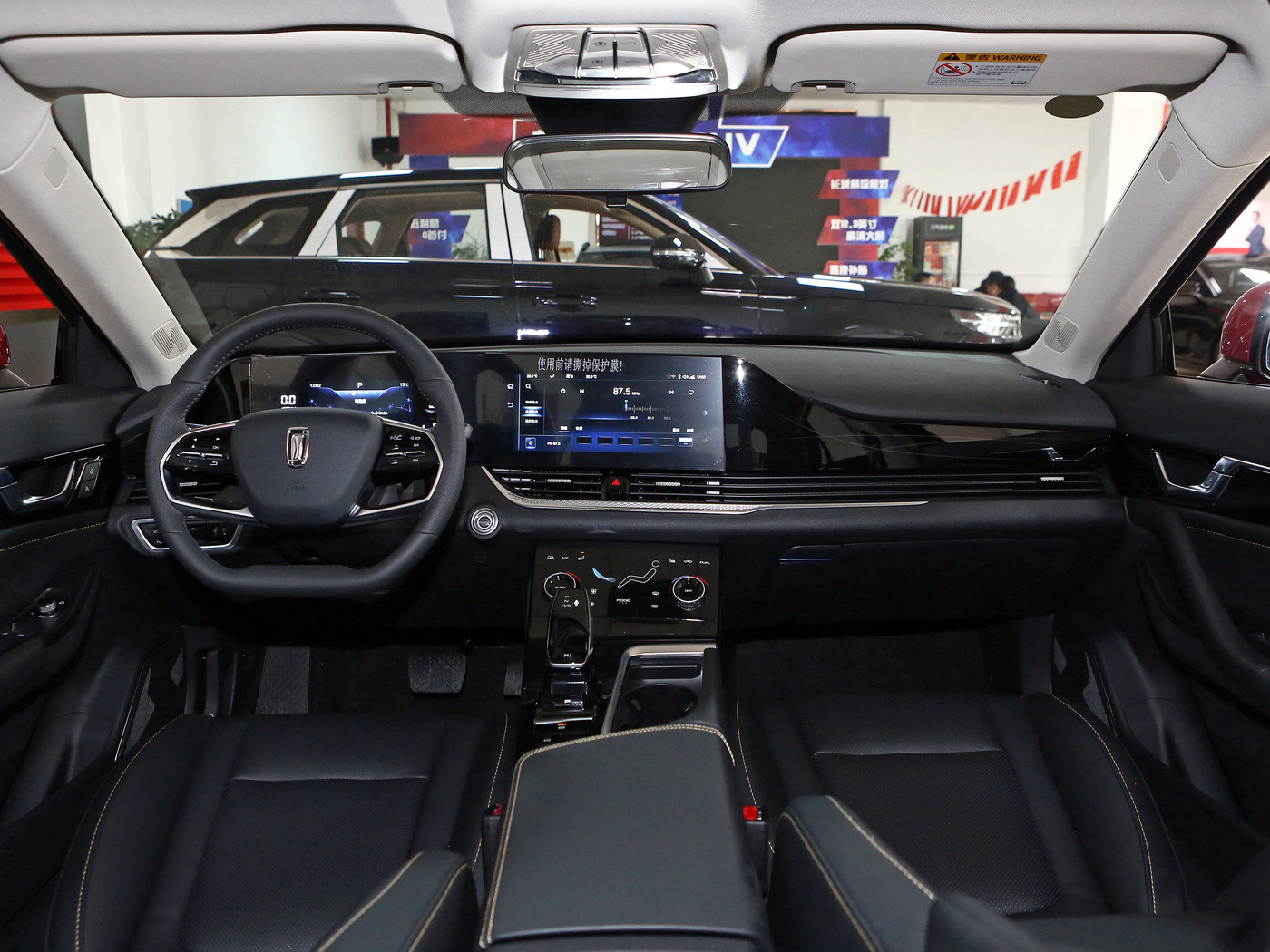
There's a special kind of desperation that creeps into a car's interior when a manufacturer stops trusting its own hardware. FAW Pentium, the mainstream passenger-car arm of China's state-owned First Automobile Works, has reached that point. Its latest cabin feature—reported with a mix of bewilderment and delight by outlets like News24—is an anime hologram that materialises above the dashboard to keep the driver company. She has a name, a voice, and a seemingly endless appetite for small talk. What she doesn't have is a reason to exist.
Let's be fair to the engineering underneath. FAW Pentium builds competent, conventionally handsome sedans and SUVs for buyers chasing maximum screen real estate per yuan. Recent cabins lean hard on wide digital displays, ambient lighting strips, and voice assistants that handle navigation and climate commands without drama. None of that is remarkable in 2025—which is exactly the problem. In a market where BYD, Nio, XPeng, and a dozen others are all fighting for the same middle-class customer, a mid-tier state-owned brand needs a story. FAW Pentium has apparently decided its story is a cartoon girl who lives in the windshield.
A Solution in Search of a Problem
The logic, such as it is, runs something like this: driving in dense Chinese traffic is stressful and solitary, so why not offer companionship? But the hologram doesn't accompany anyone. It performs. It appears, it chirps, it emotes, and then it waits to be acknowledged. This isn't companionship—it's a tamagotchi with a marketing budget. A driver stuck for two hours on the Third Ring Road doesn't need a synthetic personality clamouring for attention. They need a seat that doesn't numb their lower back and a suspension that can absorb an expansion joint. The hologram is a solution in search of a problem, bolted onto a cabin that almost certainly has more pressing deficiencies.
The Confession Beneath the Cartoon
What makes the feature genuinely telling is what it reveals about FAW Pentium's self-image. Brands confident in their chassis tuning, their battery integration, or their safety record don't lead with anime. They lead with lap times, crash-test scores, or range figures. When a manufacturer's most shareable innovation is a floating cartoon, it's quietly admitting that nothing else in the car is worth talking about. The hologram isn't a feature; it's a confession. It says: we couldn't beat them on the engineering, so we brought a mascot.
The Most Intimate Space You Own
There's also something faintly melancholy about the whole proposition. The cabin is the most intimate space most people own—a small room that moves. Automakers have spent a century refining it: the weight of a door, the smell of leather, the angle of a gear lever. FAW Pentium's answer to that legacy is to fill the void with a digital presence that never stops performing. It's the automotive equivalent of leaving the television on for a dog. The driver isn't lonely because the car is empty. The driver is lonely because the car has nothing to say beyond a scripted greeting.
None of this means the technology is worthless. Holographic interfaces may yet prove genuinely useful, and Chinese manufacturers deserve credit for experimenting while European brands iterate cautiously. But experimentation without conviction produces gimmicks, and gimmicks age badly. The anime hologram will be a curiosity in a press release, a talking point in a showroom, and an embarrassment in three years when the software update stops arriving.
FAW Pentium's lonely cabin doesn't need a companion. It needs a reason for the driver to want to sit in it. That reason has always been, and will always be, the drive itself—the way a car feels through your hands, the way it settles on its springs, the quiet confidence of hardware that was engineered rather than decorated. A brand that remembers this doesn't need a hologram to keep you company. The car already does.