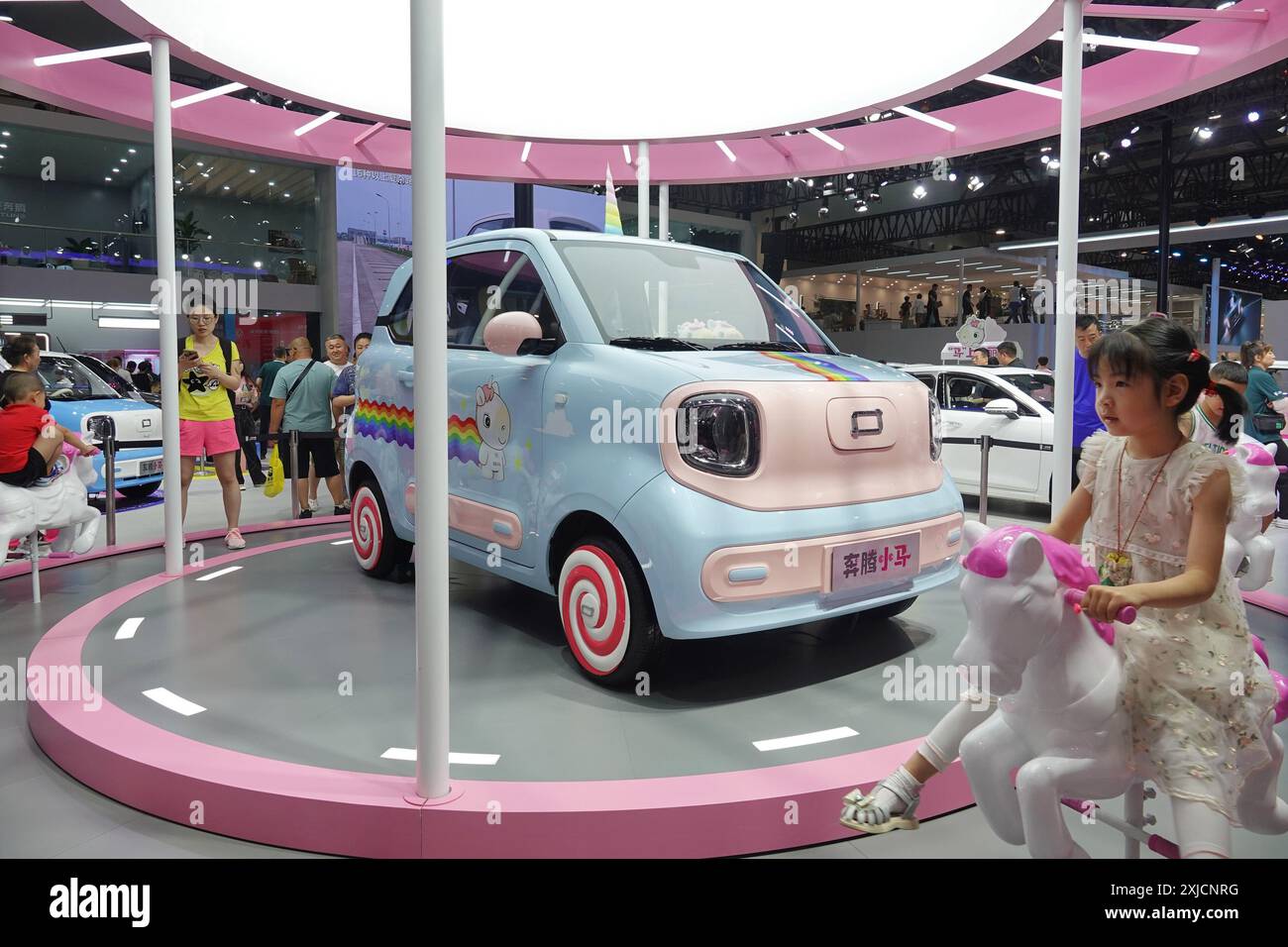
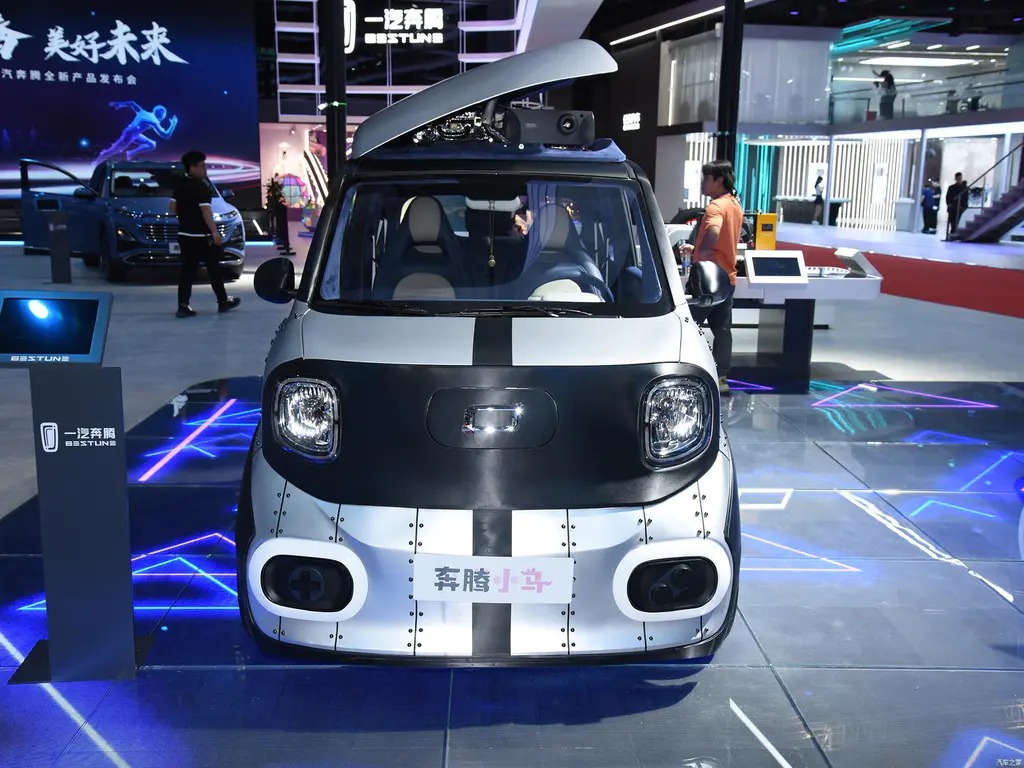
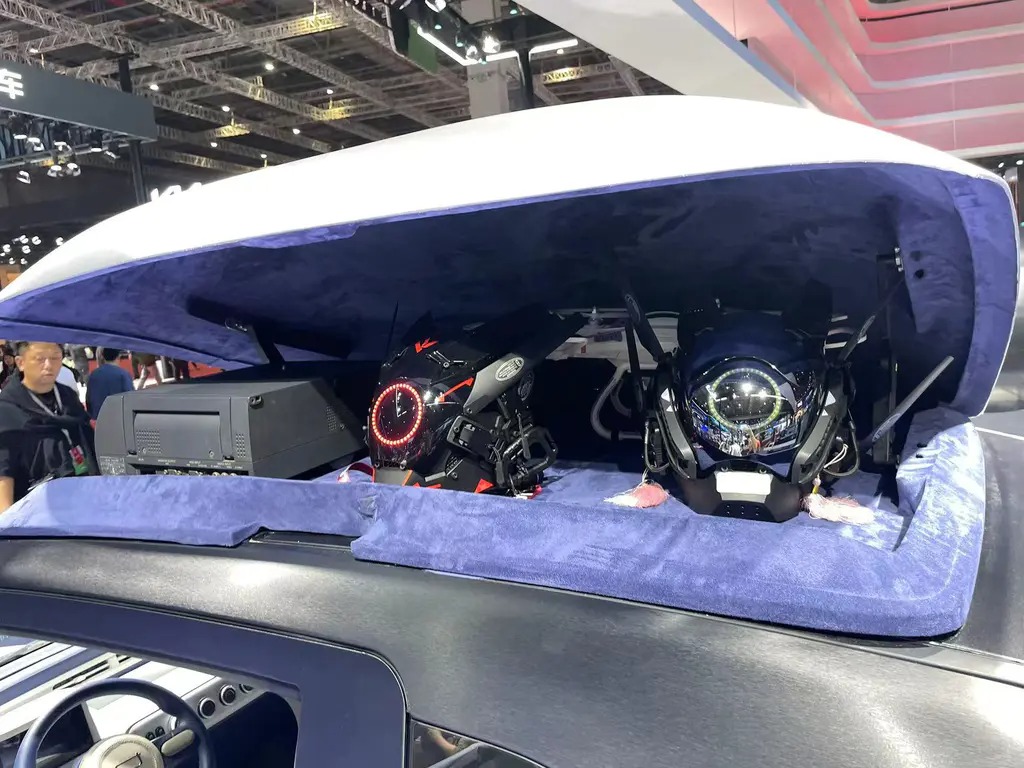
FAW Pentium has never been a brand that shrinks from the spotlight. But its latest cabin technology has thrust the Chinese manufacturer into an international conversation it may not have entirely planned for. The feature in question is a holographic anime-style assistant, projected above the dashboard, that responds to voice commands and gestures while appearing to "entertain" and accompany the driver. It has already appeared most prominently in the Pentium T99 SUV and, according to recent reports, is rolling out across an expanding roster of sedans.
The story has been covered breathlessly from news24 to The Mirror, the latter zeroing in on the assistant's "schoolgirl" aesthetic and short skirt. Strip away the tabloid framing, though, and a genuinely serious engineering question remains. Does a dancing, talking hologram hovering in the driver's eyeline make the car safer — or does it quietly erode the single most important resource a driver has? Attention.
The Reasonable Argument
FAW's stated rationale is deceptively sensible. The hologram, which responds to voice commands and gestures, is pitched as a more engaging interface than a conventional touchscreen. Rather than fumbling through menus, the driver can simply ask the character to adjust the climate settings, queue music, or navigate to a charging station.
In this framing, the anime companion is nothing more than the next evolution of the digital assistant. Alexa with a face. Siri with a smile. FAW has also hinted at emotional-design research suggesting that a familiar, friendly presence reduces the frustration and cognitive load associated with complex infotainment systems. It is a seductive argument — and one that every automaker experimenting with anthropomorphic interfaces has made at some point.
The Safety Establishment Pushes Back
Yet the automotive safety establishment has spent the better part of two decades fighting to keep visual clutter out of the driver's forward field of view. NHTSA guidelines, Euro NCAP protocols, and the ISO 15007 standards on driver visual behaviour all converge on a single principle: the less time a driver's eyes spend away from the road, the better. A holographic character floating above the dashboard — gesturing, changing expression, perhaps even dancing during idle moments — is, by definition, a persistent visual attractor in precisely the zone regulators have worked to keep sterile.
The distraction literature is unambiguous here. Even brief glances away from the road, lasting two seconds or more, materially increase crash risk. A moving, emotive figure is engineered to capture exactly those glances.
Could the Hologram Actually Help?
The counterargument, offered by FAW and echoed by some human-factors researchers, is that the hologram replaces a worse distraction. A driver who would otherwise be scrolling a smartphone or stabbing at a touchscreen menu may find the hologram sufficiently engaging that they keep their hands on the wheel and their phone in their pocket.
There is some precedent for this. Voice assistants, despite their imperfections, have measurably reduced manual interaction with infotainment systems. If the anime character is genuinely capable of handling complex commands conversationally, it could function as a net safety gain — a friendly face that keeps the driver's hands and eyes where they belong, even if the eyes occasionally drift upward to check whether the character is listening.
The Marketing Problem
The trouble is that FAW's marketing does not emphasise safety. It emphasises entertainment. The hologram is sold as a companion, a mood-lifter, a piece of cabin theatre. That framing matters, because it shapes how drivers actually use the feature. A tool is used instrumentally. A companion is engaged with socially. The moment the hologram becomes something the driver wants to watch — to see it react, to catch its latest animation — it has crossed from interface to distraction.
And the "schoolgirl" styling, which has drawn the most prurient coverage, compounds the issue by making the character visually conspicuous in a way that a simple abstract avatar would not be. This is design language doing exactly what it was built to do: pulling the eye. Whether that eye belongs on the road is another question entirely.
FAW Pentium deserves credit for pushing cabin interface design in a genuinely novel direction. The hologram is not a gimmick in the sense of being non-functional. It works, it responds, it performs real tasks. But the company has chosen to wrap that functionality in a package optimised for attention capture rather than attention preservation.
Until independent testing demonstrates that the anime assistant reduces glance time and manual interaction relative to a conventional touchscreen — and until FAW itself starts marketing the feature as a safety tool rather than a source of amusement — the honest verdict is that this is a distraction risk dressed in a very appealing costume. The road ahead for holographic interfaces is promising. The road behind the dashboard, however, is where the driver's eyes need to stay. That is the philosophy every cabin technology should be built around.