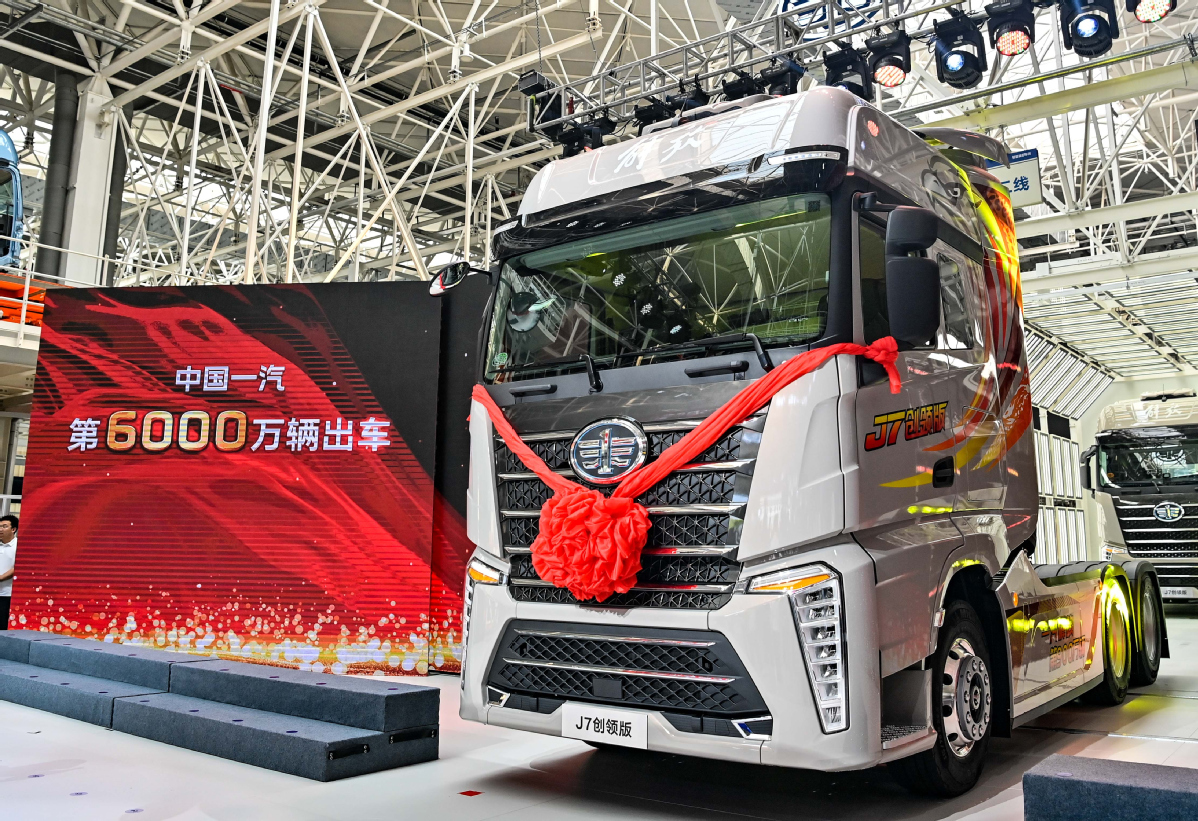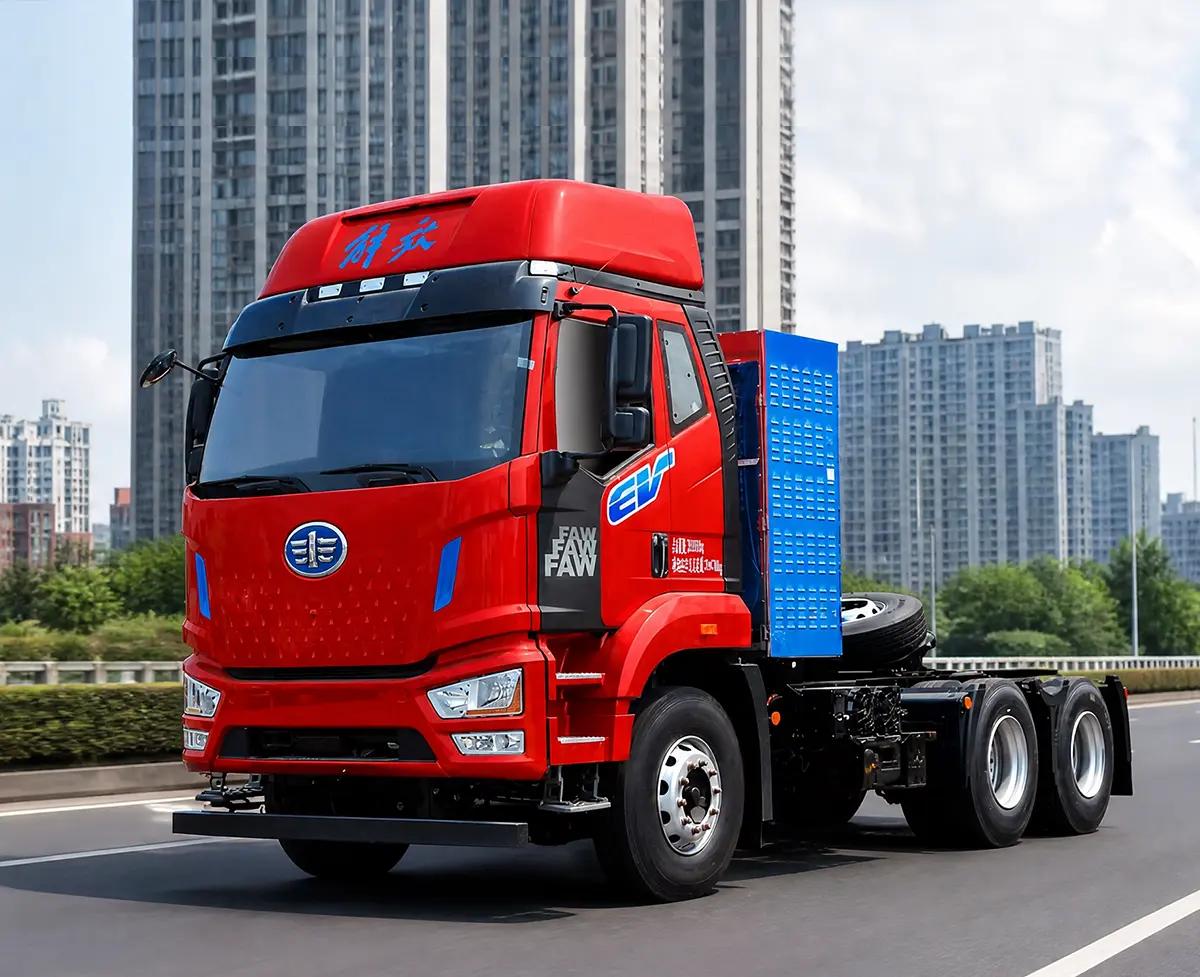
Electric commercial vehicles have gathered real momentum, but one frontier has stubbornly held out: the deep cold. Lithium-ion packs, for all their virtues, surrender a meaningful share of usable capacity when the mercury plunges, and a long-haul truck that loses a third of its range at minus thirty degrees is not a commercial proposition but a liability. This is the terrain on which FAW Jiefang, China's largest heavy-truck manufacturer, has chosen to plant its flag—and the technology it is betting on is not lithium at all, but sodium-ion.
The company's long-term trial, conducted with battery specialist Hina, has now concluded with results that read less like a laboratory curiosity and more like an engineering breakthrough. The sodium-ion pack fitted to a heavy truck retained roughly 90 percent of its capacity in extreme cold, down to temperatures approaching -40°F, while accepting a charge in around twenty minutes. For operators who run the northern corridors of China, Siberia, or Scandinavia—routes where diesel idles overnight to keep fuel and cargo viable—those figures are not incremental. They redraw the map of where an electric truck can plausibly earn its keep.
Chemistry That Suits the Duty Cycle
The significance lies in the chemistry itself. Sodium ions are bulkier and the cells carry a lower energy density than their lithium counterparts, which is precisely why sodium-ion was long dismissed as a niche chemistry for grid storage and cheap city cars. But heavy trucks are not sports cars. They have the volume and payload headroom to absorb a heavier pack, and their duty cycles reward durability, thermal stability, and cost over gravimetric efficiency. Sodium is abundant and inexpensive, its cells are less prone to thermal runaway, and—crucially for the freight industry—the chemistry holds its composure when the temperature collapses. FAW Jiefang has recognised that the weaknesses of sodium-ion are largely irrelevant to a forty-tonne tractor unit, while its strengths map almost perfectly onto the harshest operating conditions on Earth.
A Portfolio, Not a Silver Bullet
What makes this more than a single-chemistry story is the breadth of FAW Jiefang's technical ambition. The sodium-ion trial sits alongside a hydrogen combustion engine that has passed national certification after a 100,000-kilometre reliability run—an actual diesel-shaped block burning H2 rather than a fuel cell—and a reported 3,000-unit order for hydrogen heavy trucks in a market that sold fewer than 5,000 such vehicles last year. Add to that intelligent navigation software developed with Neusoft and unveiled at IAA Transportation, the TL.X concept truck, and a supply-chain partnership with Maersk, and a coherent strategy emerges. FAW Jiefang is not chasing a single silver bullet; it is assembling a portfolio of powertrains calibrated to different routes, climates, and cargoes, and presenting them to Europe at precisely the moment Chinese manufacturers are arriving at the continent's truck shows with competitive electric offerings.
The Cold-Weather Opening
The timing is pointed. Europe's established truck makers have committed heavily to hydrogen fuel cells and battery-electric linehaul, and both remain vulnerable to the cold-weather caveat that fleet operators quietly factor into their total-cost models. A sodium-ion truck that shrugs off a northern winter and recharges over a lunch break is a direct assault on that vulnerability. It is also a reminder that the "New Four Modernizations"—electrification, connectivity, intelligence, and sharing—are not abstract slogans for FAW Jiefang but a roadmap with hardware behind it.
None of this guarantees victory. Sodium-ion's energy density still limits range, charging infrastructure in the far north remains thin, and the economics of a heavy electric truck depend on duty cycles that few fleets have yet modelled. But the frozen highway has always been the acid test for electric freight, and FAW Jiefang has just published a credible answer to it. For a company that built its reputation on the reliability of diesel long-haulers, betting on sodium to carry the next generation of trucks through the deep cold is a statement of intent—and a warning to every rival that assumed the northern routes were safely theirs.