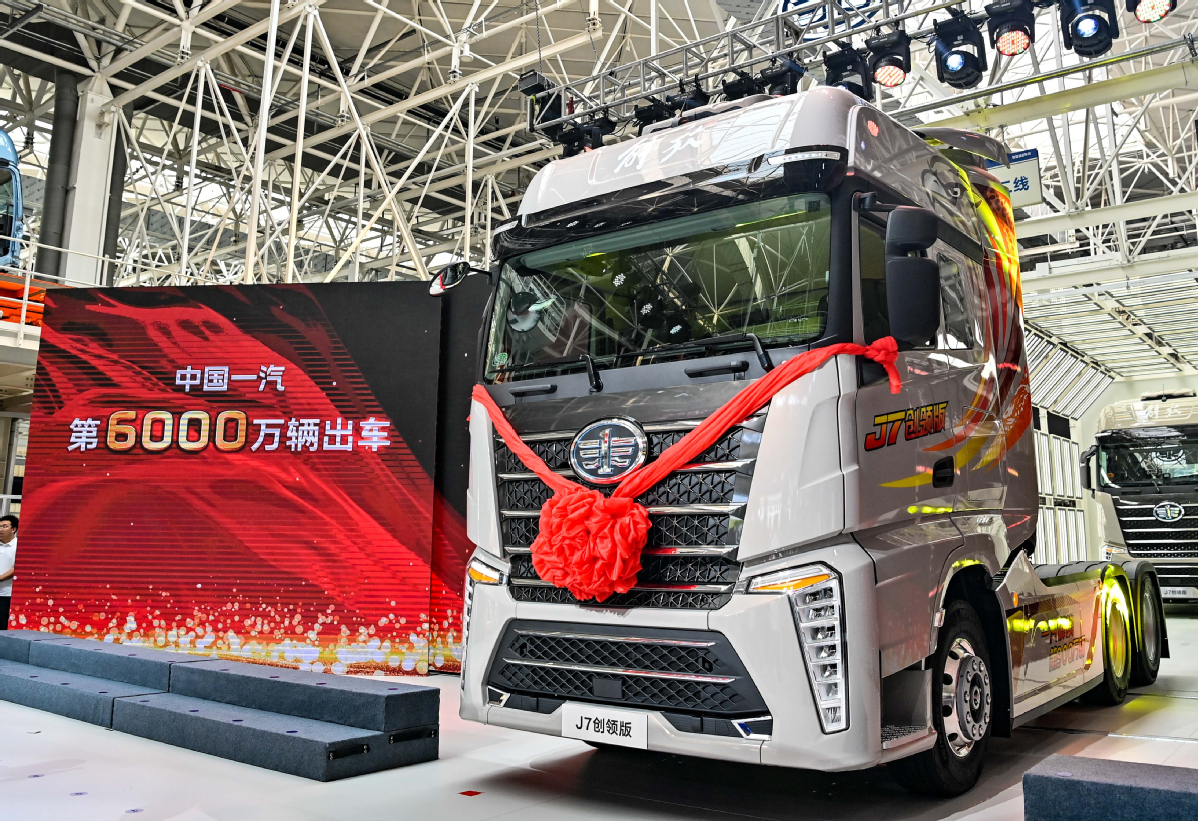
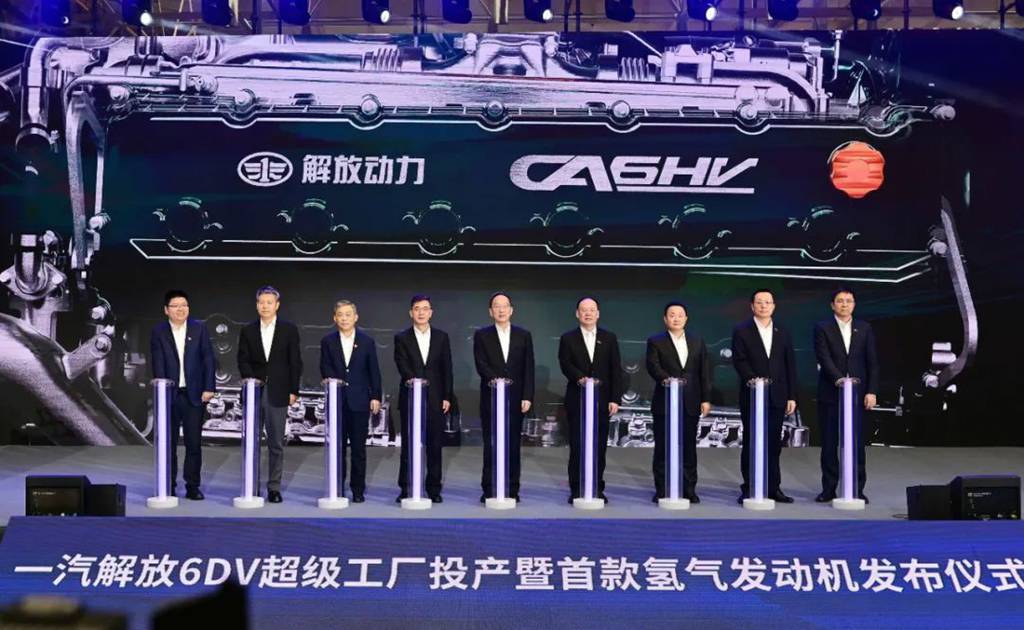
The heavy-duty diesel engine is one of the most refined artefacts in industrial history — a lump of iron and steel that has spent a century being honed into something almost impossibly durable. Now imagine taking that same block, that same crankshaft geometry, that same service posture, and making it combust hydrogen. That is exactly what FAW Jiefang, China's largest truck manufacturer, has done. And it has just passed national certification and completed a 100,000-kilometre reliability test in a 49-tonne tractor unit.
While the global commercial vehicle industry races toward fuel cells and megawatt charging, this is a powertrain that looks suspiciously like the one FAW Jiefang has been building for decades. The milestone deserves far more attention than it has received outside China — not because it is glamorous, but because it is pragmatic in a way that much of the hydrogen conversation is not.
The Case for Burning Hydrogen in a Familiar Block
The engineering logic here is disarmingly simple. A hydrogen fuel cell demands ultra-pure gas, platinum-group catalysts, and an entirely new supply chain of stacks, membranes, and thermal management systems. A hydrogen combustion engine demands none of that. It burns H2 through port or direct injection in a reciprocating cylinder, produces water vapour and trace NOx as its principal emissions, and — critically for fleet operators — is serviced by technicians who already know which end of a torque wrench to hold.
FAW Jiefang's bet is that the diesel-shaped block, refined over a century of heavy-duty development, remains the cheapest and most robust vessel for hydrogen energy. That conservatism is deliberate. It is also, on the face of it, contrarian.
The Numbers Behind the Bet
Hydrogen-powered heavy truck sales in China have dipped below 5,000 units annually — a rounding error against a market that moves over a million commercial vehicles a year. On paper, committing to a 3,000-unit order in that climate looks reckless. But look at what sits behind it: certification, and a durability programme that is anything but a laboratory formality.
The 100,000-kilometre test is the distance a long-haul operator covers in a single working year. Clearing it means the piston engine has survived the thermal cycling, the hydrogen embrittlement risks, and the lubrication challenges that have historically kept H2 combustion in the experimental column. That is the difference between a concept and a truck that earns money.
Timing, Infrastructure, and the Broader Specification
The timing is shrewd. China's pilot programmes for hydrogen power are expanding beyond passenger cars into logistics corridors, and the refuelling infrastructure that fuel-cell advocates have long demanded is equally compatible with a combustion engine. Where a fuel cell truck needs 350-bar or 700-bar high-purity hydrogen, the Jiefang piston engine tolerates a broader specification — a meaningful cost advantage when industrial-grade supply is what actually reaches the pump.
Add Neusoft's AI truck navigation, debuted jointly with FAW Jiefang at IAA, and the company is pairing an old-world mechanical solution with a new-world digital cockpit. The hydrogen combustion truck is positioned not as a retrograde compromise but as a complete, intelligent platform.
A Plural Strategy, Not a Monotheistic Creed
None of this dismisses the parallel work happening inside the same company. FAW Jiefang is simultaneously trialling sodium-ion batteries in heavy trucks, with cells retaining roughly 90 per cent capacity at minus 40 degrees Celsius and charging in around twenty minutes — a chemistry that sidesteps lithium's cold-weather and cost penalties. It has certified a self-driving truck through its joint venture with Plus, and it has partnered with Maersk to anchor Chinese-built trucks into global supply chains. The hydrogen piston engine is one strand of a deliberately plural strategy.
That pluralism is the real story. The industry's prevailing assumption has been that decarbonising heavy transport requires abandoning the internal combustion engine entirely. FAW Jiefang is testing the opposite hypothesis: that the diesel block, an artefact of extraordinary refinement, can be re-purposed to burn hydrogen and deliver a zero-carbon long-haul solution at a fraction of the capital cost. Certification and 100,000 kilometres are not proof of commercial victory, but they are proof of viability. And in a sector where the difference between a concept and a truck that earns money is measured in reliability, that distinction is everything.