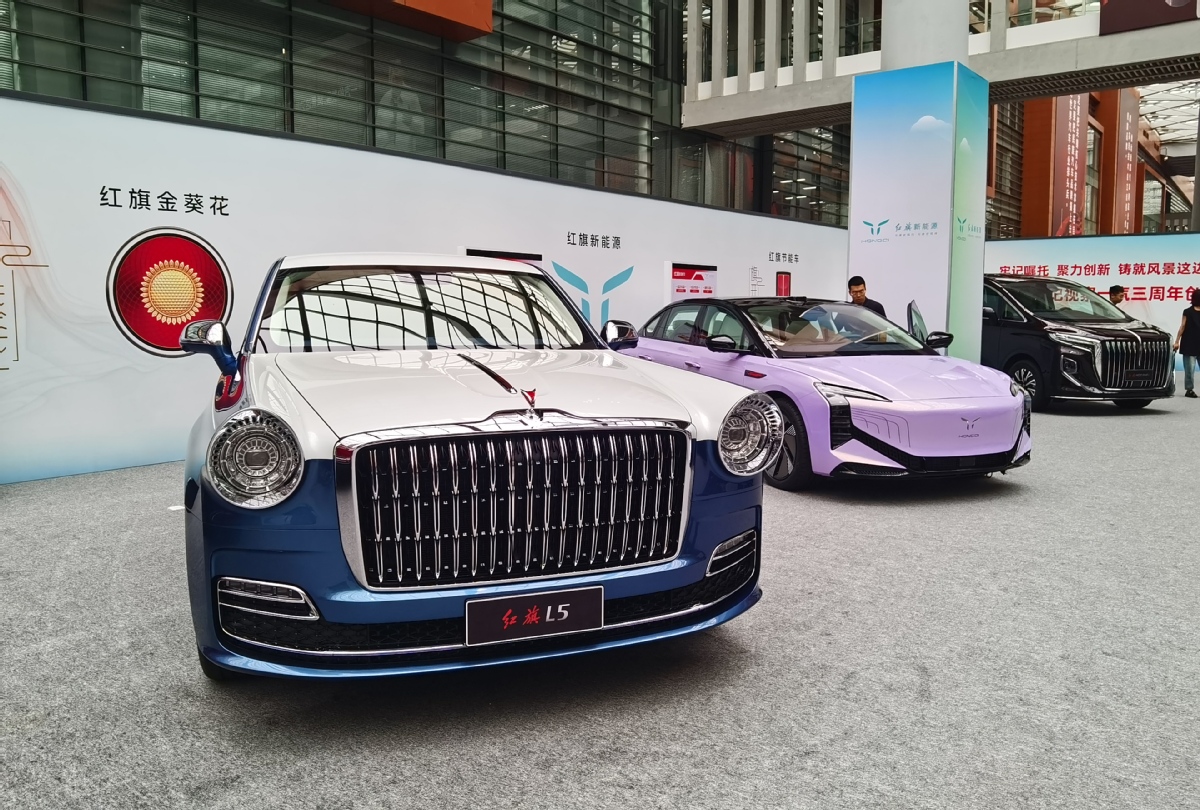
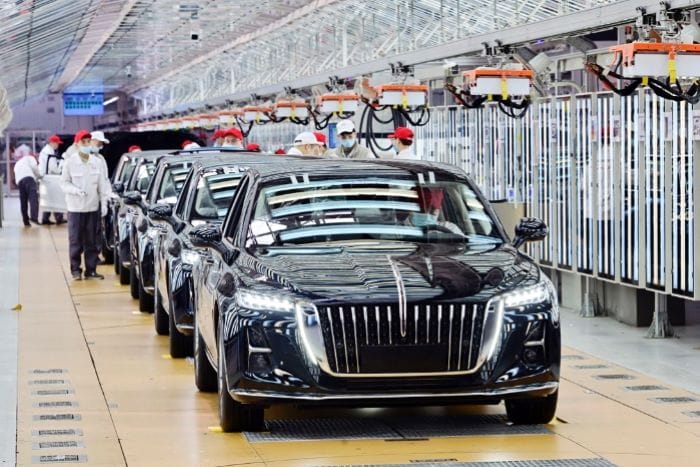
The announcement of the Hongqi No. 1 automotive-grade chip is easy to file away as one more line item in China's relentless semiconductor drive. That would be a mistake. For FAW Group, the state-owned giant behind the Hongqi marque, a self-designed automotive-grade chip is less a technical curiosity than a strategic declaration: the premium sedan of the future will be differentiated not by leather stitching or chrome, but by silicon the company controls. In a market where software-defined vehicles are becoming the norm, owning the compute layer beneath the cockpit and chassis is the difference between assembling a luxury car and defining one.
The logic is straightforward once you consider where Hongqi sits in FAW's portfolio. As the group's flagship passenger-car brand, Hongqi carries the mandate to compete with established premium names at home and, increasingly, abroad. That ambition demands capabilities that off-the-shelf silicon cannot guarantee—tight integration between chip and vehicle architecture, the ability to iterate on firmware without waiting on a third-party supplier's roadmap, and a supply chain insulated from the geopolitical churn that has repeatedly disrupted automotive semiconductors. An in-house automotive-grade chip addresses all three at once. It allows FAW to tune performance characteristics specifically for Hongqi's electronic architecture, to harden the platform against external supply shocks, and to claim a measure of technological sovereignty that resonates with both regulators and buyers.
Silicon as Strategy
This is where the Hongqi No. 1 story connects to the broader repositioning now underway at FAW. The group has spent recent months reorganizing its alliances with unusual energy—deepening ties with Leapmotor across vehicles, components, and AI, exploring cooperation with Nio on battery charging and swapping, and agreeing with GAC to restructure the long-standing FAW Toyota joint venture. Read together, these moves describe a company consciously reallocating its capital and attention toward the parts of the business it can own and differentiate. Divesting a stake in a mature joint venture and reinvesting in proprietary technology is a statement of intent: FAW is betting that its future margins lie in brand equity and intellectual property rather than in assembly capacity for foreign partners.
The Export Argument
The chip also arrives at a moment when Hongqi is being pushed outward. FAW's plan to launch the Hongqi brand in three ASEAN markets this year gives the in-house silicon a second purpose. In export markets, a proprietary automotive-grade chip becomes a marketing asset—evidence that Hongqi is not merely a regional player trading on price but a technology-led brand with vertical integration to show for itself. For buyers in Southeast Asia weighing a Hongqi sedan against entrenched competitors, the story of a self-designed chip is a credibility signal, however abstract the silicon itself may be to the showroom experience.
The Volume Problem
None of this is without risk. Automotive-grade chips carry punishing qualification cycles, and the economics of in-house silicon only work at sufficient volume—a threshold that a single brand, even a growing one, may struggle to clear alone. The strategic answer, visible across FAW's recent partnership activity, is to spread the investment across the group and its allies, treating the chip platform as shared infrastructure rather than a Hongqi-only indulgence. Whether that calculus holds will depend on how quickly Hongqi's volumes grow and how effectively FAW can extend the silicon across its wider lineup.
What is already clear is the direction of travel. FAW has concluded that the premium sedan market of the next decade will reward those who control their own compute stack, and it has begun to build one. The Hongqi No. 1 chip is the first concrete artifact of that conviction—a small piece of silicon carrying an outsized strategic weight, and a reminder that in the new automotive order, the most consequential differentiators are increasingly invisible to the eye.