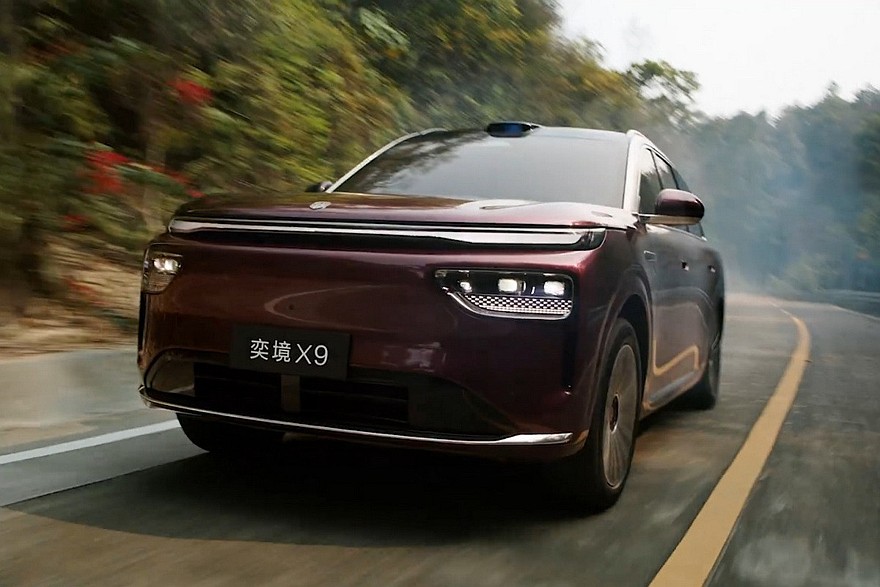
For decades, Dongfeng Motor has been the quiet titan of Chinese industry—a state-owned behemoth whose name carried weight in commercial vehicles and joint ventures but rarely sparked the imagination of tech-hungry buyers. That era of quiet competence ended the moment the Epicland X9 opened its pre-sale books at $44,180. This is not merely another electric sedan from a legacy manufacturer; it is the physical manifestation of a strategic reckoning, where Huawei’s digital mastery has been grafted onto Dongfeng’s manufacturing skeleton to produce a vehicle that redefines what a state-owned automaker can be. The X9 is less a product launch than a declaration: Dongfeng is no longer content to build the bones—it wants to own the brain.
The significance of this collaboration cannot be overstated. Huawei, barred from Western semiconductor markets, has pivoted with ferocious intent to become China’s definitive automotive supplier, and its choice of Dongfeng as a partner for the Epicland brand signals a profound shift in the pecking order of Chinese EV power. While rivals like BYD chase vertical integration and NIO courts brand loyalty through lifestyle ecosystems, the X9 leverages Huawei’s HarmonyOS Cockpit and ADS 3.0 autonomous driving stack to deliver a technological payload that feels alien to Dongfeng’s previous output. This is not an incremental upgrade; it is a metamorphosis.
The Cabin as Command Center
Step inside the X9 and the transformation is immediate. The sedan’s cabin, with its seamless multi-screen architecture and AI-assisted driving logic, positions the X9 as a direct challenger to the Mercedes-Benz EQS and the BMW i7, but at a price point that undercuts them by tens of thousands of dollars. The digital interface flows with a fluidity that feels less like a car system and more like wielding a flagship smartphone—which, given Huawei’s pedigree, is precisely the point. Every swipe, every voice command, every predictive suggestion is filtered through an operating system designed by people who think in terms of ecosystems, not trim levels.
What makes the X9 particularly compelling is how it weaponizes Dongfeng’s industrial scale to solve the problem that has plagued every software-defined vehicle: production consistency. Huawei can craft brilliant code, but it cannot stamp body panels at the rate of 2.2 million units annually. Dongfeng can, and its decades of joint-venture discipline with Stellantis and Nissan have instilled a manufacturing rigor that is now being turned inward.
Engineering That Speaks Fluently
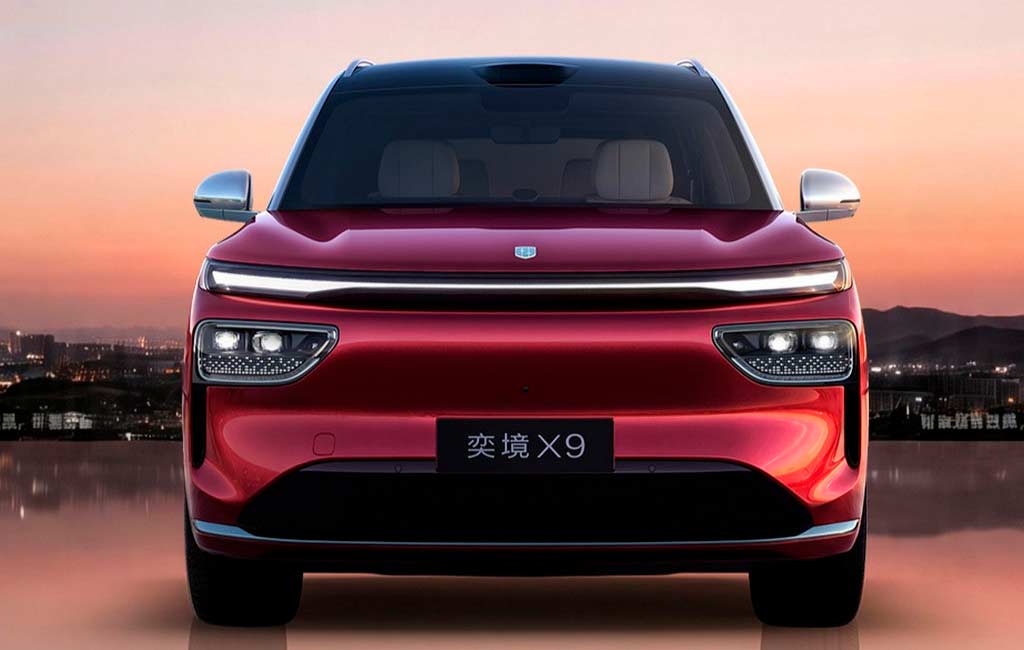
The X9 rides on a dedicated EV architecture that borrows from Dongfeng’s experience with its own M-Tech platform, yet the real magic lies in the integration. Huawei’s 192-line LiDAR and sensor fusion suite are not bolted on as an afterthought; they are woven into the vehicle’s design language, with the sensors seamlessly embedded in the front fascia—a detail that speaks to the deep co-engineering that occurred behind closed doors between Wuhan and Shenzhen.
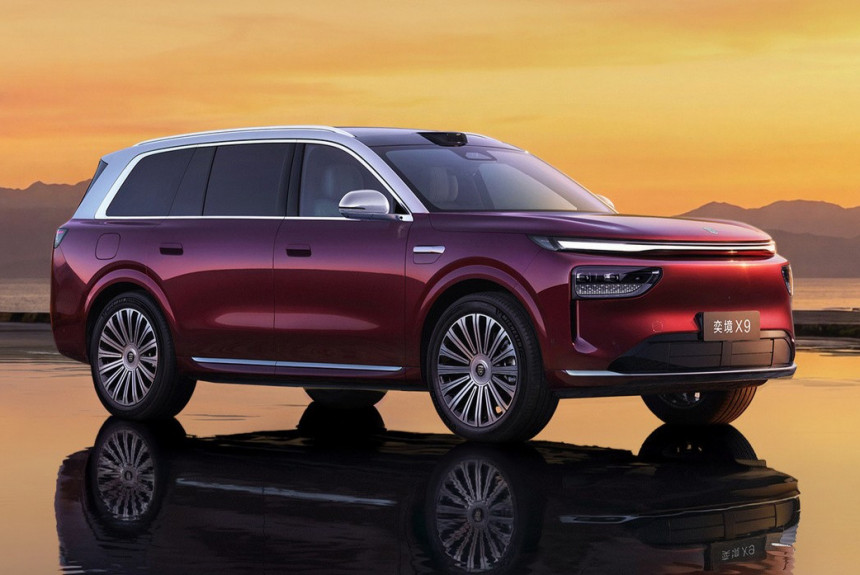
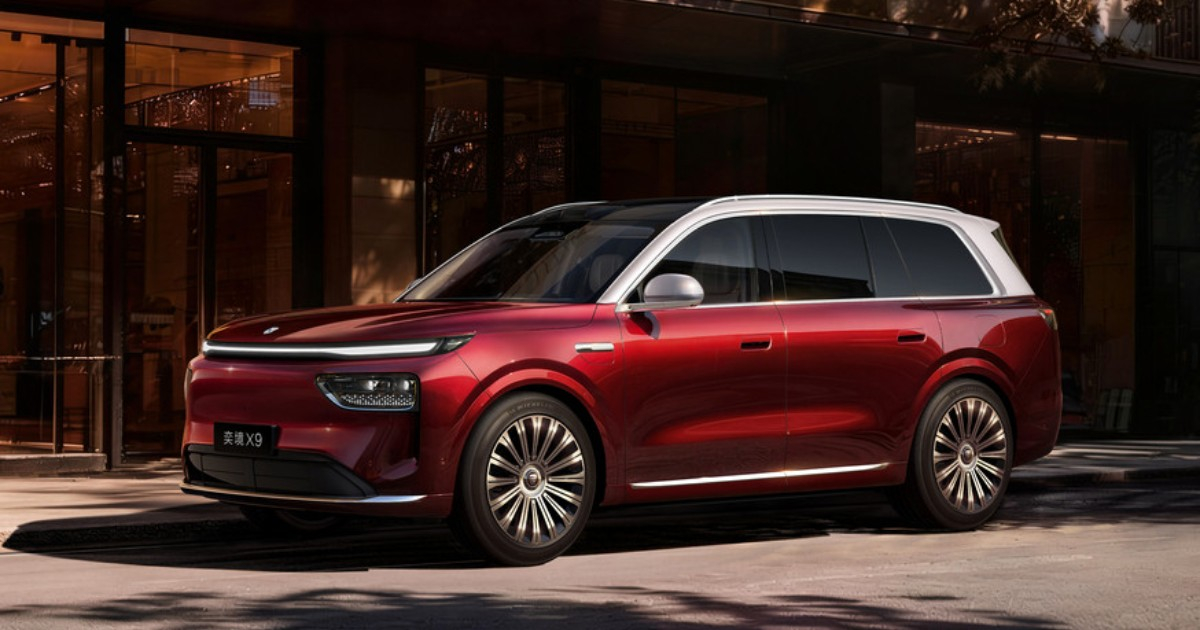
This is where the X9 transcends the typical badge-engineered collaboration. The front end doesn't wear its tech like a prosthetic; it wears it like a tailored suit. The result is a sedan that looks coherent from every angle, with the kind of visual restraint that signals confidence. No garish light bars, no theatrical aero gimmicks—just clean surfacing and a stance that hints at the intelligence lurking beneath the paint.
A Strategic Realignment With Global Ambitions
This partnership extends beyond the sedan itself, hinting at a broader strategic realignment that could ripple through global markets. The recent visit of Huawei’s Rotating Chairman Xu Zhijun to Dongfeng’s headquarters was not ceremonial; it underscored a shared ambition to export the Epicland brand beyond China’s borders. Dongfeng’s existing logistics agreements with COSCO Shipping and its newly announced European expansion plans through Stellantis give Huawei a distribution channel it could never build alone.
The X9, then, is the spearhead of a two-pronged assault: Dongfeng gains the software credibility it desperately needs to escape the low-margin trap of contract manufacturing, while Huawei secures a manufacturing partner capable of scaling its intelligent driving systems to global volumes. Even the battery strategy reflects this synergy, with Dongfeng’s in-house solid-state cells slated for mass production in the second half of this year—technology that will presumably find its way into future Epicland models, further differentiating the brand from the lithium-ion pack.
The Competitive Landscape Shifts
The competitive landscape is already shifting. The X9’s 1,500-kW charging capability, unveiled alongside its pre-sale, directly challenges BYD’s flash-charging dominance, while its Huawei-powered autonomous driving suite invites head-to-head comparisons with Xpeng’s XNGP and Li Auto’s AD Max. But the deeper story is one of institutional transformation.
Dongfeng has long been viewed as a sleeping giant, its potential shackled by bureaucratic inertia and an over-reliance on foreign joint-venture partners. The Epicland X9 suggests that the giant has finally awakened, and it has chosen the most formidable digital ally imaginable to guide its first steps into the intelligent vehicle era. For enthusiasts who have watched Chinese automakers evolve from copyists to innovators, this sedan represents the most convincing evidence yet that the future of the premium sedan will be written not in Stuttgart or Munich, but in the collaborative corridors where Wuhan’s manufacturing might meets Shenzhen’s algorithmic ambition.