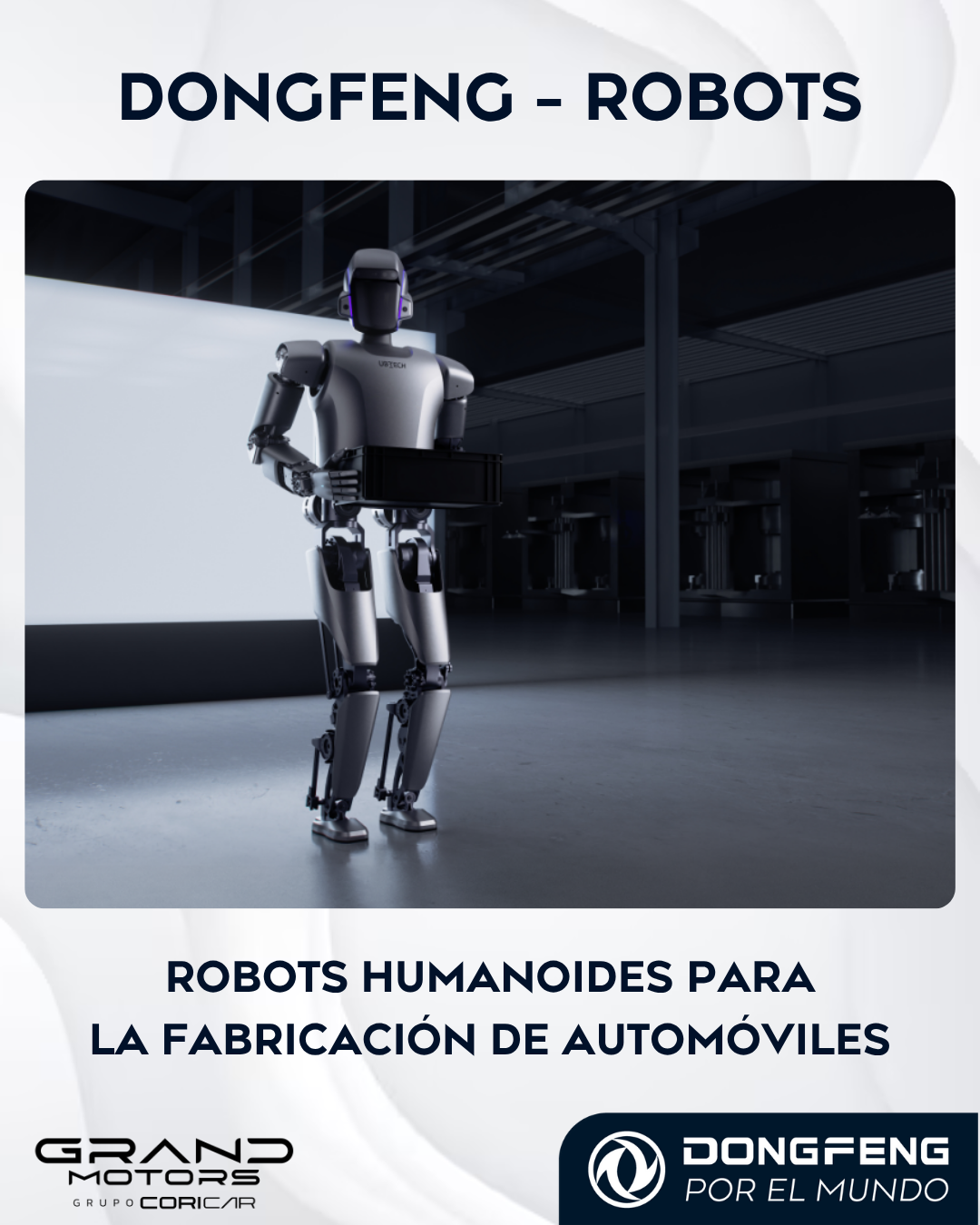
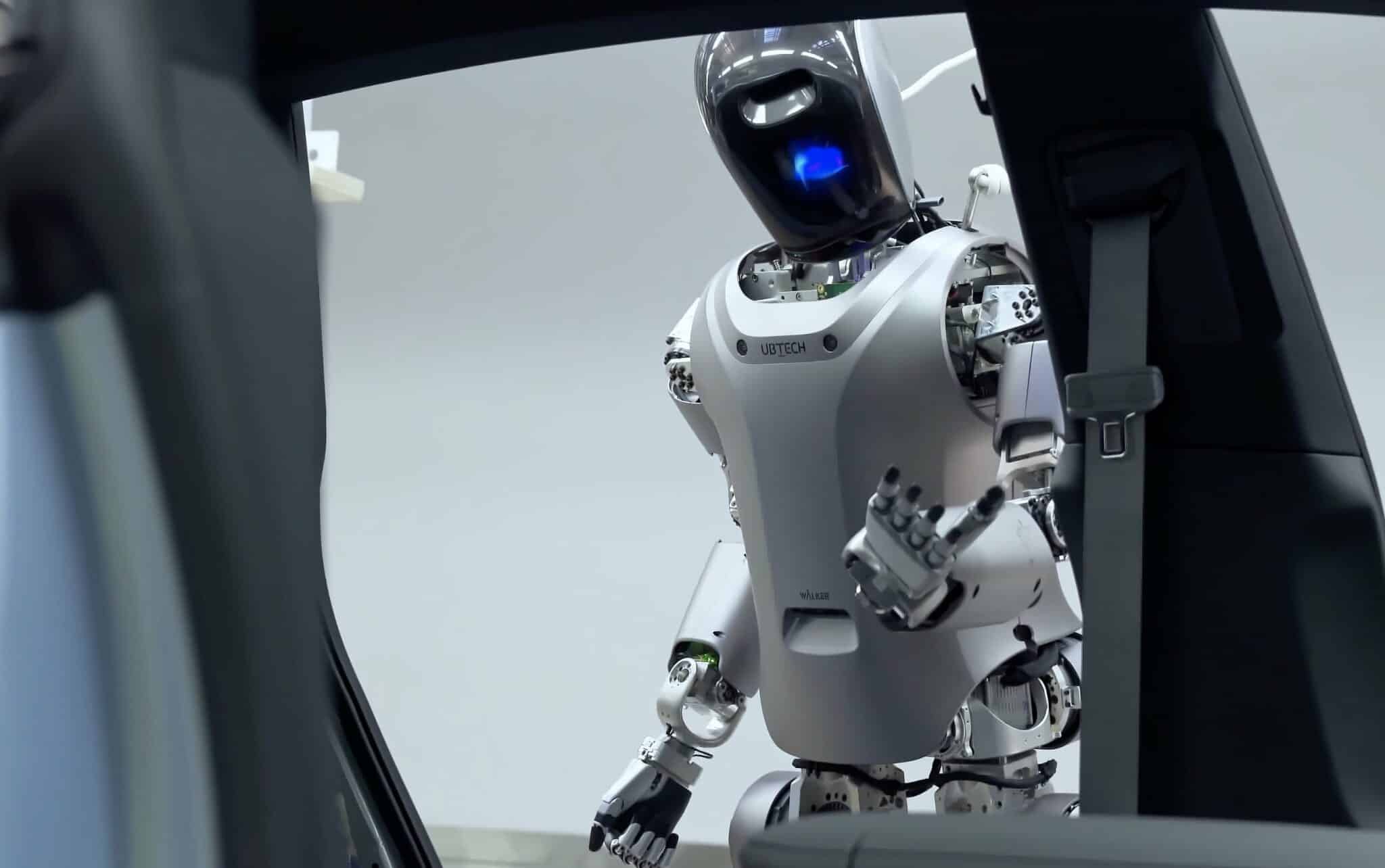
The most consequential announcement to come out of Wuhan this year didn't wear a grille badge or a launch livery. It walked. When Dongfeng Motor confirmed it would trial-produce humanoid robots by the end of 2025, with a target of human-level capability by the end of 2027, the company wasn't chasing a robotics fad. It was quietly rewriting the economics of how cars get built — and betting that the factory floor, not the showroom, is where the next phase of China's automotive revolution gets decided.
That bet only makes sense against the scale of Dongfeng's broader engineering push. The company has just rolled out its Mach Power P2.5 single-motor hybrid prototype, pushed its 2.0T hybrid engine past milestones Toyota has yet to match, launched the Epicland X9 with Huawei, expanded Voyah into the premium MPV segment with the Dream 9, and showcased its T1 platform alongside three hydrogen-powered vehicles at Hannover. Every one of those programs demands assembly precision, component handling, and quality inspection at volumes that strain conventional automation. Dongfeng's answer is to stop designing robots around cars — and start designing robots that can build anything.
The End of the Dedicated Line
A traditional automotive assembly line is a monument to inflexibility: dedicated fixtures, fixed cycle times, and tooling that has to be rebuilt the moment the product changes. A humanoid robot is something else entirely — a general-purpose labour unit. It walks to the station, picks up the tool, and performs the task. When demand shifts from the Epicland X9 to the Voyah Dream 9, the robot is redeployed, not replaced. For a conglomerate fielding combustion, hybrid, battery-electric, and hydrogen drivetrains across multiple brands at once, that flexibility isn't a luxury. It's the only way to keep capital expenditure sane.
Huawei, and the Intelligence Stack
Dongfeng's deepening alliance with Huawei sharpens the picture further. The two companies have held executive talks at the highest level — Ren Zhengfei himself received Dongfeng's leadership in Shenzhen — and the collaboration reaches well beyond infotainment and driver assistance. Huawei's expertise in embodied intelligence, chip design, and large-scale model training is precisely the stack a humanoid robot requires. Dongfeng brings the manufacturing domain, the deployment environment, and the capital. It's a division of labour that could compress years out of the robotics roadmap.
What "Human-Level" Actually Means
The end-of-2027 target deserves scrutiny. Human-level capability in a factory context doesn't mean consciousness or general intelligence. It means a robot that can match a human worker on dexterity, cycle time, and reliability across a defined set of assembly tasks. That's a far narrower goal — and a far more achievable one. Dongfeng's own Science and Technology Innovation Week in Wuhan has become a showcase for exactly this kind of applied ambition, and the company's completion of the industry's first integrated solar-hydrogen-electric smart energy station in Xinjiang shows it thinks in closed loops: generate the energy, build the vehicle, automate the build.
The Benchmark Everyone Else Chases
The implications ripple outward. If Dongfeng proves humanoid robots can hold tolerances on a real production line, the labour cost advantage that has underpinned Chinese manufacturing for four decades shifts from cheap hands to cheap cognition. The factory of 2027 won't be dark — it will be populated, just not by people. And the company that gets there first sets the benchmark every rival has to chase.
Dongfeng, quietly, is running that race. The rest of the industry should be watching the factory floor, not the showroom.