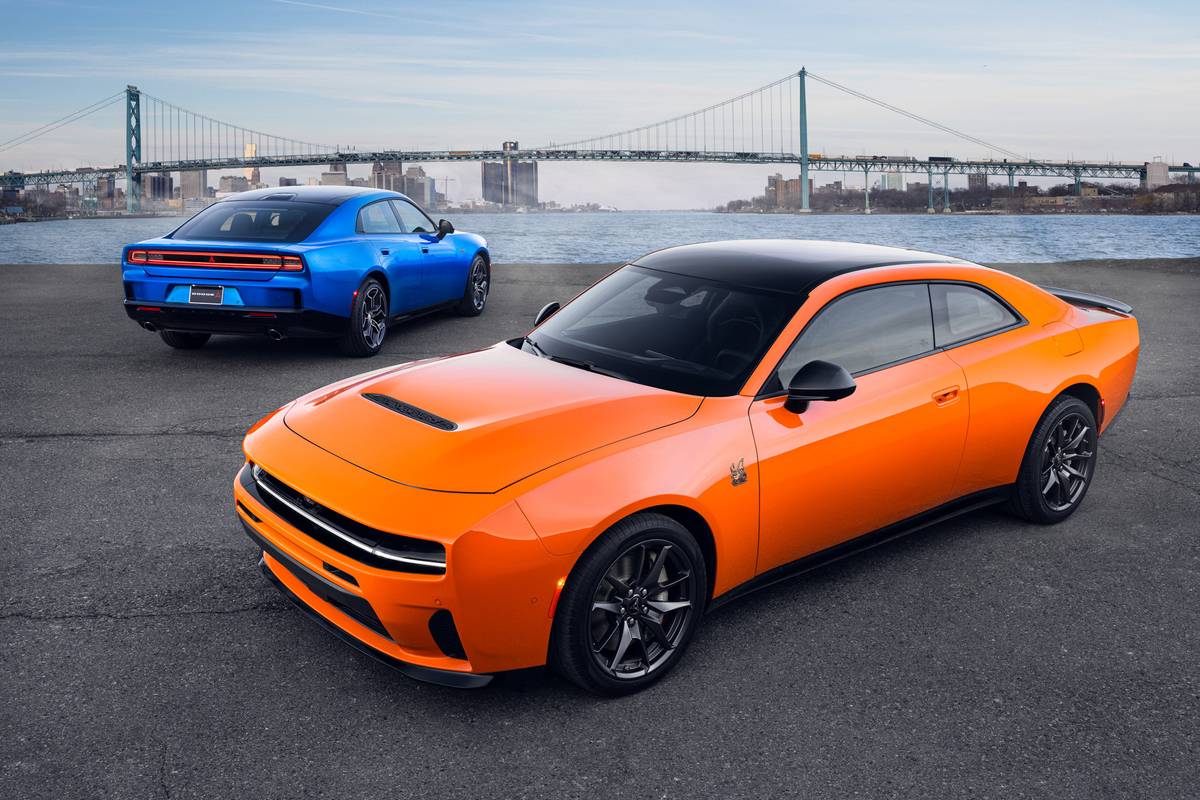
The obituary for the Hellcat has been written so many times that Dodge loyalists have learned to treat it as background noise. Every model year brings another round of hand-wringing about the death of the supercharged Hemi, another chorus of purists insisting that nothing with two fewer cylinders and a pair of turbochargers could ever fill those 707-horsepower shoes. And yet the evidence keeps mounting in the opposite direction. The Hurricane-derived Sixpack inline-six — the engine Dodge bet its performance future on — is not merely surviving the transition away from the Hemi. It is thriving in the hands of the aftermarket, where tuners have already coaxed 750 horsepower out of modified Chargers with a confidence that suggests the ceiling is nowhere in sight.
That number deserves a moment of respect. Seven hundred and fifty horsepower from a turbocharged six-cylinder is not a novelty or a stunt; it is a statement of architectural intent. The Sixpack was engineered with forced-induction headroom baked in, and the tuner community has discovered what the spec sheet only hinted at: this engine responds to boost, fueling, and calibration changes with a willingness that the old pushrod V8s, for all their charm, could never match.
The Aftermarket Has Ratified the Thesis
Where the Hellcat's supercharged 6.2-liter demanded respect for its heat management and its thirst, the Sixpack rewards incremental ambition. Bolt-ons and a proper tune take it places that would have required a pulley swap, a new blower, and a small fortune to reach on the Hemi. The aftermarket has effectively ratified Dodge's engineering thesis: the turbo-six is not a compromise, it is a platform.
Engineered Force, Not Brute Force
What makes the 750-hp Chargers so persuasive is not just the raw figure but the ease with which they wear it. The Charger's chassis and the Sixpack's power delivery are natural allies. The turbos spool with a linearity that keeps the rear tires honest, and the torque curve is broad enough that the car feels less like a drag-strip special and more like a genuinely usable weapon.
The Hellcat always carried a whiff of theatre about it — magnificent theatre, but theatre nonetheless. The Sixpack, turned up, feels like the future arriving early. It is the difference between brute force and engineered force, and Dodge's engineers clearly understood that the next generation of muscle would be defined by calibration rather than displacement.
Character Is What an Engine Can Be Made to Do
There is a poetic justice here that Dodge could not have scripted. For years, the knock on the Sixpack was that it lacked the Hellcat's soul — that its soundtrack was thinner, that its character was more clinical. But character, as any tuner will tell you, is a function of what an engine can be made to do.
A 750-hp Charger does not sound thin; it sounds like a wound-up turbine with a muscle-car snarl layered over it. It does not feel clinical; it feels relentless. The enthusiasts who once mourned the Hemi are now the ones posting dyno sheets, and the conversation has shifted from whether the Sixpack can replace the Hellcat to how long it will take Dodge's own SRT division to answer the aftermarket with a factory package that closes the gap.
A Performance Narrative Without Nostalgia
The broader signal matters as much as the horsepower. Dodge has spent the past several years navigating a painful transition — electrification, the retirement of the Hemi, the uneasy return of the Hellcat name on a new platform. The Sixpack's tunability gives the brand something it desperately needs: a credible performance narrative that is not built on nostalgia.
The 750-hp modded Chargers are proof of concept — not just for the engine, but for Dodge's entire post-Hemi identity. They demonstrate that the brand's performance DNA survived the cylinder-count change intact, and that the aftermarket, that most honest of arbiters, has already rendered its verdict.
The Hellcat will always be a legend, and legends do not fade because a successor arrives. But heirs are not chosen by sentiment; they are chosen by capability. The Sixpack has the headroom, the aftermarket support, and now the demonstrated numbers to claim the throne. Dodge's next move is the one to watch: the tuners have shown what the engine can do, and it is only a matter of time before the factory decides to show them how it is done.