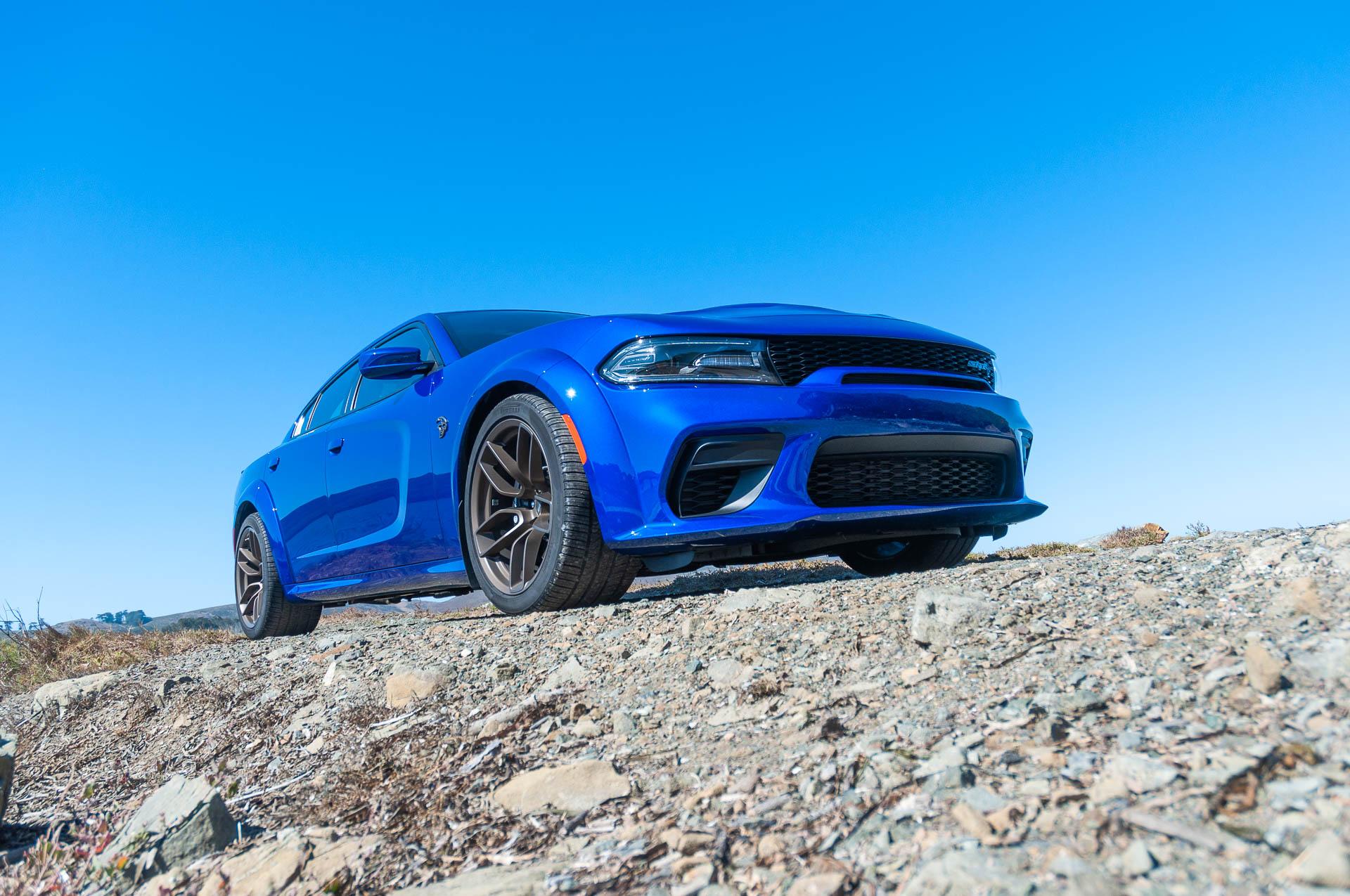
One billion dollars. Read that number again, because it lands less like a budget line and more like a confession. That's the figure now swirling around Dodge's reported plan to bring HELLCAT power back to the Charger for 2028—a sum so vast it stops being arithmetic and starts being a statement of faith. After years of hedging toward electrification—the Charger Daytona, the Hornet, the slow retreat from the supercharged V8 that built the brand's modern identity—Dodge appears ready to spend ten figures resurrecting the very engine it spent a decade turning into a cultural artifact.
If the reporting holds, this isn't a product decision. It's a bet-the-company wager, and it may be the last of its kind.
What a Billion Dollars Actually Buys
Understand what that money represents. It is not simply the cost of dropping a 6.2-liter supercharged V8 back into an engine bay engineered around battery packs and electric motors. It is the cost of re-engineering a platform, re-certifying an engine against emissions regimes that have only tightened, re-tooling a supply chain that has spent years winding down supercharged component production, and absorbing the penalties that come with selling a car that thumbed its nose at the regulatory consensus.
Every one of those dollars is a statement that Dodge believes the Hellcat nameplate is worth more than the sum of its regulatory liabilities—that the muscle-car faithful, and the mythology they carry, constitute a market no spreadsheet has yet managed to price correctly. That's not spreadsheet logic. That's conviction, and it's expensive.
The Racing Connection
There is a certain symmetry in the timing. Word of the 2028 Hellcat Charger arrives alongside credible reports that Dodge is preparing a return to the NASCAR Cup Series as early as 2027—a move that has already drawn a public welcome from Ford's racing leadership and revived speculation about a Brad Keselowski reunion. Read together, these are not separate stories. They are a single strategic argument: that Dodge's future is best secured by reasserting the loud, combustion-driven, race-bred identity that made it relevant in the first place. NASCAR is the marketing wing; the Hellcat is the product. The billion dollars is the bridge between them.
The Arithmetic Is Harrowing
Yet the math is genuinely brutal. A billion-dollar program must be amortized across a production run that will be shorter, smaller, and more expensive than anything the Hellcat enjoyed in its 2015–2023 heyday. The regulatory environment of 2028 will be less forgiving than the one that birthed the original. And the customer base, however devoted, is aging.
Dodge is effectively wagering that scarcity and nostalgia will command a premium steep enough to carry the load—that the last great V8 sedan will be valuable precisely because it is the last. It is a strategy that works only if the brand's enthusiasts treat the car as an heirloom rather than a commodity, and if the wider market treats it as a cultural event rather than a curiosity. That's a narrow window, and Dodge knows it.
Defending the Audacity
It is worth remembering what Dodge is risking all this to protect. The brand's modern resurgence was never built on refinement or efficiency; it was built on the audacity of putting 707 horsepower in a family sedan and daring the world to object. That audacity is a fragile asset. It survives only so long as the company is willing to spend real money defending it, and a billion dollars is the most emphatic defense Dodge has ever mounted.
Whether the 2028 Charger Hellcat arrives as a triumphant final statement or a cautionary monument to a vanishing era depends on forces no engineering team controls—fuel prices, political weather, the patience of a parent company staring down its own electrification commitments. The car itself may be the easy part. The world around it is anything but.
What can be said with confidence is that Dodge has chosen its hill. In an industry racing toward silence, the company is preparing to spend a billion dollars to make noise—supercharged, uncivilized, unmistakable noise. For a brand whose entire modern identity was forged in that sound, the wager is not merely defensible. It is, in the deepest sense, the only move that still looks like Dodge.


