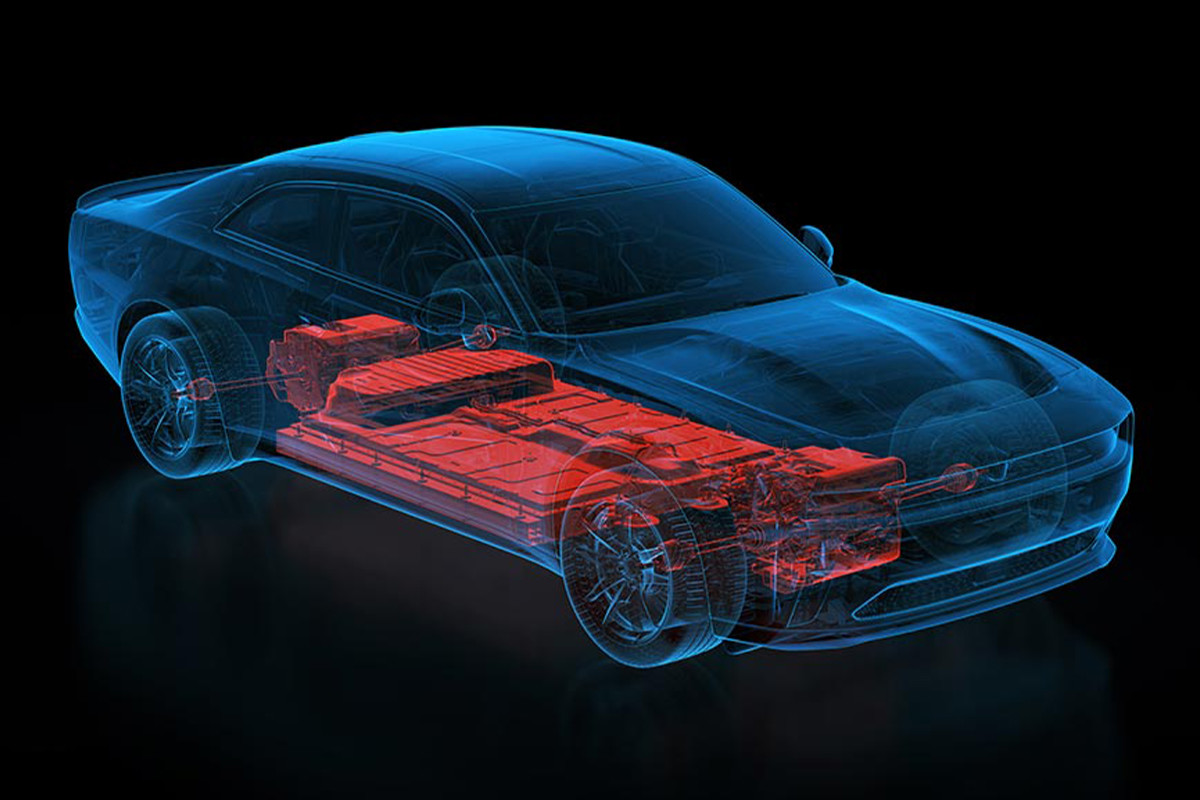
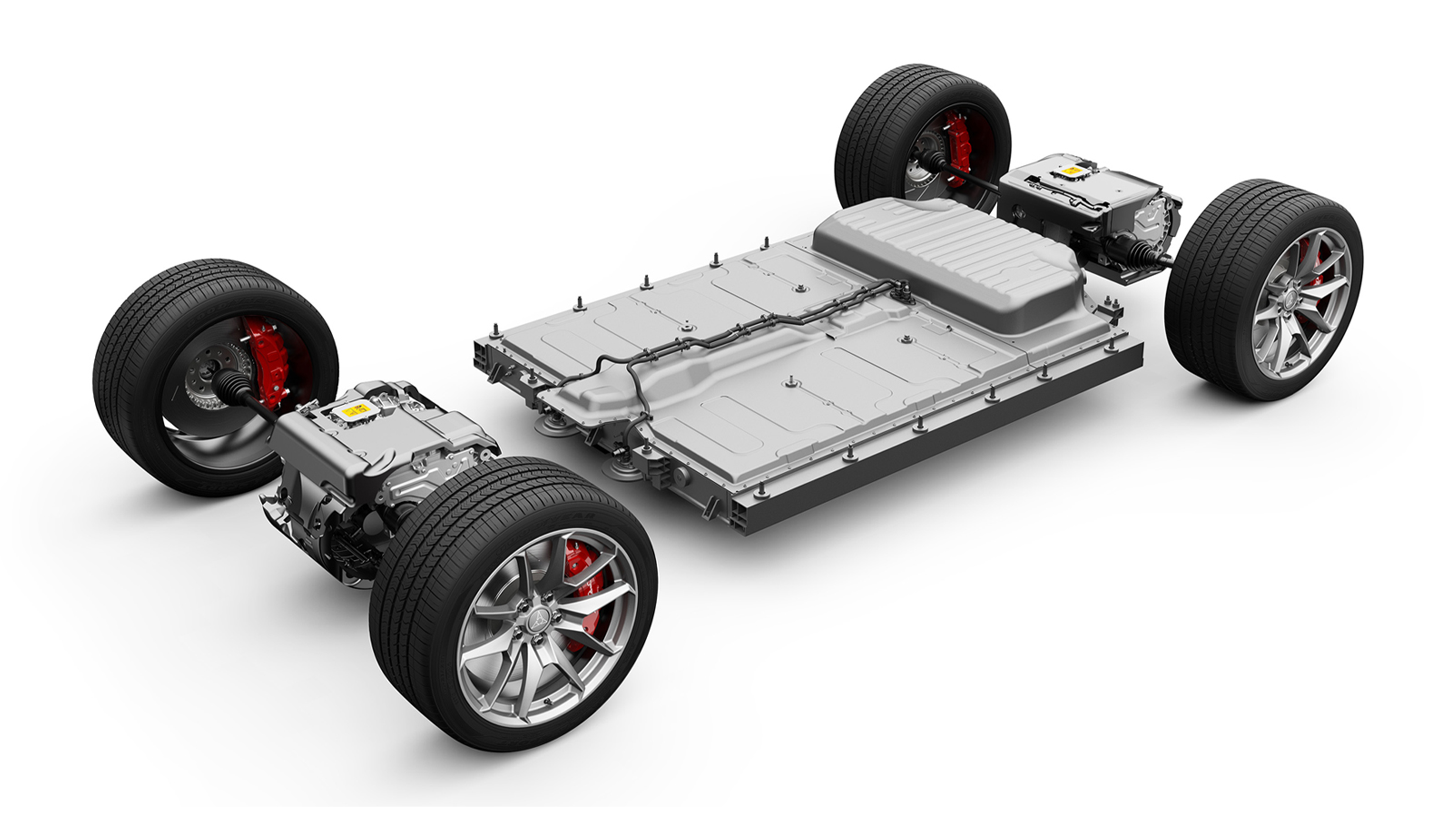
Dodge has never been a brand content to solve problems quietly. Where other automakers engineer their way toward restraint, Dodge engineers its way toward spectacle. So when news surfaced via Jalopnik that the brand had patented an ejecting battery system — a mechanism designed to physically jettison a burning battery pack from the vehicle before it can torch the cabin — the reaction was less surprise than recognition.
Of course Dodge looked at the problem of EV thermal runaway and concluded that the answer was not better chemistry or thicker shielding, but a trapdoor. Of course the brand that gave us the Hellcat and the Demon would treat a lithium fire the way a fighter jet treats a malfunctioning missile: punch it out and let physics handle the rest.
The Patent Is Genuinely Clever
Strip away the theater and the engineering deserves serious attention. Thermal runaway in a high-voltage pack is a uniquely vicious failure mode — once a cell begins to combust, it can cascade through neighboring cells with a ferocity that no conventional extinguisher can meaningfully arrest. Fire crews are trained to let EV fires burn themselves out, sometimes for hours, because intervention is often futile and dangerous.
Dodge's proposal inverts that logic. If the pack cannot be saved, it can at least be separated from the people inside. The system would detect the conditions preceding a runaway and physically eject the battery away from the chassis, leaving occupants with an intact, fire-free escape route. It is, at its core, an ejection seat philosophy applied to four wheels — sacrifice the component, save the crew.
The Questions the Drawings Don't Answer
Whether this ever reaches production is another matter entirely. Automakers patent speculative ideas constantly, and a mechanism that fires a thousand-pound battery pack onto the roadway at speed raises questions the patent drawings do not answer. What happens to the motorcyclist behind you? What happens to the battery itself, now a burning projectile resting in a ditch or a parking structure? What happens in a garage, a tunnel, or a crowded city street?
The engineering solves the problem of the occupant while creating an entirely new class of hazard for everyone in the vicinity. That is a liability calculus no legal department will sign off on without a fight. The patent may simply be a placeholder — a defensive claim staked in the ground — rather than a blueprint for a production mechanism.
An Unapologetically Dodge Answer to an Electric Problem
And yet there is something admirable in the ambition, precisely because it is so unapologetically Dodge. The brand's entire modern identity is built on the premise that too much is almost enough — that the correct response to a constraint is not compliance but defiance, ideally accompanied by tire smoke. An ejecting battery is that ethos translated into the electric era.
It arrives at a moment when Dodge's transition has been anything but smooth. The Charger Sixpack has crossed the Atlantic carrying a price tag that raised eyebrows, and the brand's two-door bets have drawn skepticism from analysts who note that buyers keep walking away. Dodge needs a narrative for its electric future that feels like Dodge, and "the car that saves itself from fire" is undeniably that.
A Deeply American Piece of Engineering
It is also, in its own strange way, a deeply American piece of engineering. Other manufacturers would address the same problem through incremental refinement — a more stable cathode, a more robust enclosure, a more conservative charge curve. Dodge's instinct is to give the failure mode somewhere to go.
There is individualism in that, and a certain grim optimism: the belief that any catastrophe can be survived if you are willing to throw a component overboard and keep driving. It is the same instinct that put a supercharged V8 in a family sedan and called it a family sedan. The solution is never to ask less of the machine. The solution is to give the danger an exit.
Whether the ejecting battery ever sees a production line, it tells us exactly who Dodge intends to be when the V8s are gone. Not safer, necessarily. Just never passive.