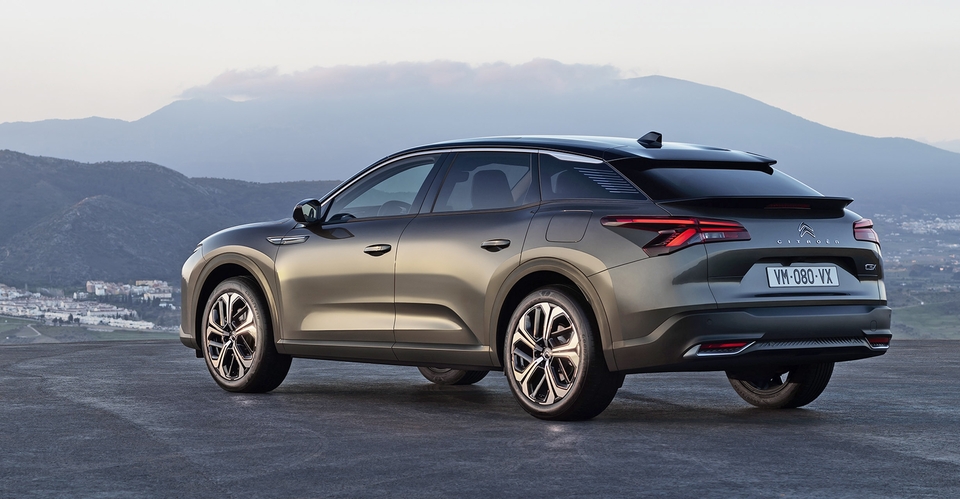
There is a peculiar irony haunting the modern electric sedan. As powertrains have become whisper-quiet and instantaneously torquey, chassis engineers have responded by stiffening suspensions to manage battery weight, fitting ever-larger wheels, and tuning dampers for track-day heroics that 99 percent of owners will never exploit. The result is a paradox: the most serene propulsion systems on the market are bolted to the most agitated rides.
Step into a Citroën C5 X, and you will immediately recognise the brand’s quiet rebellion against this trend—a rebellion that began with the Traction Avant in 1934 and reached its mystical apex with the DS in 1955. Today, as Citroën prepares its electric future under the Stellantis umbrella, the question is not whether the marque can build an EV sedan—it already showcased the ë-C4 X—but whether it will resurrect the hydropneumatic magic for a battery-powered flagship. The answer should be an unequivocal yes, because the C5 X’s Advanced Comfort Active Suspension is already a proof of concept that the electric sedan’s greatest challenge is not range, but ride.
The Mechanical Brain That Read the Road
Hydropneumatic suspension, that legendary system of nitrogen spheres and hydraulic fluid that cushioned the CX, XM, and C6, was never merely about softness. It was about *intelligence*—a mechanical brain that could read the road’s imperfections faster than any coil spring. The system’s self-levelling ability meant a Citroën could glide over cobblestones while maintaining perfect body height, a sensation so uncanny that Rolls-Royce licensed the technology for the Silver Shadow.
When Citroën phased out hydropneumatics in 2017 with the end of the C5, many assumed the magic was gone. Not quite. The C5 X’s suspension uses hydraulic cushions—progressive compression and decompression stops—paired with conventional springs and passive dampers. It is a simplified, cheaper echo of the old system, yet it delivers a ride that genuinely flummoxes luxury rivals. Now, imagine that same philosophy applied to a dedicated electric sedan platform, where the silence of the drivetrain magnifies every road imperfection into a percussive intrusion. The C5 X proves that comfort electronics—cameras reading the road ahead, adaptive dampers reacting in milliseconds—can replicate the old hydraulics’ sorcery without the plumbing.
Why Batteries Scream for the Magic Carpet
Why does this matter specifically for electric sedans? Because battery placement has transformed vehicle dynamics. The floor-mounted pack lowers the centre of gravity, which engineers celebrate for cornering grip, but it also increases unsprung mass and raises the resonant frequency of the body structure. A stiff suspension is the lazy solution to managing that mass. The consequence is a jarring ride on broken asphalt, a constant low-frequency shudder that contradicts the electric motor’s serene hum.
The upcoming Citroën ë-C5 X—expected to share the STLA Medium platform with the Peugeot 3008 and Opel Grandland—cannot afford that compromise. It must be the anti-Tesla, the antidote to the Model 3’s brittle firmness and the Porsche Taycan’s track-tuned tautness. The brand has already signalled its intent with the Oli concept of 2022, a radical, lightweight electric show car that prioritised simplicity and sustainability over performance. The Oli’s cabin was a masterclass in reduction, but its suspension was conventional. The next step, the production electric flagship, must resurrect the hydropneumatic concept in digital form: adaptive dampers with hydraulic end-stops, air springs for self-levelling, and a camera that pre-scans the road surface 15 metres ahead, adjusting damping force in real time.
The Art of Decoupling from Tarmac
This is not nostalgia; it is engineering logic. Citroën’s greatest historical successes were not sports cars but grand tourers that made distance irrelevant. The DS 19 could cross France at 130 km/h with a glass of water balanced on the dash. The CX 25 GTi Turbo was a 200 km/h limousine that never disturbed its occupants. An electric sedan, with its inherently smooth power delivery, is the perfect canvas for such a philosophy.
The problem is that most manufacturers are using electrification to chase acceleration figures, not serenity. Citroën’s opportunity is to position the electric C5 X as the only sedan in its class that treats the road as a suggestion, not a battleground. The brand’s Advanced Comfort seats—those thick, high-density foam creations that first appeared in the C4 Cactus—already do half the work. Pair them with a true active suspension, and Citroën could achieve what no EV has yet delivered: the sensation of being *decoupled* from the tarmac, floating rather than driving.
The Weight of Legacy, Lightened
There are technical hurdles, of course. Hydropneumatic systems were heavy and energy-dense, two qualities that conflict with EV efficiency. But modern air springs and continuously variable dampers can achieve 80 percent of the old magic at a fraction of the weight. Citroën’s engineers have already demonstrated this with the C5 X’s Progressive Hydraulic Cushions, which swallow potholes with a muted thump rather than a crash. The next step is to add the active element—an electronically controlled valve that varies damping force within five milliseconds, reacting to accelerometer data from each wheel. Add a front-facing camera for predictive control, and you have a system that could genuinely rival the Mercedes-Benz EQS’s E-Active Body Control, but without the complexity or the price premium. The C5 X’s current passive system costs a fraction of the German air suspension, yet independent reviewers consistently rank its ride comfort above the BMW i5 and Audi A6 e-tron prototypes.
The market is ready. Electric sedan buyers are not early adopters chasing g-force; they are commuters, executives, and families who want to arrive at their destination as fresh as when they left. Citroën’s brand identity—quirky, humanistic, defiantly non-premium—is uniquely suited to this brief. The ë-C4 X is already a compelling compact crossover-coupe sedan, but it rides on a modified multi-link rear axle borrowed from the Peugeot 208, which limits its comfort ceiling. The true flagship must be built on a dedicated platform with air springs and active dampers from the outset. The 2024 Paris Motor Show featured a concept called the C5 Aircross Electric, hinting at an SUV-first strategy, but the sedan body style remains the brand’s soul. The old C6 was the last true French limousine, and its spiritual successor should be an electric saloon with the ride of a 1969 DS 21 Pallas and the silence of a library.
Citroën does not need to reinvent the electric sedan’s powertrain. The STLA Medium platform already offers a 100 kWh battery and 700 km of WLTP range—plenty. What it needs is to redefine what that range feels like. A 700 km journey in a stiff German EV leaves you fatigued, your spine micro-vibrating from road noise. A 700 km journey in a Citroën with active hydropneumatic-style suspension leaves you fresh, your brain unjangled by constant correction. That is the brand’s competitive advantage, and it is one that no amount of horsepower can replicate. The hydraulic cushions, the self-levelling air springs, the camera-preview dampers—these are not retro gimmicks. They are the future of luxury, ironically rediscovered by a brand that most industry observers have written off as a budget curiosity. The electric sedan is waiting for its saviour, and it wears a chevron badge. All Citroën has to do is listen to its own glorious past and press the accelerator.