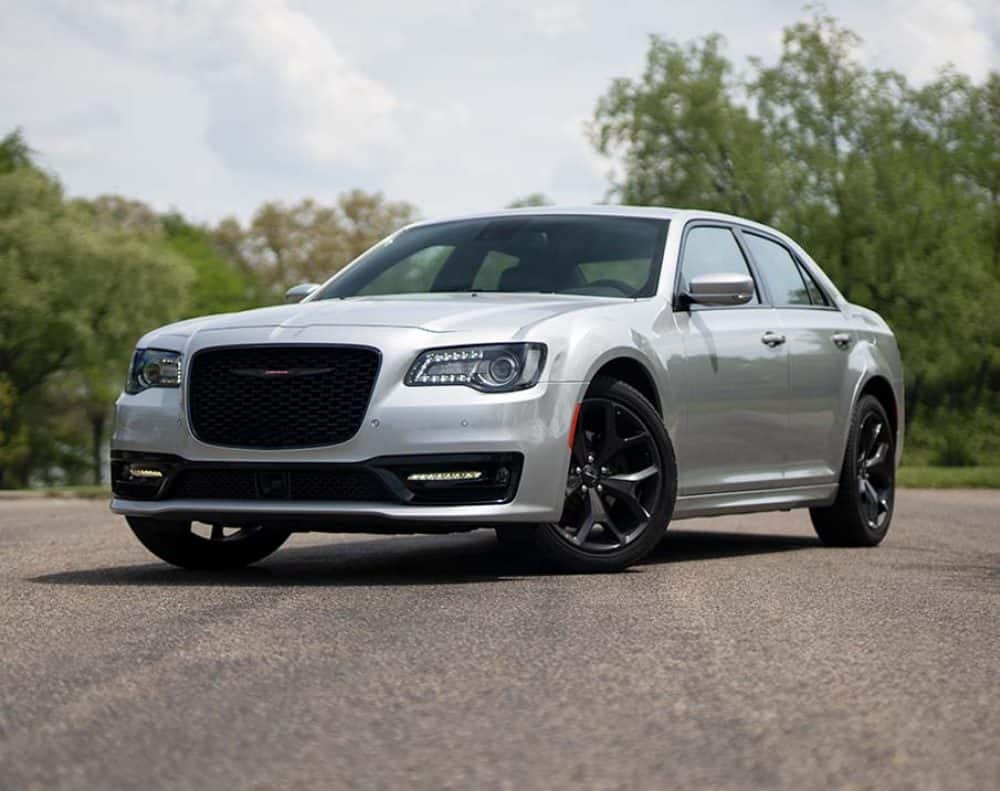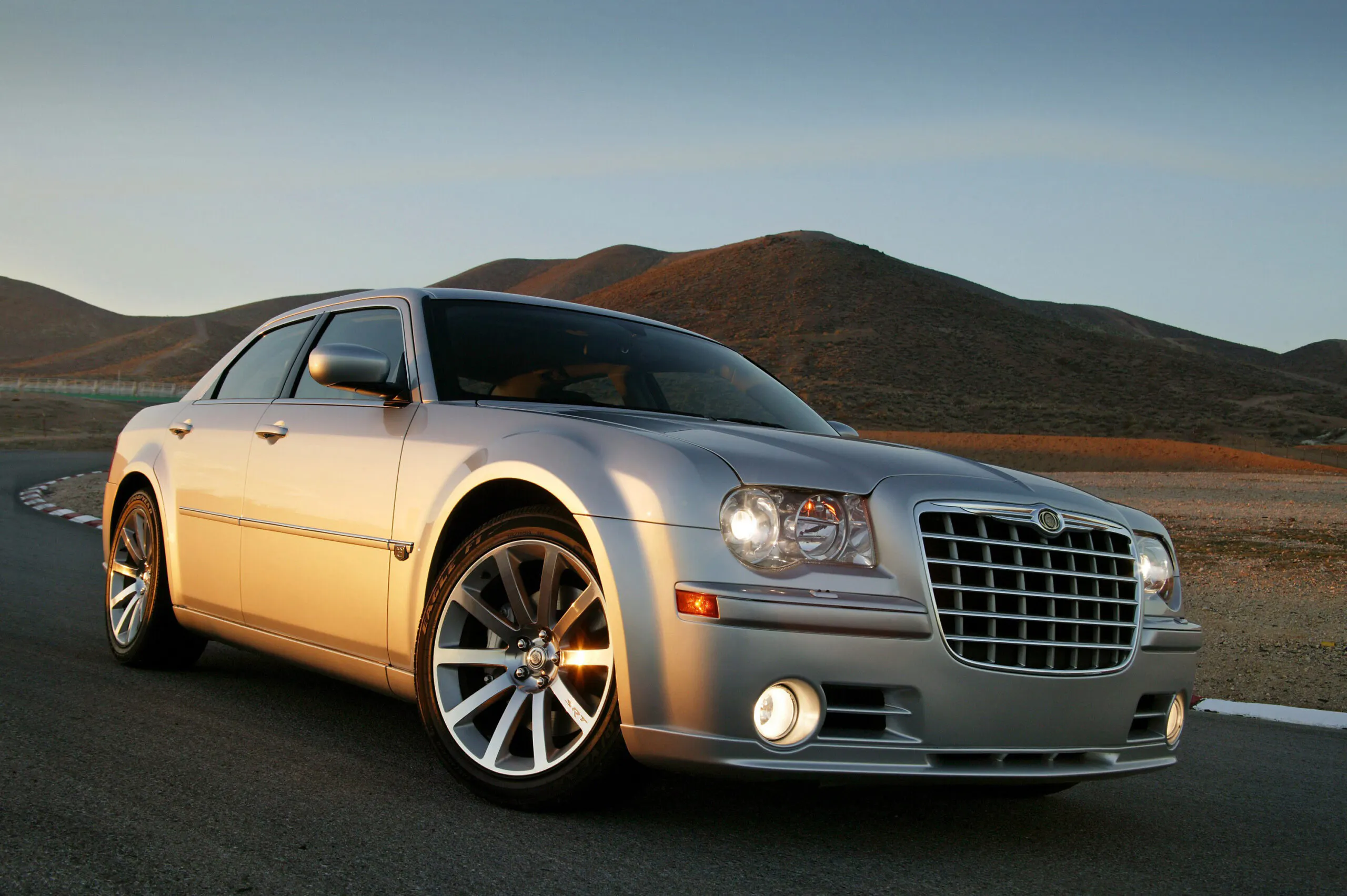
Twenty years ago, the Chrysler 300 rolled onto American driveways with a bluff, Bentley-adjacent grille and a 5.7-liter Hemi under its hood—a rear-drive sedan that thumbed its nose at the front-drive Camry consensus and briefly made Chrysler feel dangerous again. It was a car of appetites, and it had them in abundance.
Today, that same nameplate sits at the center of a slow-motion crisis. The 300 is now Chrysler's only remaining car—its minivan notwithstanding—and it's built at Stellantis's Brampton, Ontario assembly plant, where the Canadian union Unifor has issued a strike vote amid a negotiating standoff. A work stoppage there wouldn't merely idle a factory. It would halt production of the only sedan Chrysler still sells.
That is a remarkable position for a marque that once fielded everything from the ME Four-Twelve—a quad-turbo V12 concept so audacious it still reads as fantasy—to the 1979 Chrysler 300, a pampered survivor of which recently surfaced with a rare factory option, a reminder of when the badge carried genuine aspiration.
The Machine Itself
Here's the irony: by the standards of its segment, the 300 remains a legitimate machine. A 19-year Honda Odyssey owner recently climbed out of a 2027 Pacifica and marveled at how the 3.6-liter V6 felt "worlds apart" from the minivan he knew, though its 20.3 mpg served as a sobering counterpoint. That engine, and that sensibility, is the through-line of Chrysler's current lineup—competent, comfortable, and increasingly hard to justify against rivals that have simply moved on.
The competition hasn't stood still. SlashGear recently named four family minivans rated above the Pacifica, and Cars.com's car-seat fitment review of the 2027 Pacifica reads less like an endorsement than a procedural check on a vehicle whose relevance is assumed rather than argued. When your product is being benchmarked against the segment leaders and coming up short in the practical metrics that matter to families, "competent" stops being a compliment.
A Portfolio Vacuum
What the 300 represents, then, is not a product problem so much as a portfolio vacuum. Chrysler has spent a decade winnowing itself down to two vehicles—a sedan and a minivan—while its corporate parent pours capital into Jeep, Ram, and Dodge. The brand that once built a 300-hp Hemi sleeper three decades before AMG existed has been reduced to maintenance mode.
Even the Chrysler Building, that Art Deco monument to the company's grandest ambitions, has changed hands again, its new owner promising renovations. The metaphor is almost too tidy: the name outlives the enterprise. A brand that once defined American automotive aspiration now finds its most visible asset is real estate.
The Deeper Threat
The strike vote is the proximate threat, but the deeper issue is that Chrysler no longer has a next act. A plant shutdown can be negotiated. A brand without a future product plan cannot be so easily resolved. The 300 will soldier on for now—a big, comfortable, faintly nostalgic sedan built by workers whose contract is in limbo, sold to buyers who increasingly wonder why they should care.
That is a hard way for any nameplate to spend its final years. Not with a farewell, but with an argument over whether anyone noticed it was still there. The Hemi rumble that once announced the 300's arrival now competes with the silence of a showroom floor where nothing new is coming.
Heritage Doesn't Roll Off the Line
For Chrysler loyalists, the ME Four-Twelve and the Hemi sleepers and the hundred-year-old museum pieces are proof of what the badge once meant. They are reminders that Chrysler could build cars with genuine swagger, machines that made a statement before you even turned the key.
The trouble is that heritage doesn't roll off an assembly line in Brampton. A strike might pause the 300; indifference will finish it. And for a brand that once made danger feel like a selling point, the quietest threat of all is the one nobody bothers to negotiate.