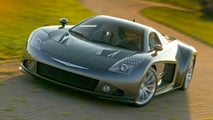
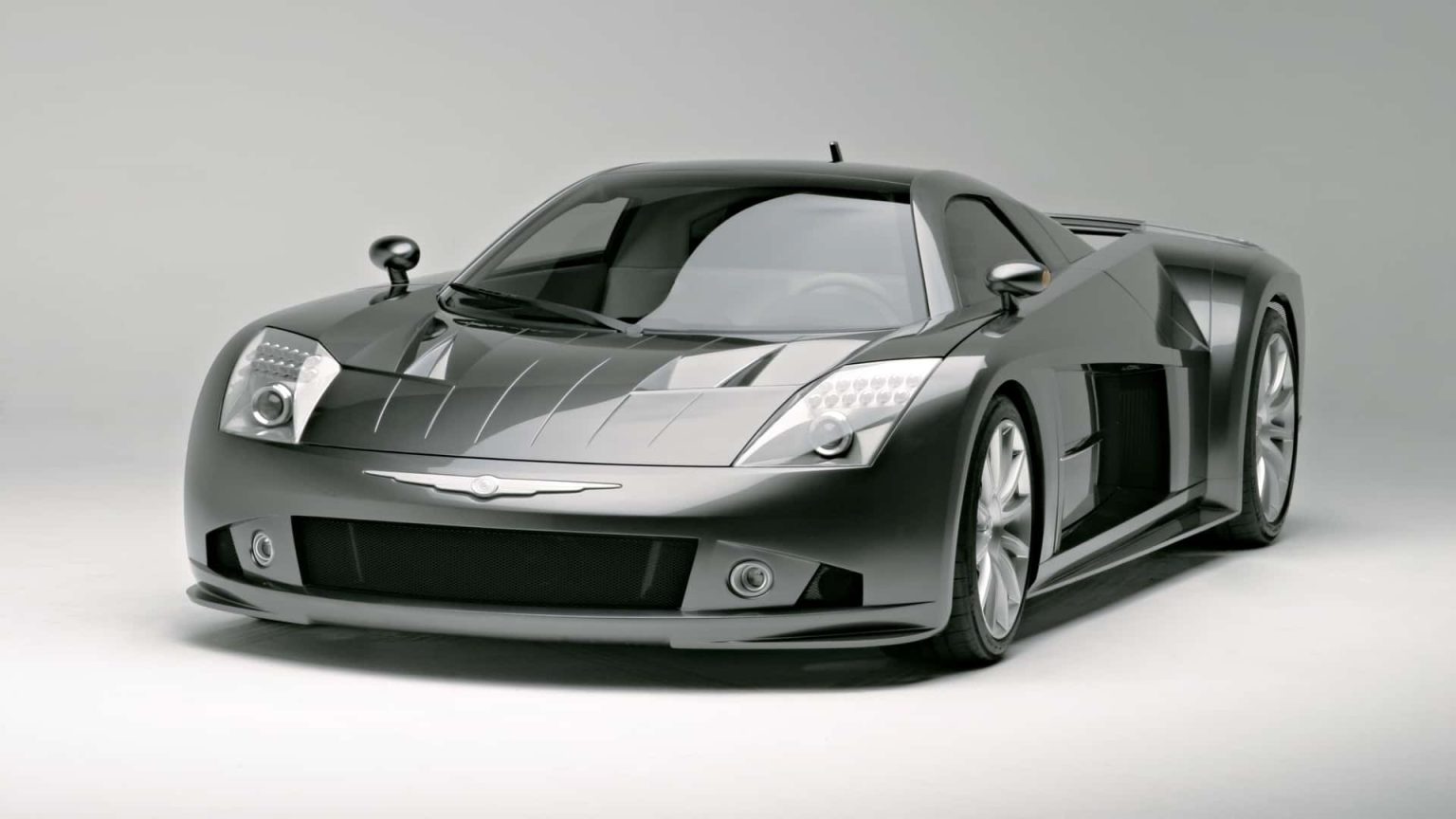
Somewhere in Chrysler's history sits a machine that shouldn't exist. Not a concept car, not a design study, not a styling exercise destined for a convention floor — but a genuine, running, mid-engined supercar with roughly 850 horsepower, engineered with one job in mind: to hunt Ferraris. And then, before it could ever reach a showroom, Chrysler buried it.
The story, resurfacing this week via MotorTrend, reads like automotive myth. A mid-mounted V-10, loosely derived from the architecture that would eventually power the Dodge Viper, reportedly massaged to extraordinary output. With something in the neighborhood of 850 horsepower on tap, this Chrysler wasn't merely competitive with contemporary Italian exotica — it was built to humiliate them. Straight-line acceleration, top speed, track poise: all reportedly benchmarked against the very best Maranello could offer. For a company whose modern identity rests on the Pacifica and the promise of $25,000 crossovers, the notion of a Ferrari-killing halo car is almost jarring.
The Numbers That Never Were
Start with the engine, because that's where the audacity lives. A V-10 mounted amidships — the layout Ferrari, Lamborghini, and McLaren have refined for decades — and tuned to a figure that, even today, would place it among the most powerful production cars on earth. Around 850 horsepower. Read that again in the context of Chrysler's current lineup. This wasn't a cautious toe dipped into the performance pool. It was a cannonball.
The benchmarks tell the rest of the story. Every target was set against Maranello's finest: acceleration, top speed, the kind of chassis composure that separates a true supercar from a fast car. Chrysler wasn't aiming to be taken seriously by enthusiasts. It was aiming to beat them at their own game, on their own terms, with a badge nobody expected to see on a mid-engined exotic.
A Bloodline of Audacity
And yet, none of this is as out of character as it first appears. Chrysler has always been at its most electrifying when it ignored caution. The 1957 Chrysler 300C — which Hagerty recently re-anointed as America's greatest-performing car — was precisely this kind of statement. A full-size sedan that embarrassed sports cars of its era with brute Hemi force. The letter-series 300s weren't sensible purchases. They were engineering manifestos, rolling declarations that Chrysler could out-muscle anything on the road.
The buried supercar was, in spirit, a direct descendant of that audacity. It carried the same DNA: the refusal to accept the role assigned to it, the compulsion to prove that the underdog badge could run with the thoroughbreds. It's a reminder that Chrysler's heritage contains genuine performance royalty alongside its people-mover pragmatism — and that the two have always been in tension.
Why It Disappeared
The answers are depressingly familiar. Money, timing, and corporate triage. Chrysler has spent the past two decades lurching between ownership regimes — Daimler, Cerberus, Fiat, and now Stellantis — each with its own priorities, and each less inclined to fund a low-volume exotic with a tenuous business case. A supercar is a vanity project in the best of times. Chrysler has rarely enjoyed the best of times.
The program was reportedly shelved. Prototypes consigned to storage. Engineers reassigned to vehicles that could actually turn a profit. It's the oldest story in the industry: the halo car that never was, sacrificed on the altar of quarterly earnings.
The tragedy isn't merely that a remarkable machine never saw production. It's that the buried supercar reveals what Chrysler is capable of when unshackled from spreadsheets — and how thoroughly that capability has been suppressed. Today's headlines tell a different story. Chrysler plans affordability plays with two crossovers around $25,000, a strategy that makes commercial sense but sits at the opposite pole from an 850-horsepower Ferrari hunter. The Pacifica Grizzly Peak may yet reach production, and the made-in-Canada 2027 Pacifica continues to earn praise as the most practical vehicle money can buy. Meanwhile, the brand's news cycle is dominated by a 201,000-unit Jeep recall over faulty tire pressure monitoring and a Thanksgiving food drive at a Burlington dealership. Worthy stories, all — but hardly the stuff of legend.
There's a melancholy lesson here about how American performance gets made and unmade. The mid-engine supercar graveyard is crowded — CarBuzz recently catalogued seven such casualties that preceded the C8 Corvette — and Chrysler's phantom flagship belongs in that company. But what distinguishes this particular ghost is its badge. Ferrari killers are expected from Chevrolet, from Ford, from Dodge. They are not expected from Chrysler. That the company built one anyway, and then chose to bury it, says everything about the tension between ambition and survival that has defined the marque for generations.
The Ghost That Endures
The supercar will never roar to life on a public road. It exists only in grainy photographs, engineering documents, and the testimony of those who drove it. But it endures as a rebuke to the idea that Chrysler is merely a minivan company — a reminder that the brand's automotive philosophy was never purely pragmatic, even when pragmatism paid the bills.
Somewhere beneath the affordability strategies and the recall notices, an 850-horsepower ghost is still waiting. Proof that the brand once dreamed at full throttle — and that, for reasons we may never fully know, it decided to stop.