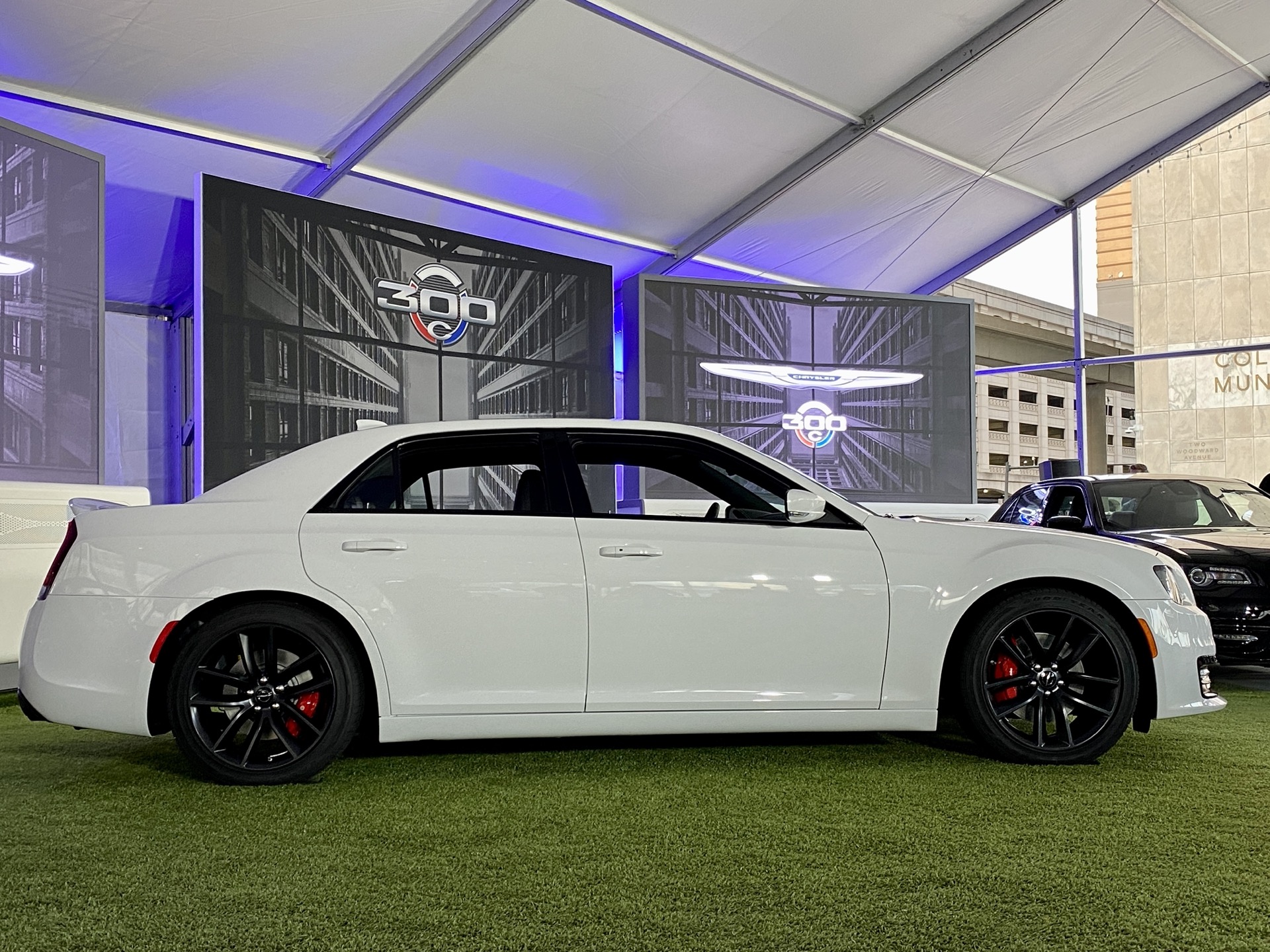
Chrysler has spent the better part of a century selling aspiration. From the Airflow's streamlined audacity to the letter-series 300s that defined American performance luxury, the brand built its identity on the proposition that a Chrysler was something more than mere transportation. That proposition is now being quietly dismantled, and the replacement strategy is as pragmatic as it is painful: two crossovers, both starting around $25,000, reportedly derived from Fiat underpinnings. For a marque that once positioned itself against Lincoln and Cadillac, the pivot to budget-first family haulers is less a reinvention than a surrender dressed up as strategy.
The logic behind the move is not difficult to trace. Stellantis has watched Chrysler's lineup wither to a single model, the aging Pacifica minivan, while showrooms that once moved metal in volume now function largely as holding pens for Dodge, Jeep, and Ram traffic. Selling two affordable crossovers is, in the coldest commercial terms, a volume play — a way to get bodies back into Chrysler dealerships and spread fixed costs across a broader production base. The reported rebadging of Fiat platforms, however, raises an uncomfortable question that the brand has never had to answer so directly: what exactly does a Chrysler stand for if its engineering, its architecture, and its price point all originate elsewhere?
The Volume Play Nobody Asked For
Strip away the nostalgia and the commercial math is brutally simple. Chrysler needs product, and it needs it cheaply. Two $25,000 crossovers built on existing Fiat hardware represent the shortest possible path from empty showroom to signed paperwork. It is a strategy engineered by accountants, not enthusiasts, and it treats the nameplate as a distribution channel rather than a promise.
The trouble is that this is the most crowded, least forgiving segment in the market. The Toyota RAV4, the Honda CR-V, and a dozen Korean and domestic rivals already own the value conversation, and they own it with decades of reliability data and residual values Chrysler cannot match. Chrysler will not win on price alone, because everyone is already there. If the crossovers arrive as transparently rebadged Fiats with a markup, the market will punish the cynicism swiftly.
What Chrysler Used to Mean
The answer, historically, was design and presence. Chrysler's best moments came when it leveraged shared corporate hardware into something distinctly American — the 300C of the mid-2000s being the clearest example, a car whose Bentley-adjacent swagger and rear-drive proportions made a Mercedes-derived platform feel like a declaration of intent. That car worked because the brand's ambition matched its sheet metal. It didn't apologize for borrowing bones; it dressed them in a tailored suit and dared you to call it a rental.
That is the template the new crossovers must follow if they are to mean anything. A Chrysler badge on a Fiat crossover is not inherently fatal — the 300C proved that. What is fatal is the absence of conviction, the sense that the badge is a sticker applied at the port rather than a statement engineered into the metal.
The People Behind the Badge
What the brand retains is something harder to quantify: a century of institutional memory and a workforce that has, in some cases, never left. The recent stories of Charles Ferguson and Raymond Washington, two Chrysler plant veterans marking sixty years on the line, are not mere human-interest filler — they are a reminder that the company's real equity lives in the people who built it, not the badge on the grille. That equity is being spent to fund a strategy that treats the nameplate as a distribution channel rather than a promise.
Whether the math works depends entirely on execution. If the crossovers arrive with genuine design distinction, competitive hybrid powertrains, and the kind of interior quality that justifies the Chrysler crest, the affordability play could stabilize the brand long enough to rebuild it. If they arrive as transparently rebadged Fiats with a markup, the market will punish the cynicism swiftly.
The Identity Chrysler Could Choose
There is a version of this story in which Chrysler becomes the sensible, attainable American brand — a kind of domestic answer to what Mazda or Subaru represent, offering honest value without pretension. That is a legitimate identity, and arguably a more sustainable one than the faded luxury aspirations the brand has been coasting on for two decades.
But it requires the company to commit fully to the repositioning rather than hedge, and it requires Stellantis to invest in the product rather than simply rebrand it. A $25,000 Chrysler can work. A $25,000 Chrysler that feels like a $25,000 Fiat will not, and the distinction between those two outcomes is the entire gamble.
For a nameplate that has survived longer than most of its rivals, the stakes have rarely been this stark. Chrysler's century of aspiration was never really about leather and chrome — it was about the belief that an American car could stand on its own terms, engineered with conviction and sold without apology. That belief is what the next two crossovers will either honor or extinguish. The badge is already on the grille. Now comes the harder question of whether it deserves to be.