There's a particular kind of joy that comes from surprising someone at a stoplight. Not with a flashy launch or a screaming exhaust note, but with a quiet, unassuming sedan that simply doesn't look the part. Before the industry's collective pivot to silent electric torque, before the SUV's total domination of suburban driveways, Chevrolet quietly built a family sedan that could humiliate contemporary sports cars. The 2014-2017 Chevrolet SS remains one of the most compelling and misunderstood performance vehicles ever to wear a bowtie.
It wasn't a marketing gimmick or a badge-engineered special. It was a rebadged Holden Commodore VF from Australia, shipped to American shores with a 6.2-liter LS3 V8 producing 415 horsepower at first, then upgraded to 450 horsepower in its final model year. And almost nobody bought it.
The Anti-Corvette
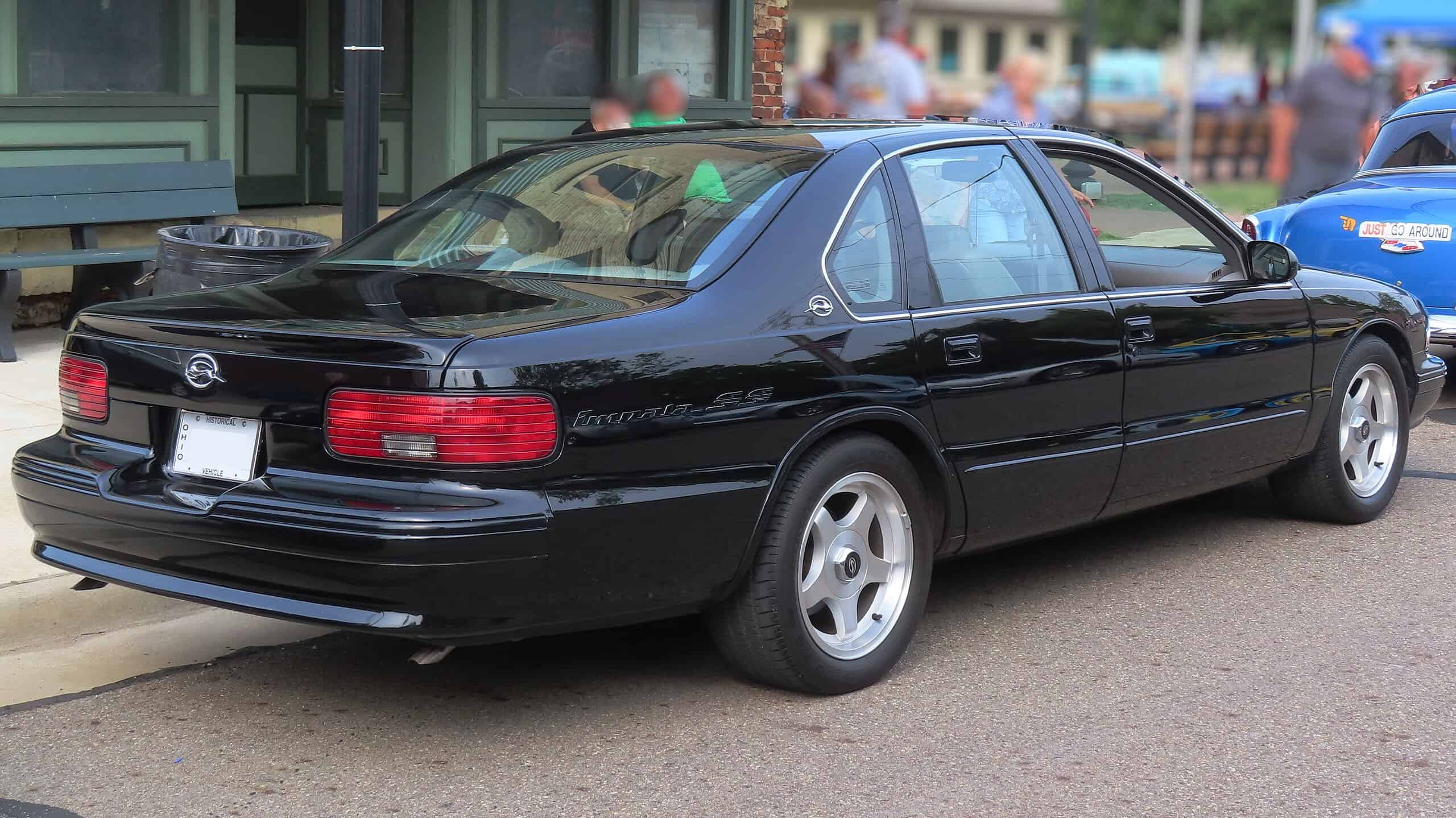
The SS was, in every conceivable way, the anti-Corvette. It arrived with zero fanfare, a conservative four-door body, and a base price hovering near $45,000. There were no aggressive body kits, no carbon fiber trim, no launch control theatrics. It looked like a rental-spec sedan that had accidentally swallowed a race car.
But beneath that anonymous sheet metal lay a genuine Chevrolet Performance parts bin: a Tremec TR6060 six-speed manual or a competent automatic, a limited-slip differential, Brembo brakes, and Magnetic Ride Control tuned by engineers who clearly understood the assignment. The SS could sprint to 60 mph in the low four-second range and top out near 170 mph. It was, in pure numbers, faster than a contemporary BMW M5 in certain real-world contexts, and it could carry five adults and their luggage while doing it.
The design language was deliberate in its restraint. Where rivals wore wings, splitters, and gaping intakes, the SS presented a clean, almost corporate facade. The interior followed suit—functional, well-built, but utterly devoid of the theatrical flourishes that typically accompany a 400-plus-horsepower sedan. It was a wolf in the most convincing sheep's clothing imaginable.
The Sleeper Effect
Yet Chevrolet sold fewer than 13,000 units over four model years. Dealerships relegated the SS to dusty corners of their lots, often unaware of what they were sitting on. Salespeople pushed Malibus and Impalas instead. The car's anonymity was both its charm and its fatal flaw.
In an era when performance sedans wore their aggression like armor—think of the winged Mercedes-AMG models or the buck-toothed Subaru WRX STI—the SS arrived as a sleeper of almost absurd proportions. Owners loved the confusion on the faces of muscle car drivers at stoplights. The car made no noise about itself; it simply performed.
The driving feel was where the SS truly distinguished itself. Magnetic Ride Control delivered a duality that few cars of any price could match—compliant enough for daily commutes, yet buttoned-down and composed when the road turned demanding. The LS3's torque curve was a broad, seamless wave of thrust that made every on-ramp feel like a drag strip. The Tremec gearbox was mechanical perfection in your hand, each shift a positive, satisfying engagement that connected driver to machine in a way that modern turbocharged competitors simply couldn't replicate.
A Lineage Cut Short
The SS's lineage traces back to a moment when General Motors still believed in the global rear-wheel-drive platform. The Zeta architecture, developed by Holden, also underpinned the Pontiac G8—a similar sleeper that died with the Pontiac brand in 2009. The SS was essentially a second chance, an encore that the American public ignored just as resolutely.
By 2017, with Holden's Australian plant shuttering, Chevrolet ended production with a final run of 1,500 SS models painted in Heritage Green and Nitrate Silver, each one a collector's item that few recognized at the time. The car disappeared from showrooms as quietly as it had arrived, leaving behind a small but devoted following who understood exactly what they had lost.
Now, as Chevrolet pivots toward an electrified future with the upcoming NEV sedan and the increasingly capable Bolt, the SS stands as a monument to a different kind of performance. It wasn't about lap times or drag strip bragging rights that could be printed on a spec sheet. It was about the sensation of a naturally aspirated V8 humming behind a dashboard that looked like it belonged in a rental fleet.
The current Corvette gets the headlines. The ZR1X with its 4,517-horsepower fantasies captures the internet's imagination. But the SS represents a different truth about Chevrolet: the brand has always possessed the engineering courage to build cars that defy categorization. The SS was a sedan that outran expectations, a family hauler that embarrassed exotics, and a sales failure that became a legend.
In the rush toward electrification, it's worth remembering that sometimes the most revolutionary thing a car company can do is build a quiet, unassuming sedan with 450 horsepower and let the pavement do the talking. The SS rewarded those who understood nuance. It punished those who judged by appearance. And it remains, even today, one of the most undervalued performance sedans in the modern era—proof that the best cars aren't always the loudest ones in the room.