For nearly a century, Chevrolet defined the American car company, and for most of that time, the answer arrived on four doors. The Impala, the Malibu, the Cruze — these were the volume machines that parked Bowtie badges in driveways from coast to coast. That era is ending, and the showroom tells the story. The sedan lineup that once anchored Chevrolet's lineup has been steadily dismantled, and the brand's remaining energy is being redirected toward trucks, SUVs, and a small electric hatchback whose future just got a little less certain.
The clearest signal comes from the electric side. According to Reuters, General Motors' pint-sized Bolt EV is being handed a smaller production run than originally planned — a detail echoed by Kelley Blue Book, which reports that Chevrolet may lower production of the 2027 Bolt. For a vehicle meant to be the accessible entry point into GM's electric future, a reduced build volume is a telling concession. The Bolt was never a halo car; it was a practicality play. Shrinking its output suggests Chevrolet is reading the room carefully — or perhaps cautiously. Either way, the affordable EV that enthusiasts hoped would democratize electric driving is arriving in far fewer driveways than the marketing suggested.
A Supercar That Gets Cheaper
That restraint stands in sharp contrast to the noise coming from the performance wing. Chevrolet has announced pricing for the 2027 Corvette Z06, and the news is genuinely surprising: the American supercar is getting a price cut. Order books are open, and the move reads as an aggressive play to keep the Z06 competitive against European rivals whose costs have been creeping upward. It's a rare moment of a manufacturer pulling a flagship's price downward rather than letting it drift toward six figures as a matter of course. Chevrolet clearly understands that the Corvette remains its most potent brand asset — and it is willing to sacrifice margin to keep the car in the conversation.
The contrast between these two stories is the whole story. On one side, a modest electric hatchback quietly trimmed back. On the other, a mid-engine supercar getting more affordable. In between, the sedans have largely vanished, leaving the Malibu as a lonely holdout in a segment Chevrolet once dominated. The company is no longer pretending to be a full-line carmaker in the traditional sense. It is a truck company, an SUV company, and — selectively — a performance company.
The Cost of Betting Big
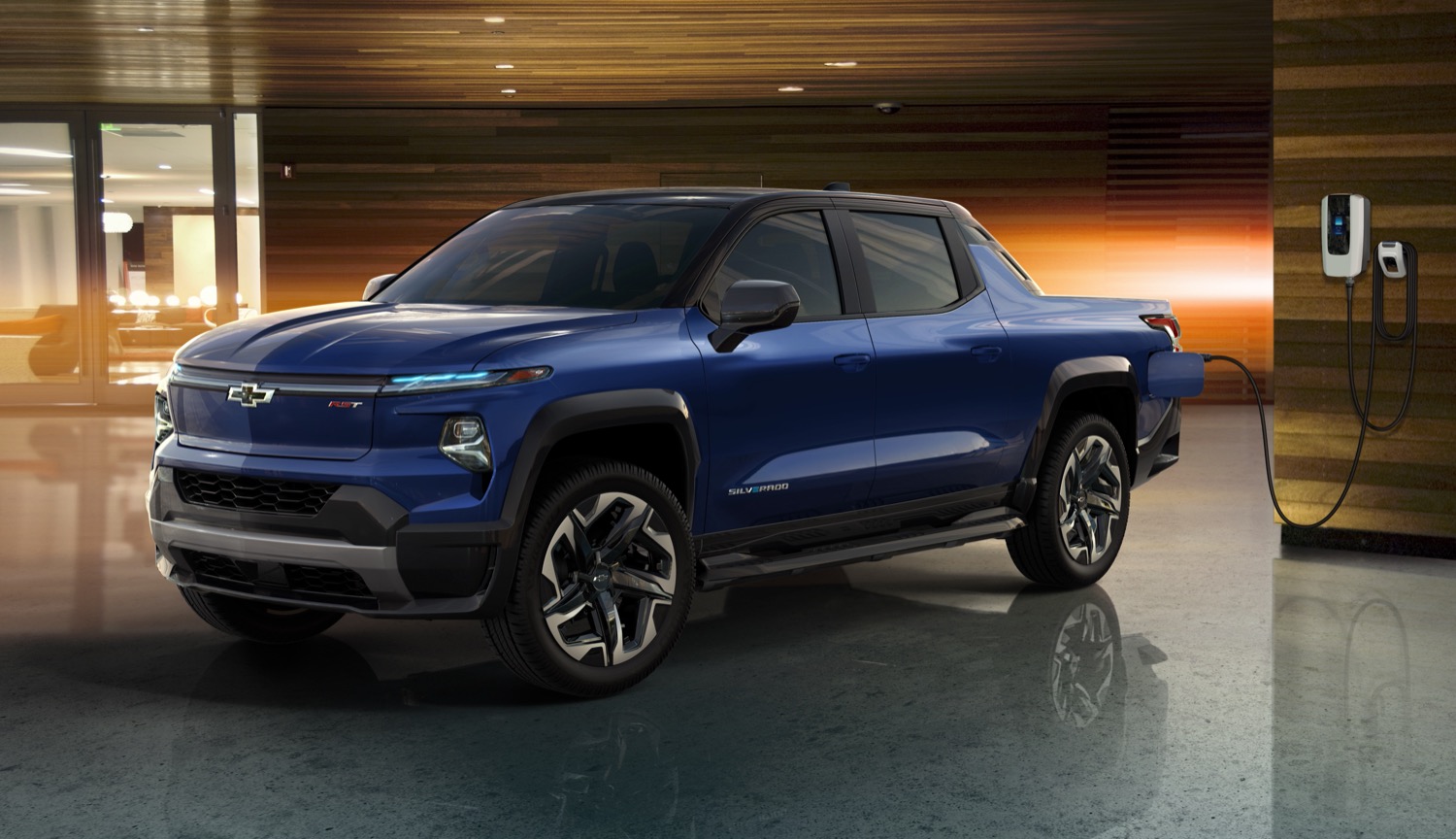
The truck and SUV dominance carries its own complications. An owner of a Silverado EV recently reported paying $651.47 in public charging costs across a 1,216-mile tow — a figure that underscores how far electric towing economics still have to travel before they match the convenience of a diesel fill-up. The owner said the trip felt easier, which is a genuine endorsement of the driving experience, but the receipt tells a more complicated story. Meanwhile, broader market data from The New York Times shows that as gas prices rose, sales of larger vehicles slid — a reminder that Chevrolet's heavy bet on big, thirsty machines is not immune to the pump.
A Legacy in the Rearview
There is also the matter of legacy. The California Highway Patrol has revealed its final Chevrolet Camaro, closing a chapter for a nameplate that has already ended production. A 1972 Chevelle SS shipped to Australia in 2011 is heading to auction — a relic of the era when Chevrolet's identity was built on sedans and muscle coupes rather than crossovers. Even the Corvette has become a study in collector economics: one owner bought a 2024 Z06 Convertible for $168,875, drove 13,000 miles, and sold it for $122,000 — a nearly $47,000 depreciation lesson in modern supercar ownership.
Chevrolet is not in trouble, but it is in transition, and the transition is narrower than the brand's mythology. The sedans are gone or going. The Bolt is being built in smaller numbers. What remains is a portfolio increasingly split between high-margin trucks, a premium sports car, and an electric future that Chevrolet is approaching with more caution than bravado. The Bowtie still means something. It just means fewer things than it used to.