Chery has spent the past three years executing one of the most aggressive international rollouts in modern automotive history. The numbers are genuinely impressive: the Chinese manufacturer now sits second only to BYD in China's NEV export rankings, where its rival commands a 31.1 percent share while Chery climbs fast behind it. An EV launch in the UK is confirmed for early 2027. A European localization plan is being stood up through the same year. New sub-brands — Lepas, iCAUR, Jetour — have spun out at a cadence that would exhaust most legacy marques.
And yet the same period has produced a safety failure serious enough to force a national regulator to intervene. Then it happened again. That contradiction sits at the heart of the Chery story right now, and it is not a small one.
The Axle That Came Off — Twice
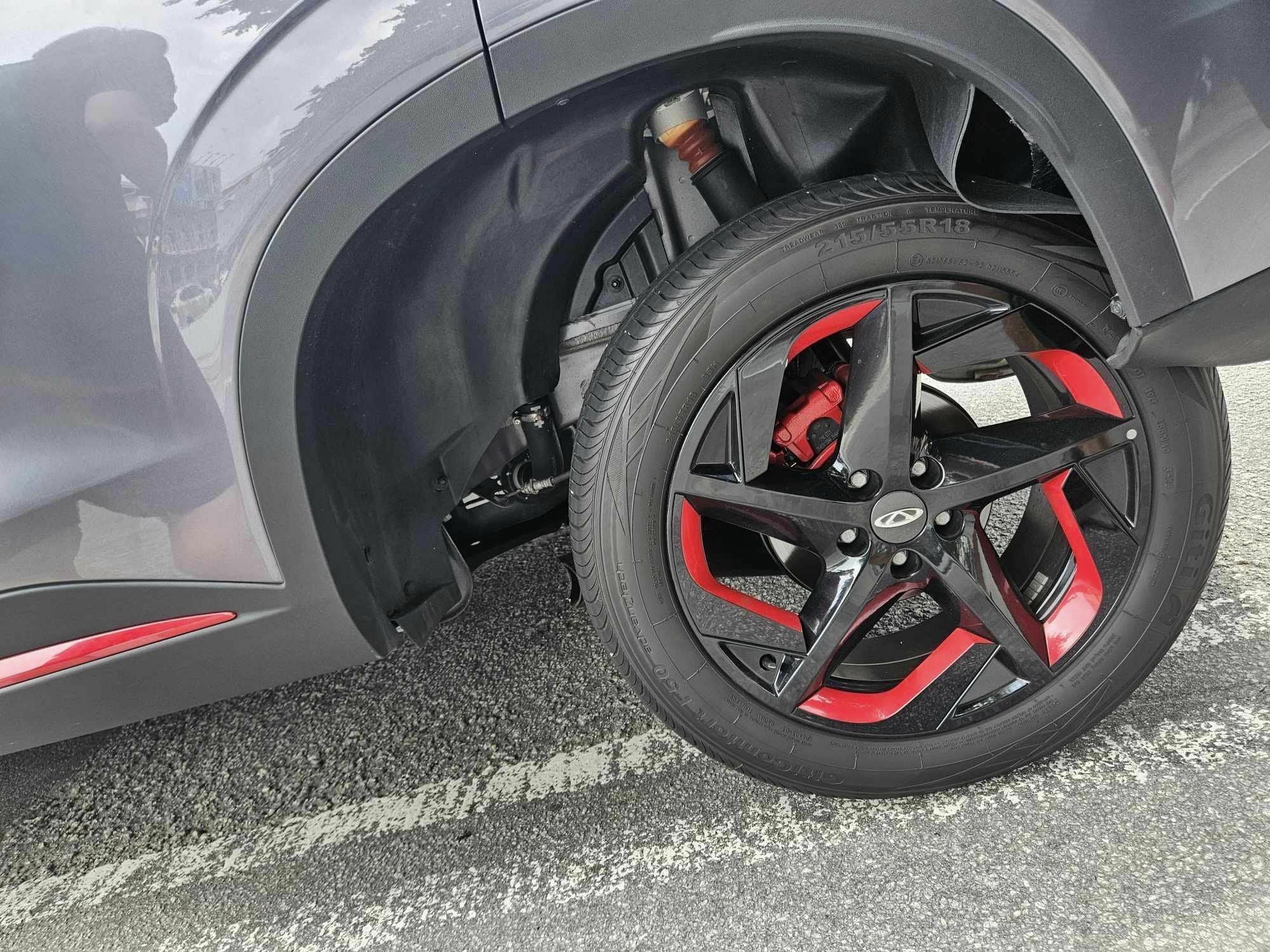
The failure concerns the Omoda 5 and its electric sibling, the Omoda C5. In Malaysia, a viral incident showed the rear axle of an Omoda 5 snapping clean off, wheels still attached, leaving the vehicle stranded. The footage spread fast enough that Malaysia's Road Transport Department, JPJ, suspended approval for the model outright, halting sales while investigators worked. Chery recalled the vehicle.
Then came the sequence that ought to trouble anyone tracking the brand. Chery recalled the Omoda C5 in Malaysia a second time for the same defect — a detached axle. Two recalls, one market, one component. Whatever the root cause, the pattern points to a corrective action that did not fully correct the problem.
Expansion at Full Throttle
What makes this more than a regional embarrassment is the timing. Chery is not a brand quietly consolidating at home before venturing abroad. It is simultaneously launching the Jetour Traveller 7 in China with ICE and PHEV options, pricing the Lepas electric SUV at $47,990 with a claimed 440 km range, extending a European cooperation with AUMOVIO, and preparing to bring the iCAUR electric SUV to British showrooms in 2027.
Each of those moves demands engineering resources, supplier oversight, validation capacity, and quality assurance bandwidth. A rear axle that detaches twice in the same market suggests those resources are being stretched thinner than the expansion schedule assumes.
Why a Rear Axle Is Not a Trim Piece
The rear axle is not a cosmetic part. It is a load-bearing structural component, and its failure at speed is the kind of defect that turns a warranty claim into a fatality. That is precisely why JPJ's suspension carried weight beyond Malaysia's borders — regulators and consumers in other markets notice when a safety authority withdraws approval from a model that is being sold, or about to be sold, in their own country. Chery was quick to note that Singapore vehicles were unaffected, a clarification that protects one market while implicitly raising questions about which others might be.
The Recall That Didn't Take
There is a defensible argument that rapid recalls are a sign of a functioning safety system rather than a broken one, and that young global brands inevitably encounter teething problems. But that argument requires the recall to work. A second recall for the same defect is not teething. It is evidence that the feedback loop between field failure and engineering correction is not keeping pace with the volume of vehicles Chery is pushing into new markets.
None of this means Chery's expansion will fail. The company has capital, product breadth, and a proven ability to move faster than its competitors. But speed in launching is not the same as speed in learning, and the Omoda axle saga is the clearest evidence yet that Chery's growth is outpacing its quality infrastructure. The brand is asking buyers in the UK, Europe, and Southeast Asia to trust a name they barely know. Trust is built on axles that stay attached — not on how quickly the next model arrives.