Chery has never been a company content with a single identity. While its flagship marque does the heavy lifting in China and emerging markets, the Wuhu-based giant has spent the past two years assembling something more ambitious: a portfolio of sub-brands engineered to slip past the defences that protect legacy automakers in the world's most lucrative markets. Two names sit at the centre of this strategy — Freelander and Lepas — and neither is being launched with the fanfare normally reserved for a global push. That reticence is entirely deliberate.
Think of it as a pincer movement executed in silence. On one flank, a revived British nameplate with instant recognition. On the other, a blank-sheet EV brand creeping through Europe's secondary markets. Between them, a logistics and manufacturing apparatus being bolted together piece by piece. This is not a single invasion. It is a quiet colonisation, and it is already underway.
Freelander: Borrowed Heritage as a Weapon
Consider Freelander first. The badge, resurrected from the Land Rover back catalogue under the Chery-JLR joint venture, chose the United Arab Emirates for its global debut — a market where premium SUVs are judged on presence rather than provenance. From there, the brand is being prepped for a Philippine debut, with the Philippines acting as a proving ground for Southeast Asian acceptance before any assault on more sceptical territories.
Reviving a dormant British nameplate gives Chery something money alone cannot buy: heritage recognition in markets where "made in China" still invites a raised eyebrow. It is a masterclass in borrowing equity rather than building it from scratch. The name does the heavy lifting before a single specification sheet is circulated. For buyers who grew up knowing Freelander as a rugged, accessible take on the Land Rover ideal, the badge arrives carrying memories — and that is worth more than any advertising budget.
Lepas: The Blank-Sheet Advance
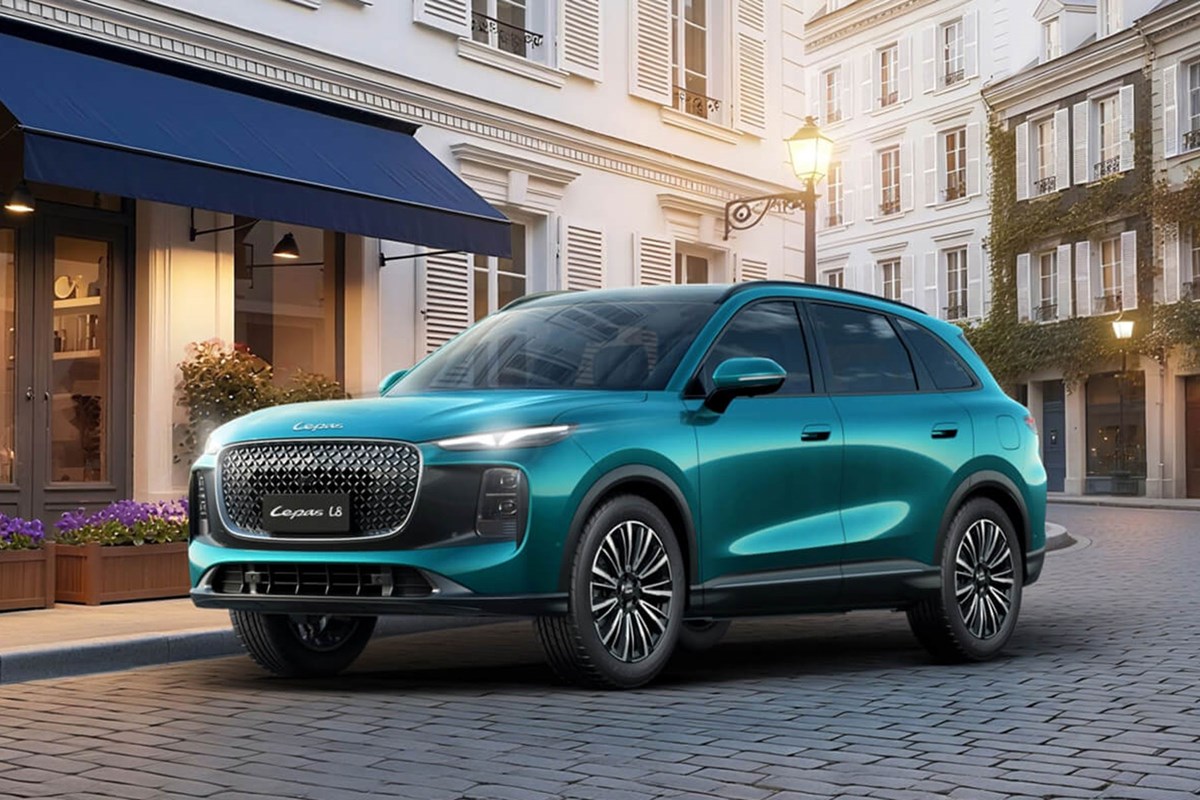
Lepas, by contrast, is Chery's blank-sheet play. Its expansion has been methodical and almost stealthy, with confirmed progress across multiple markets and a Bulgarian launch of its electric range planned for 2027. Early specifications for the Lepas L6 electric SUV have already surfaced, signalling that the brand is being positioned not as a budget curiosity but as a credible EV proposition for European buyers.
Bulgaria may seem an unlikely beachhead, but it is precisely the kind of mid-sized EU market where a new entrant can build volume, service networks and word-of-mouth before the spotlight of a German or French launch arrives. By the time Lepas reaches Western Europe's motoring press, it will already have a track record. No hype cycle. No premature scrutiny. Just cars on driveways and charging cables coiled in garages.
The Infrastructure of Expansion
The broader machinery supporting these brands is revealing. Chery has signed a memorandum of understanding with CMA CGM and CEVA Logistics to advance global automotive logistics collaboration — the unglamorous plumbing that determines whether a brand can actually deliver cars at scale. It is investing $75 million in Korea's KG Mobility, buying insight into overseas markets and manufacturing know-how. And it is establishing a UK research centre, a move that buys engineering credibility as much as capability. None of this is accidental; it is the infrastructure of colonisation, assembled quietly.
Domestically, Chery is even weighing whether to bring Omoda and Jaecoo — two brands conceived largely for export — back into China to bolster sagging home sales. That inversion tells you where the company's centre of gravity now sits. The sub-brands were never merely export curiosities; they have become the engine. Meanwhile, products like the Chery E5 electric SUV continue to earn favourable reviews in Australia, and a new budget fastback has drawn comparisons to Audi design language at a fraction of the price — evidence that Chery's styling confidence is catching up with its commercial ambition.
A Portfolio Read in Fragments
What makes this strategy so effective is its refusal to fight on a single front. Freelander attacks the premium flank with borrowed heritage. Lepas advances through secondary European markets under the radar. Omoda and Jaecoo court younger buyers with e-sports launches in Barcelona while their parent company decides whether to repatriate them. Each brand carries its own narrative, its own price ceiling and its own set of competitors, which means a setback for one does not tarnish the others. Legacy manufacturers, accustomed to reading a rival's intentions through a single badge, are being outflanked by a portfolio designed to be read in fragments.
The result is a form of market entry that rarely makes headlines precisely because it is distributed across so many names. By the time the industry recognises the scale of what Chery has built, Freelander will have footholds in the Gulf and Southeast Asia, Lepas will be selling electric SUVs across Eastern Europe, and the question will no longer be whether Chinese brands can compete globally — but which of Chery's many faces got there first.


