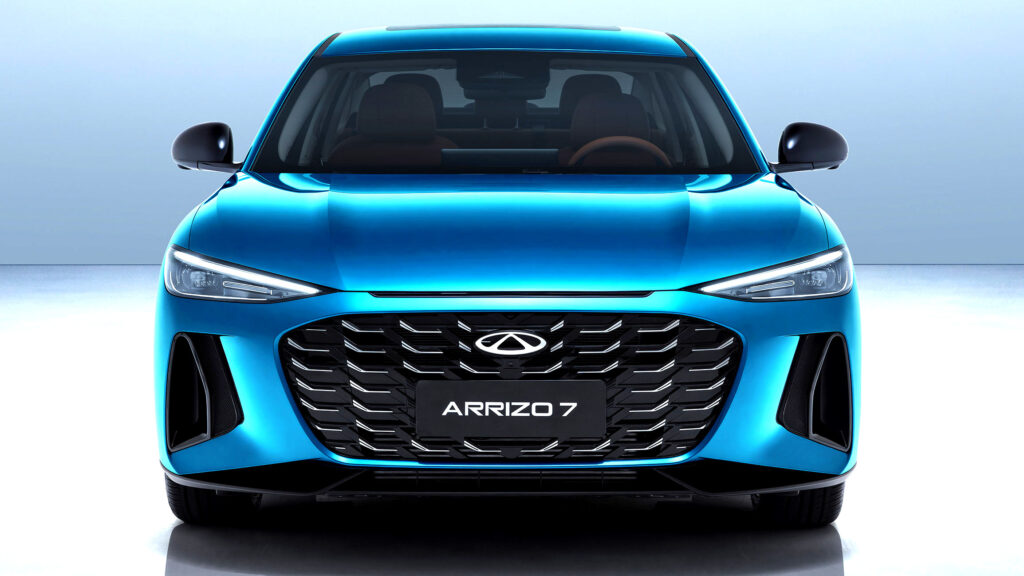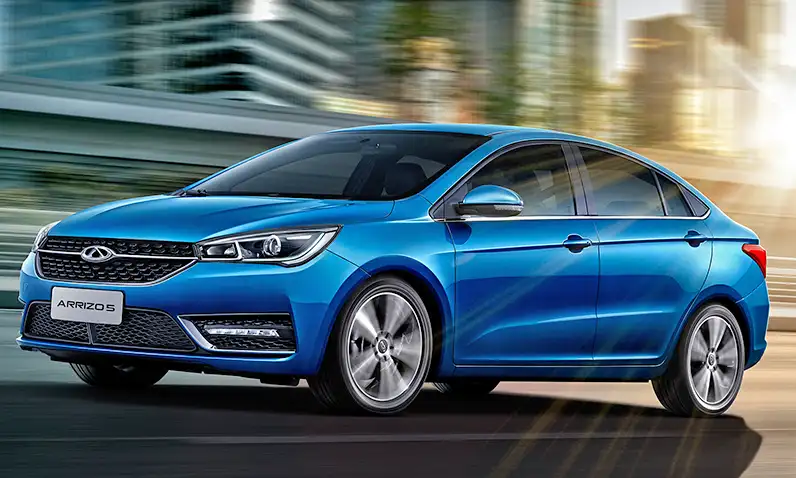
There's a moment every petrolhead knows—when you stop reading the badge and start tracing the sheet metal. That moment hits hard when a challenger brand rolls out a silhouette so confident it demands a second glance. Chery has just delivered that moment with its new fastback sedan, a car that drapes itself in more quattro-inspired aggression than Ingolstadt's current lineup, then prices it below what most compact hatches dare to ask. This isn't hype; it's the calculated result of a company that's spent two years dismantling every assumption about what a Chinese automaker can achieve.
The design language here is unapologetically Germanic. The front fascia wears a wide, frameless grille that flares into sharp LED matrix headlights, while the hood's power domes echo the muscular haunches of the A7 Sportback. But the side profile is where the magic lives: a steeply raked roofline flows into a short decklid, creating a fastback that could pass for a Stuttgart concept. Chery hasn't merely copied—it has amplified. The character line running from the front wheel arch to the tail lamp is deeper, more sculpted than anything Audi currently offers in its own sedan range. The rear haunches bulge like a muscle car's, and the full-width light bar wraps around a diffuser that looks borrowed from an RS model. In the metal, this car wears Audi's identity better than the new A5, which has gone soft and rounded in its latest iteration. Chery's designers clearly studied the golden era—those sharp, deterministic lines from the 2010s—and applied them with a modern, electrified twist.
The Platform Beneath the Skin
Underneath that striking body sits an in-house platform that bears no resemblance to the flimsy, tinny underpinnings of yesteryear. The chassis is stiff, the double-wishbone front suspension tuned with a firmness that suggests genuine European testing, and the steering weight is reassuringly heavy at speed. Power comes from a plug-in hybrid system pairing a 1.5-liter turbocharged engine with an electric motor, delivering a combined output hovering near 300 horsepower in the flagship trim. Electric-only range is a respectable 100 kilometers, meaning daily commutes can run silent and zero-emission, while the gasoline engine acts as a long-distance safety net.
The cabin is where Chery has made its most dramatic leap forward. Gone are the plasticky switchgear and clunky infotainment screens of previous models. In their place sits a curved 15.6-inch display, haptic climate controls, and quilted Nappa leather that wouldn't look out of place in a Mercedes E-Class. Build quality is meticulous, with panel gaps that rival anything from Wolfsburg. This is a car that feels engineered, not assembled.
The Price That Changes the Conversation
Here's the bombshell. With a starting price in China equivalent to just under $14,000 for the base version—and the fully loaded fastback topping out around $18,500—this sedan undercuts the Audi A5 by nearly 60 percent. For that money, buyers get a car that out-styles the German original, offers comparable technology, and delivers a driving experience that's 85 percent of what Audi provides, at a fraction of the cost.
Chery is already leveraging this aggressive pricing globally. The fastback is slated for European and UK showrooms by late 2026, alongside the new Fulwin T7 SUV that starts from under $15,000 with a 600-kilometer range. The brand's acquisition of Nissan's South African plant and its new R&D centre in Bedfordshire signal a long-term commitment to Western markets, while the recent $10.8 million investment in NIO's research unit Weiju hints at deeper software integration to come.
The Spearhead of an Assault
This is not a fluke or a one-off. Chery has sold over 1.8 million vehicles globally in the past year, and its European growth is accelerating, driven by a surge in hybrid sales. The fastback is the spearhead of that assault—a car that doesn't apologize for its origins but instead dares to out-Audi the Audis. For buyers weary of paying a premium for a four-ring badge, the choice is becoming painfully obvious.
The question isn't whether Chery can build a car that looks this good. It's whether legacy brands can justify their existence when a newcomer delivers this much style and substance for less than the cost of a base Golf GTI. The answer, increasingly, is that they cannot. And for anyone who's ever questioned whether value and desire can coexist, this fastback is the proof that they absolutely can.