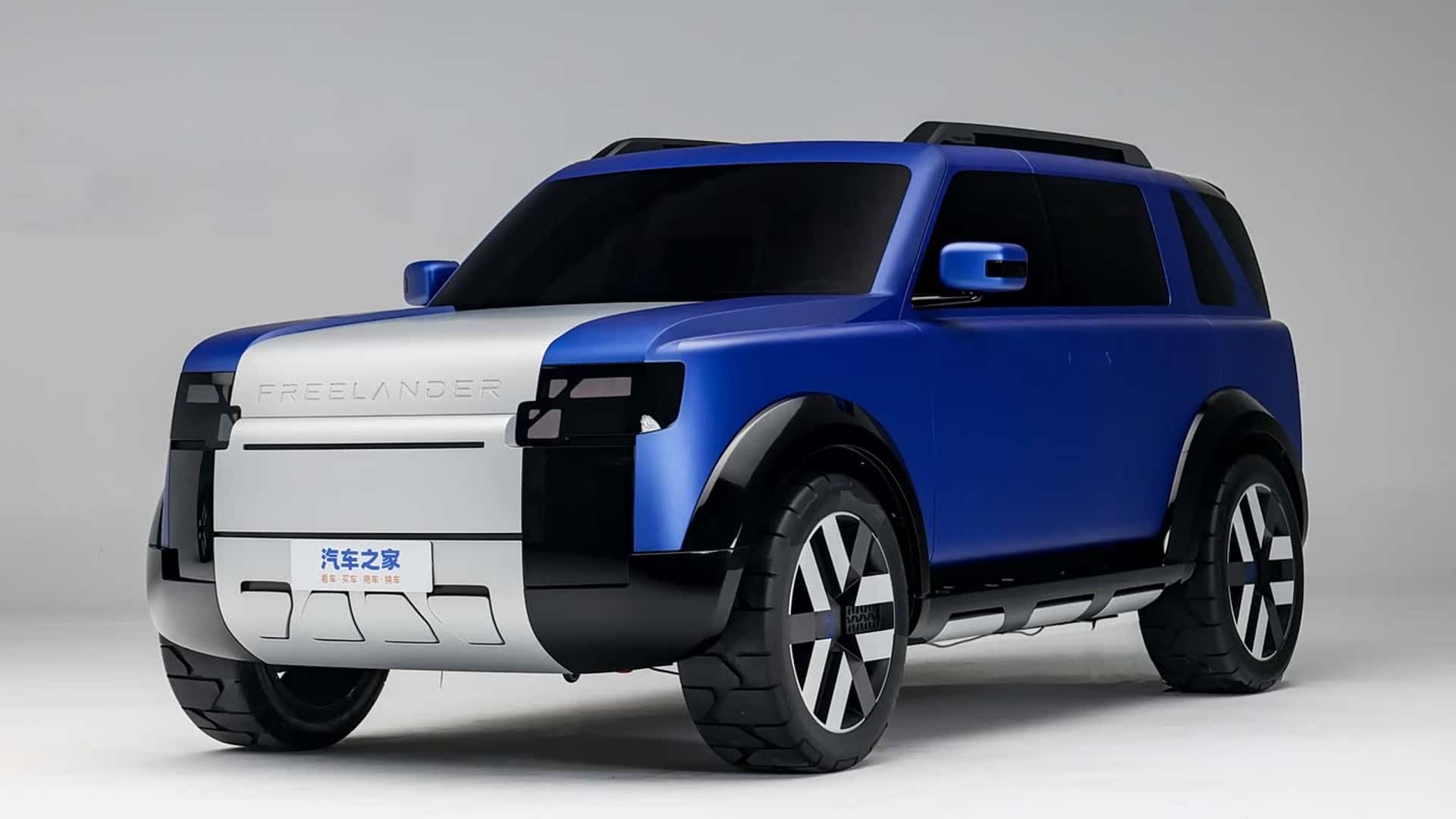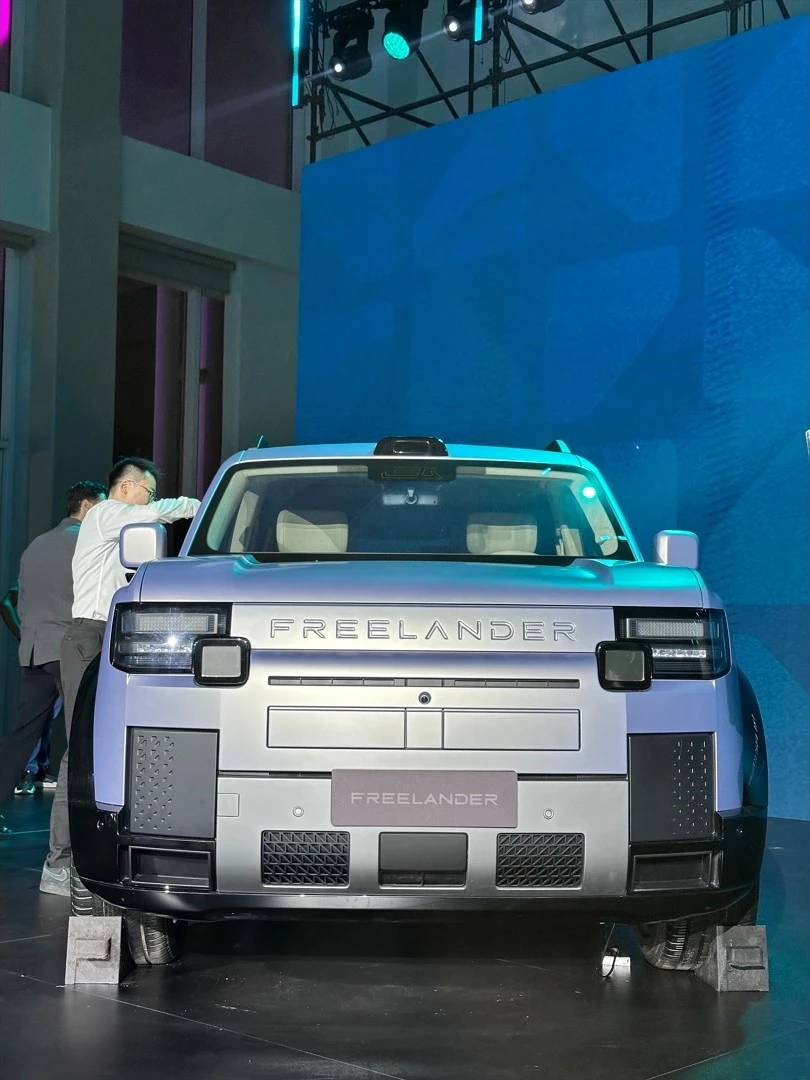
When the first reborn Freelander rolled off the line in Changshu, it wasn't just another SUV resurrection. It was a geopolitical statement welded to a battery pack. The Chery Jaguar Land Rover joint venture has spent months teasing this moment, but the real revelation isn't the car itself—it’s the audacious plan to export half of its production. The Freelander 8, a model that wears a British badge yet breathes Chinese technology, has already amassed over 10,000 pre-orders in its first 48 hours on sale. That demand, however, is merely the domestic appetizer. The main course is a global strategy that turns the old joint-venture model on its head, positioning China not as a low-cost manufacturing hub for Western brands, but as the epicenter of premium EV design and distribution.
A Cabin That Rewrites the Rulebook
The vehicle itself is a fascinating amalgam. Underneath a body that nods to the rugged, utilitarian heritage of the original Freelander lies a cockpit dominated by a 46.3-inch 8K panoramic display that would make a home theater blush. It is a stark contrast to the minimalist, physical-button ethos of traditional Land Rover interiors. Yet, the inclusion of Huawei’s driver-assistance suite as standard equipment is the more telling detail. This is not a joint venture where the foreign partner dictates the tech stack; this is a venture where Chery’s deep supply chain integration and software prowess are the primary value drivers. JLR provides the brand equity, the design language, and the legacy of the Freelander nameplate, but the beating heart of this machine is unequivocally Chinese innovation.
The Reverse-Flow Strategy
The strategic pivot to exports is where the narrative gets genuinely disruptive. Historically, Chinese-built vehicles for foreign brands were confined to local markets or emerging economies, kept away from Western showrooms to protect brand prestige. The new Freelander strategy obliterates that convention. With reports of Chery in talks to build vehicles at JLR plants in the UK, the joint venture is exploring a radical "reverse flow" scenario. Instead of importing cars into Europe, they may assemble them in the UK using Chinese platforms and components. This is not merely about circumventing tariffs; it is about leveraging China’s massive overcapacity in EV battery production and software development to create a product that can compete on both price and technological sophistication in the global arena.
A High-Stakes Bet on Volume
The implications for the legacy automakers are profound. JLR’s recent Q4 sales bounce-back after a cybersecurity incident shows a company stabilizing its core operations, but the Freelander is a separate, aggressive bet on volume. By allowing Chery to lead the engineering charge on this specific model, JLR effectively outsources the risk of EV development while reaping the rewards of a new revenue stream. For Chery, the deal is a masterclass in brand elevation. They gain access to a storied nameplate and a global distribution network without having to spend decades building a premium image from scratch. The Freelander 8, priced from around $50,080, undercuts many Western luxury EVs while offering a screen real estate and driver-assist features that leave rivals scrambling.
The New Export Playbook
What we are witnessing is the maturation of China’s automotive export strategy. Gone are the days of cheap, derivative knock-offs. The new playbook involves acquiring, licensing, or partnering with legacy brands to create "hybrid" products that carry Western nostalgia but execute with Eastern efficiency. The fact that the Freelander is initially launching in China with such explosive pre-order numbers validates the domestic appetite for this hybrid approach. But the long-term viability hinges on whether international buyers, particularly in Europe and the UK, will accept a Land Rover-badged product that is proudly powered by Huawei and engineered by Chery. The answer may well be yes, especially if the pricing and technology remain compelling.
This is the new reality of the global auto industry: the lines between maker, brand, and origin have blurred beyond recognition, and the Freelander is the clearest example yet that the future of premium EVs will be written in both English and Mandarin. For a brand built on British grit and off-road pedigree, the irony is delicious—the next chapter of Land Rover’s story isn’t forged in Solihull, but in the collision of two automotive superpowers. And if the Freelander 8’s early success is any indication, the road ahead is paved with both ambition and electrons.