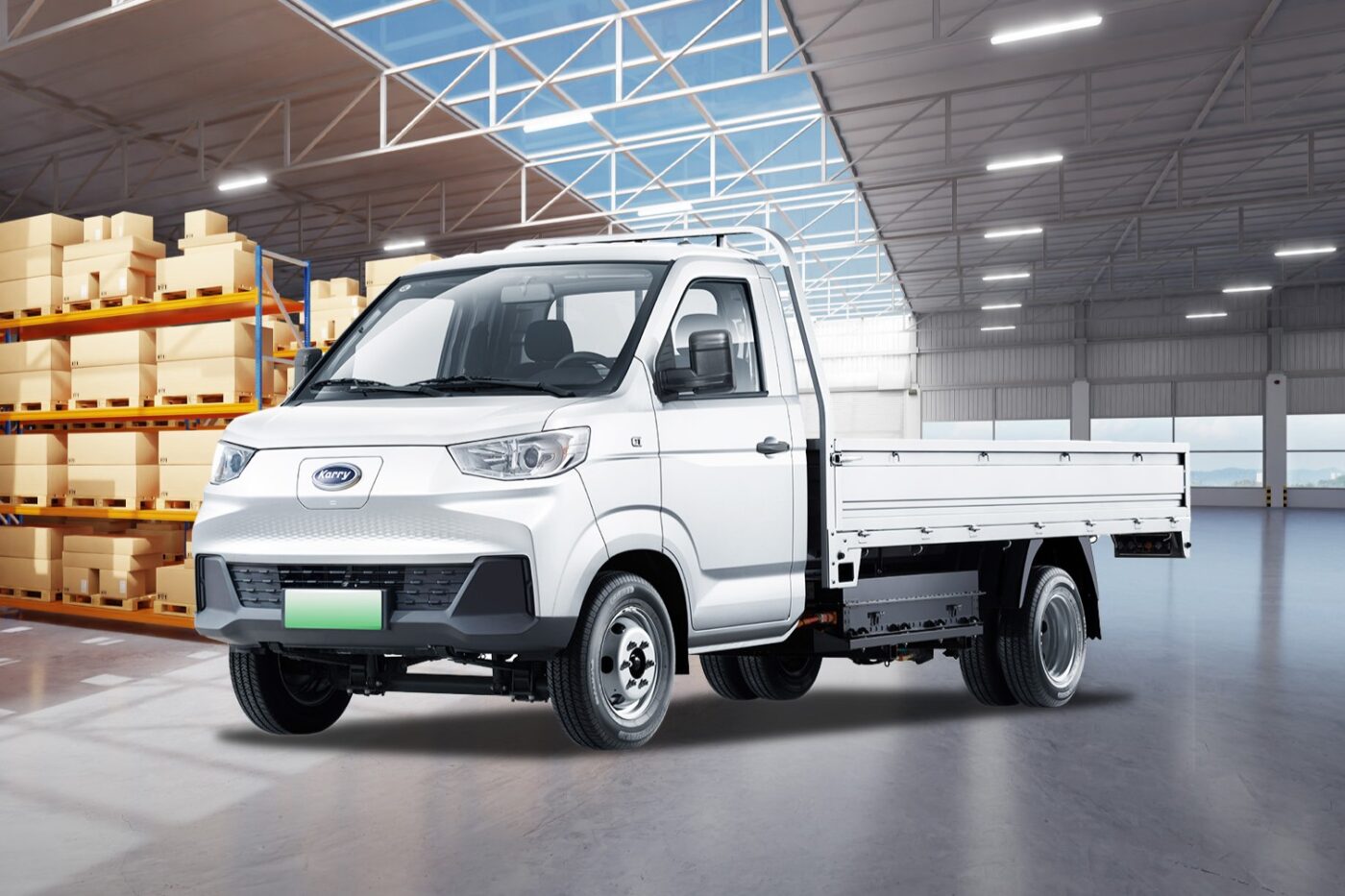
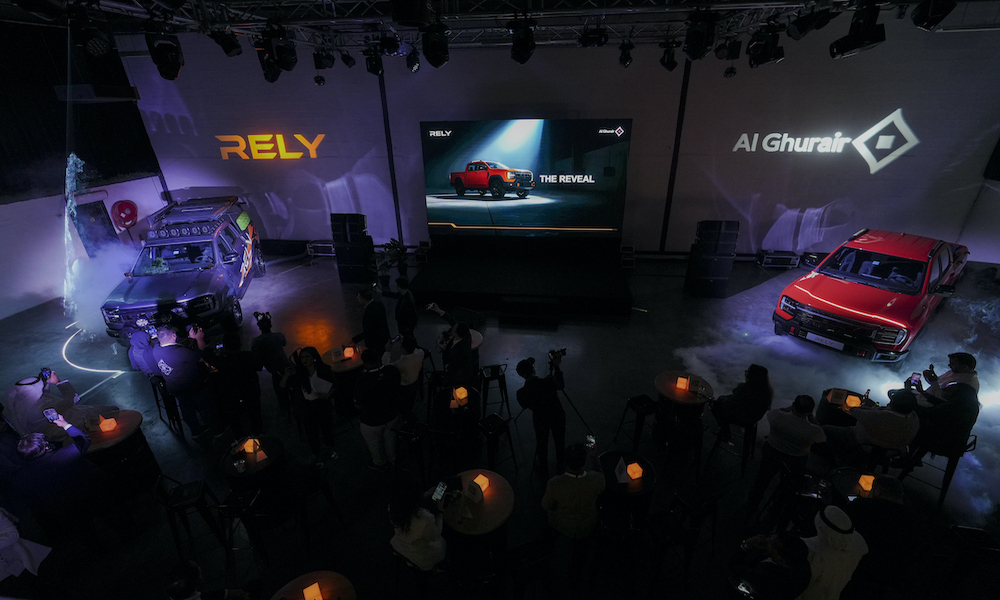
At IAA Transportation 2026 in Hanover, Chery Commercial Vehicle unveiled its latest new-energy solutions and its DELIVAN brand, a light commercial vehicle play aimed squarely at European fleets. At almost the same moment, the company confirmed a European headquarters in Liverpool — a move widely read as a beachhead for vans, LCVs, and the kind of volume business that pays the bills. Then came the inevitable trade-press speculation: Chery is circling Jaguar Land Rover's underused UK plants. The implication being that Chery wants what JLR has — factories, capacity, a British industrial footprint.
That reading misses the point entirely. Chery Commercial does not need JLR's assembly lines. It needs JLR's mud.
What Chery Commercial Actually Is
Strip away the headlines and you find a commercial vehicle division with genuine scale ambitions, a new energy roadmap, and a growing lineup that includes the kind of niche pickups most global manufacturers have quietly abandoned. The Gasgoo analysis of Chery's pickup strategy framed the segment as an underestimated opportunity, and it is right.
The global pickup market is bifurcated. On one side, American full-sizers with their own cultural gravity. On the other, a sprawling middle ground of mid-size workhorses serving farmers, builders, miners, and weekend overlanders from Thailand to Chile to Australia. That middle ground is where Toyota, Isuzu, and Ford have feasted for decades — and where Chinese entrants have struggled to earn credibility. Not because their hardware is bad, but because nobody believes a pickup without a heritage can handle a rutted track in the wet.
Why JLR Matters — And It Isn't the Welding Robots
Land Rover — and by extension JLR — is one of the few brands on earth with unimpeachable off-road equity. It is a name that means something in a bog, on a rock face, in a river crossing. That equity was built over seventy years of actual terrain, not over a marketing deck.
If Chery Commercial wants its pickups and rugged LCVs to be taken seriously by the buyers who actually use them — not just the fleets that lease them — it needs to borrow, license, or co-develop that credibility. It needs the mud.
The Liverpool HQ, the DELIVAN launch, the Hanover showcase: these are all sensible, volume-driven moves. They put Chery Commercial in front of European fleet managers with electrified vans and competitive total-cost-of-ownership maths. But they do nothing for the off-road pickup proposition, which lives or dies on a different question entirely: can this thing actually go where a Hilux goes? Right now, the honest answer from a European buyer is: we don't know, and we don't have a reason to find out.
What a Factory Can't Buy
JLR's plants would give Chery capacity it can already build elsewhere. JLR's engineering culture, its terrain-testing regimes, its suspension know-how, its very name attached to a rugged variant — that would give Chery something it cannot buy with a factory.
A Land Rover-derived or JLR-assisted off-road pickup from Chery Commercial would not be a novelty. It would be a genuine threat to the established order, because it would combine Chinese cost structure and electrification speed with British off-road legitimacy. That is a combination nobody currently offers.
The irony is that the industry keeps framing the Chery-JLR chatter as a manufacturing story, when the real opportunity is a capability story. Britain does not need another assembler of vans. It has plenty. What Britain — and the wider world — has in JLR is one of the last great off-road engineering houses.
If Chery Commercial is serious about niche pickups, about the rugged end of the LCV market, about being more than a value alternative, then the conversation it should be having with JLR is not about floor space. It is about dirt. About differentials, articulation, wading depth, and the thousand small calibrations that separate a pickup that looks the part from one that earns its place on a worksite.
The Point of It All
Chery Commercial has the scale, the ambition, and now the European footprint. What it lacks is a reason for a farmer in Queensland or a forester in Scotland to trust it. JLR's assembly lines will not supply that. JLR's mud will.
The brands that endure in this business are not the ones with the most capacity. They are the ones with a reason to exist — a reason that survives the show lights, the press releases, and the quarterly volume targets. Chery Commercial is building the hardware. Now it needs the heritage to back it up. And heritage, inconveniently, is the one thing you cannot bolt onto a production line. You have to go and get dirty for it.