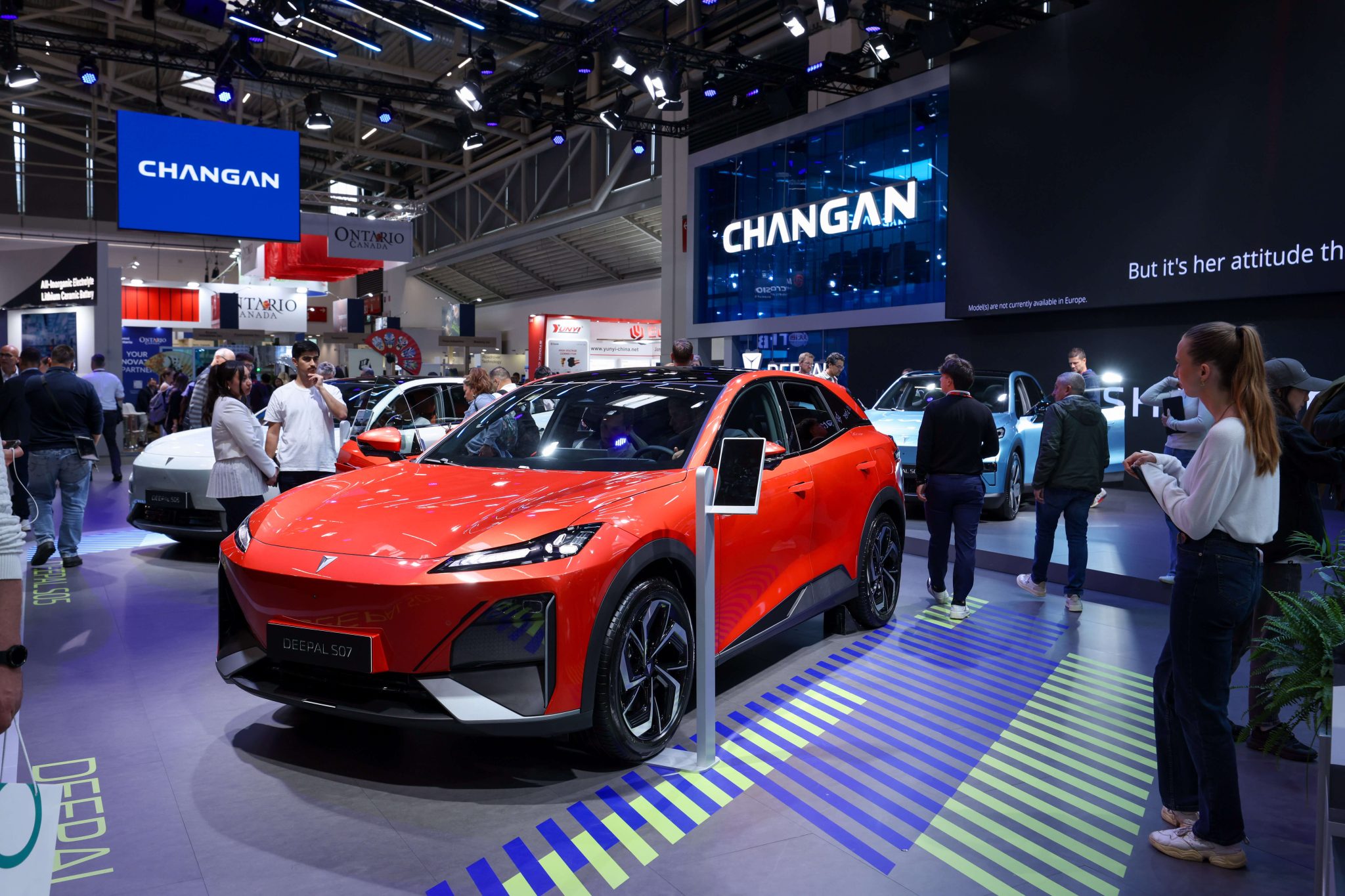
When Changan rolled into the Mondial de l'Auto with ambitions to plant its flag across the continent, the script seemed straightforward: launch electric vehicles, lean on Chinese cost advantages, and ride Europe's regulatory tailwind toward market share. That script has now been revised. The company's decision to abandon its electric-only plan for Europe and introduce the Deepal S05 PHEV is not a quiet product adjustment—it is a confession about the shape of European demand, and a signal that the continent's transition is proving more complicated than any manufacturer's slide deck anticipated.
The logic behind the retreat is difficult to argue with. Europe's charging infrastructure remains uneven, consumer appetite for battery-electric vehicles has cooled in key markets, and the plug-in hybrid has re-emerged as the pragmatic compromise for buyers who want electrified running costs without range anxiety. By pivoting to a PHEV-led offensive, Changan is acknowledging that the mass-market European customer is not yet ready to be pushed.
Listening Rather Than Lecturing
It is a strategy born of listening rather than lecturing—and it raises uncomfortable questions for policymakers who assumed the BEV-only pathway was a one-way street. What makes the pivot more interesting is that it does not represent a dilution of Changan's technological ambition. The same company deepening its European roots through new letters of intent and local customer support is also expanding its battery partnership with CATL to 75 GWh of capacity, with the two firms collaborating on solid-state cells targeting ranges of 1,500 km. This is not a manufacturer hedging against electrification; it is one that recognizes the difference between what is technically achievable and what the market will actually buy in the near term. The PHEV is a bridge, and Changan intends to cross it while building the far bank.
A Long War, Not a Retreat
The European manoeuvre sits within a broader global strategy that is accelerating on multiple fronts. In Kazakhstan, Changan posted growth of 127.1% in September, outpacing most rivals in a region where Chinese brands are consolidating rapidly. In the Middle East and Africa, the company is pursuing a major expansion plan. It has moved to take control of Deepal in Australia, and it has added Nevo as a third brand in Europe aimed squarely at families. The stated goal—to rank among the world's top-10 carmakers by 2030—requires exactly this kind of multi-region, multi-brand dexterity, and the European PHEV pivot should be read as a tactical adjustment within a long war rather than a retreat from it.
Sequencing the Bets
There is also a technological dimension that complicates any narrative of retrenchment. China's second batch of Level 3 autonomous driving approvals included Changan, and the company's own projections—articulated by Zhao Fei—foresee L3 mass production by 2027 and L4 commercial operations from 2028. A manufacturer preparing for conditional autonomy at scale is not one lacking confidence in electrification; it is one sequencing its bets. The European PHEV is the near-term revenue engine that funds the long-term software and battery ambitions.
Yet the picture is not without shadows. Reports that Changan pickups have appeared as improvised drone launchers in Ukraine—alongside a high-profile promotional association with Ronaldo—illustrate the reputational complexity that accompanies rapid global expansion. Geopolitical entanglement is now part of the cost of doing business for any Chinese automaker with worldwide aspirations, and brand-building in Europe must contend with headlines that no marketing department can control.
Selling Into the Market That Exists
Changan's European rethink is best understood as a reality check the entire industry would do well to heed. The electric-only orthodoxy is colliding with consumer behaviour, infrastructure gaps, and affordability constraints, and the manufacturers that thrive will be those willing to revise their plans without abandoning their direction. Changan has done precisely that: softened its European approach, deepened its battery and autonomy investments, and widened its global footprint. The PHEV may not be the future, but for now it is the present—and Changan has decided to sell into the market that exists rather than the one it wishes did.