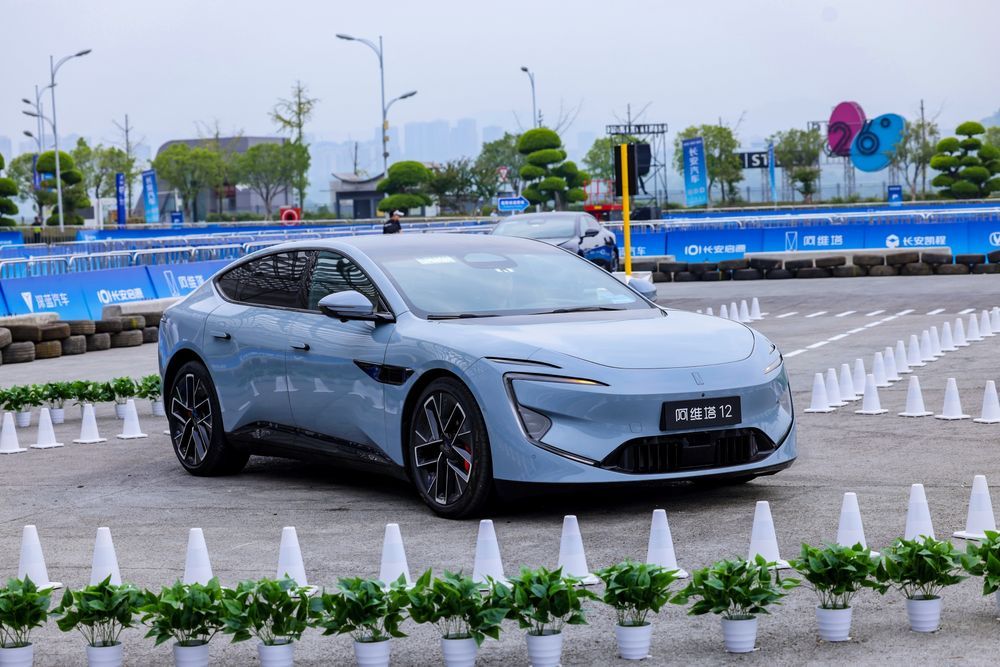
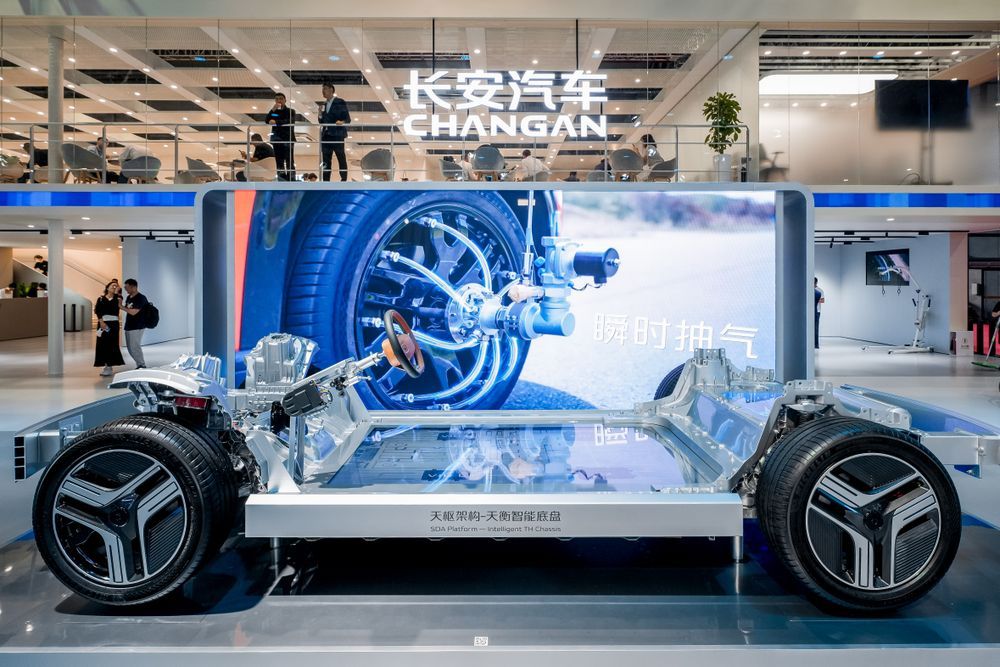
For years, the sharpest driver-assistance technology has lived behind a velvet rope. Adaptive cruise that actually holds a line, lane centering that doesn't saw at the wheel, urban navigation that reads an intersection instead of panicking at it — these have been the preserve of six-figure flagships, options buried deep in a configurator. Changan has looked at that arrangement and decided it no longer makes sense. With the official launch of its SDA Pilot advanced driver-assistance system, the Chinese automaker is rolling out intelligent driving across three distinct capability tiers, a structural decision that promises to reshape what an affordable sedan can genuinely do on the road.
This is not a feature announcement so much as a redefinition of the segment's baseline. The question Changan is answering isn't whether ADAS can be good — it's whether it can be ordinary.
Three Tiers, One Backbone
The architecture behind SDA Pilot is Changan's Super DNA platform, an electronic and electrical backbone designed from the outset to scale. Rather than treating driver assistance as a single monolithic package, Changan has stratified capability into entry, mid, and high tiers. Each tier maps to a different sensor suite, compute budget, and functional envelope, yet all three share the same underlying software stack and over-the-air update pathway.
That shared foundation is the quiet revolution. A buyer choosing a modestly priced sedan is not purchasing a dead-end system; they are entering an ecosystem Changan can refine, expand, and upgrade remotely for years. The hardware changes across tiers, but the intelligence layer underneath stays coherent — which means the car you drive home doesn't become obsolete the moment a higher-spec model arrives in the showroom.
Capability Where Customers Actually Buy
The three-tier structure matters because it mirrors how people actually buy cars. Not every driver needs highway piloting or urban navigation assistance. Some want reliable adaptive cruise control and lane centering at a fair price, nothing more. Others will pay for point-to-point intelligent driving that handles intersections, merges, and parking with minimal intervention.
By segmenting capability instead of forcing a single premium bundle, Changan lets the market decide where intelligence lands. Just as importantly, it normalizes the presence of ADAS in vehicles that previously offered little more than a reversing camera. The entry tier is the thin end of the wedge — and that's the point.
Global Infrastructure, Not a Domestic Curiosity
What elevates this beyond a marketing exercise is the timing. Changan recently reported 207,100 new vehicle deliveries in July, with overseas shipments surging for a sixth consecutive month. The brand is expanding aggressively — mulling a Spanish factory to support European ambitions, launching commercial models in South Africa, and signing partnerships for a Saudi NEV institute.
A scalable ADAS strategy is not a domestic curiosity; it is infrastructure for global competitiveness. When Changan sells a sedan in Panama, where its sales jumped 47.2 percent, or in South Africa, the intelligence layer travels with it, consistent and updatable. That consistency is what separates a regional push from a genuine global footprint.
The Broader Product Picture
The strategy is reinforced by the metal around it. The Changan Nevo Q06 pairs an 800V platform with 6C charging at a pre-sales price starting around 22,000 USD, demonstrating that Changan's affordability discipline extends to its electrified lineup. Meanwhile, Changan Ford ranked third in the 2026 Vehicle Dependability Study — a reminder that the group's quality story is maturing alongside its technology story. And the recent Gasgoo report on collaborative automotive intelligence, "Launch New Journey, Unite the Chain," signals that Changan intends to build SDA Pilot within an open partner ecosystem rather than as a walled garden.
Skeptics will note that tiered ADAS is not unique; several automakers have attempted similar segmentation. But few have done so from a position of genuine volume leadership in affordable segments. Changan's advantage is not that it invented the concept — it's that it can deploy it at a scale where the economics finally work. When intelligent driving becomes standard equipment on the sedans most people actually buy, the competitive floor for the entire market rises.
That is the real significance of SDA Pilot. It is less a technology debut than a declaration that intelligence should no longer be a luxury option. For budget-conscious buyers who have watched advanced safety features drift further out of reach, Changan's three-tier approach offers something rarer than novelty: access. And in the global race toward autonomous capability, access may prove to be the most disruptive feature of all.