For years, the European automotive establishment has comforted itself with a simple story: BYD is a battery company that happens to build cars. A clever Chinese upstart, yes. A genuine threat to the continent's industrial order, no. That story is now dangerously out of date.
The more consequential narrative is being written not in showrooms but in industrial parks in Hungary and Turkey, where the Shenzhen giant is constructing the infrastructure to build commercial vehicles on European soil. This is the moment BYD stops being an exporter and starts becoming a European industrial power — and the distinction matters more than any single product launch.
From Exporter to "European Company"
Reuters reported that BYD will produce trucks in Europe as part of an explicit ambition to become, in its own words, a "European company." Those two words are not a marketing slogan. They are a tariff strategy, a political strategy, and a supply-chain strategy compressed into a single phrase.
By localising truck production, BYD sidesteps the import duties that have already reshaped the economics of Chinese EVs in the EU. Just as importantly, it presents itself to Brussels, Budapest, and Ankara as a domestic employer rather than a foreign disruptor — a subtle but decisive shift in how regulators and politicians will view the company.
The Hardware Backing the Ambition
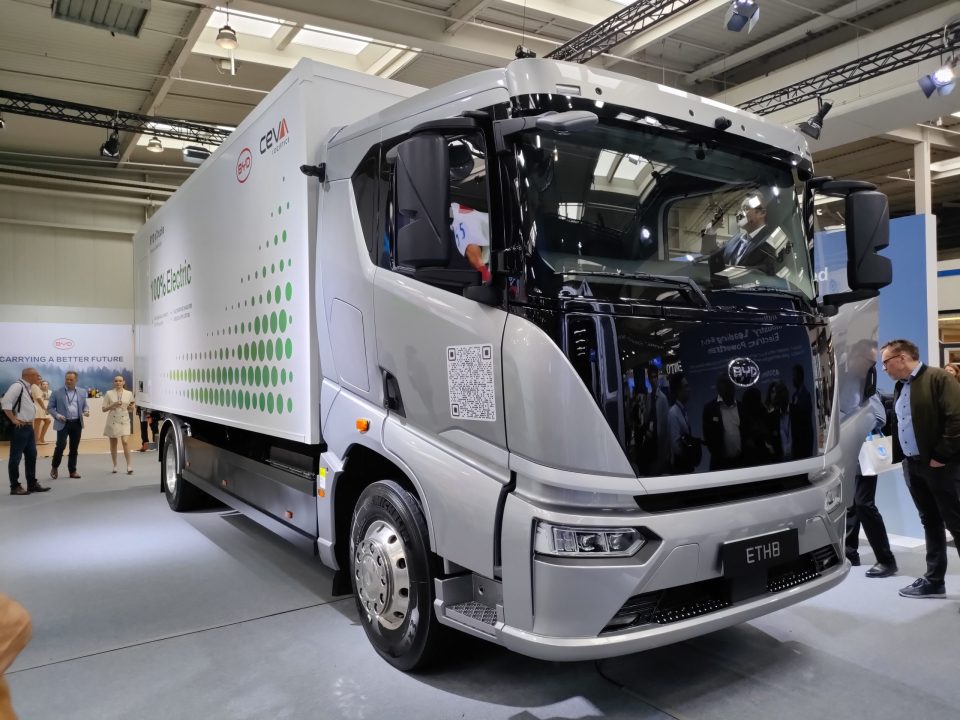
The product underpinning this push is no token effort. BYD's ETT 44 electric truck is slated for European production, and the company has unveiled a semi with a claimed 373-mile range that can charge in roughly twenty minutes. According to Yahoo Autos, those figures give it more range and nearly double the charging power of Tesla's Semi.
That comparison should keep executives in Stuttgart and Detroit awake at night. Tesla has spent years promising to industrialise the electric semi. BYD appears to be doing it — and doing it inside the very market it intends to sell into.
Three Plants, One Battery Factory, and a Political Tailwind
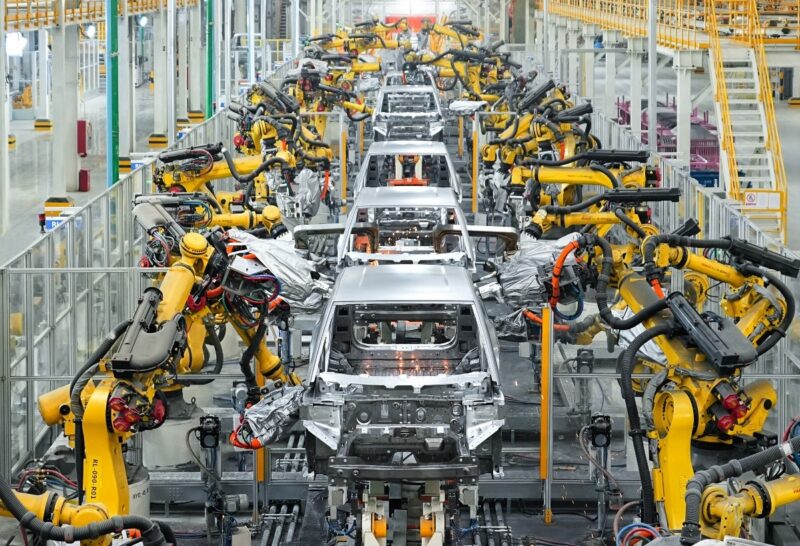
Executives advising the company have suggested BYD will eventually need three assembly plants and one battery factory in Europe. Three assembly plants is not a beachhead. It is a manufacturing footprint on the scale of an established legacy automaker.
A European battery plant would let BYD feed its own vehicle lines from local cell production, insulating itself from both tariff regimes and the logistical fragility that has plagued competitors. The vertical integration that made BYD formidable in China — cells, packs, motors, semiconductors, and now complete vehicles — becomes exponentially harder to compete against once replicated within EU borders.
The political dimension cannot be ignored. Bloomberg reported that China is considering BYD to join Xi Jinping's CEO entourage for a Trump summit — a signal the company is now treated as a national champion of strategic importance, not merely a successful manufacturer. When a corporation becomes a diplomatic asset, it gains access, leverage, and patience that ordinary rivals lack. Hungary, meanwhile, is increasing pressure on BYD and CATL, a reminder that the road to European legitimacy runs through messy local politics, labour expectations, and regulatory scrutiny.
Attacking Every Segment at Once
The broader portfolio reinforces the threat. BYD's Blade Battery has been demonstrated charging at -22°F, a result that speaks directly to the cold-weather weaknesses that have historically undermined EV adoption in northern Europe. The company's battery arm commands roughly 21% of the Chinese market, second only to CATL, and it is simultaneously launching a 62 MWh GC Block for gigawatt-scale storage — meaning its cell business underwrites its vehicle business in a way few rivals can match.
Add a Formula S undercutting the Tesla Model 3 at under $29,000, a Denza Z9S with up to 1,100 km of range, and prototypes testing against the Phantom and Cullinan, and the picture is of a company attacking every price point and segment at once.
For Europe's truck makers, the danger is specific. Electric commercial vehicles are the hardest part of the transition — heavy duty cycles, brutal payload requirements, and customers who buy on total cost of ownership, not badge prestige. BYD already sells electric buses across the continent. Trucks are the logical next step, and local factories make them politically and commercially viable.
The automotive industry spent a decade treating BYD as a curiosity. It is now building the factories that will decide whether that judgement was merely late, or fatal.