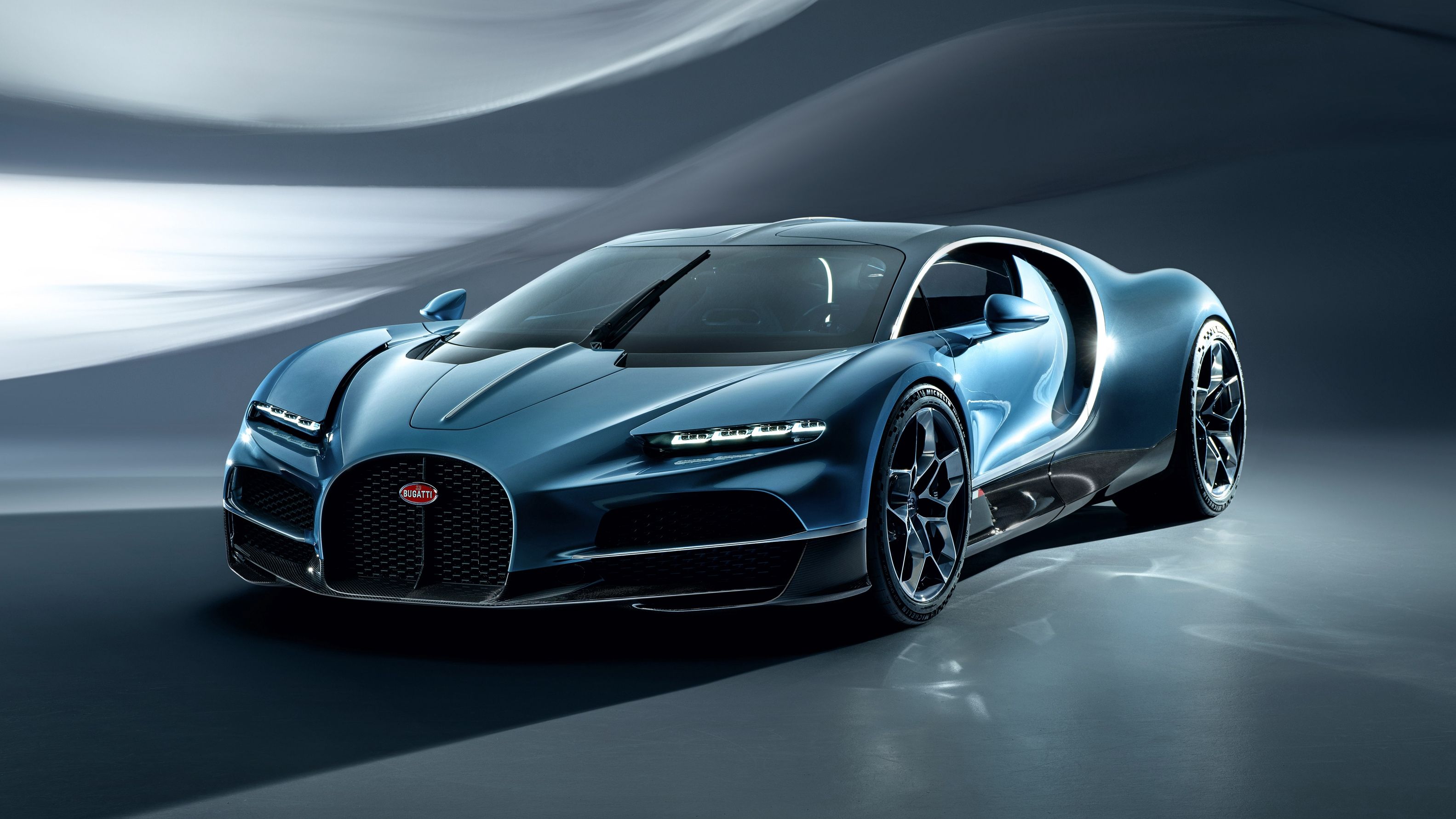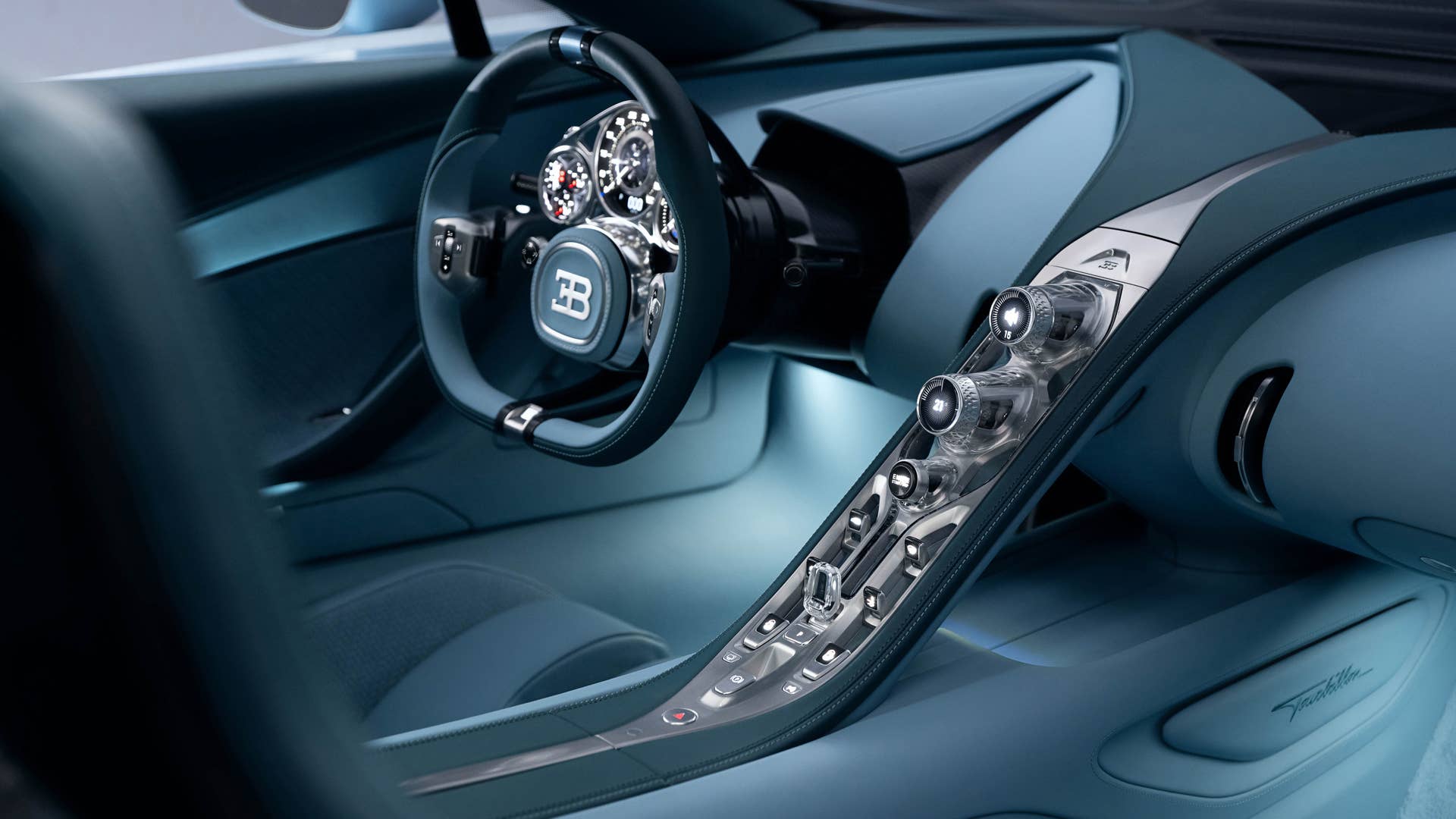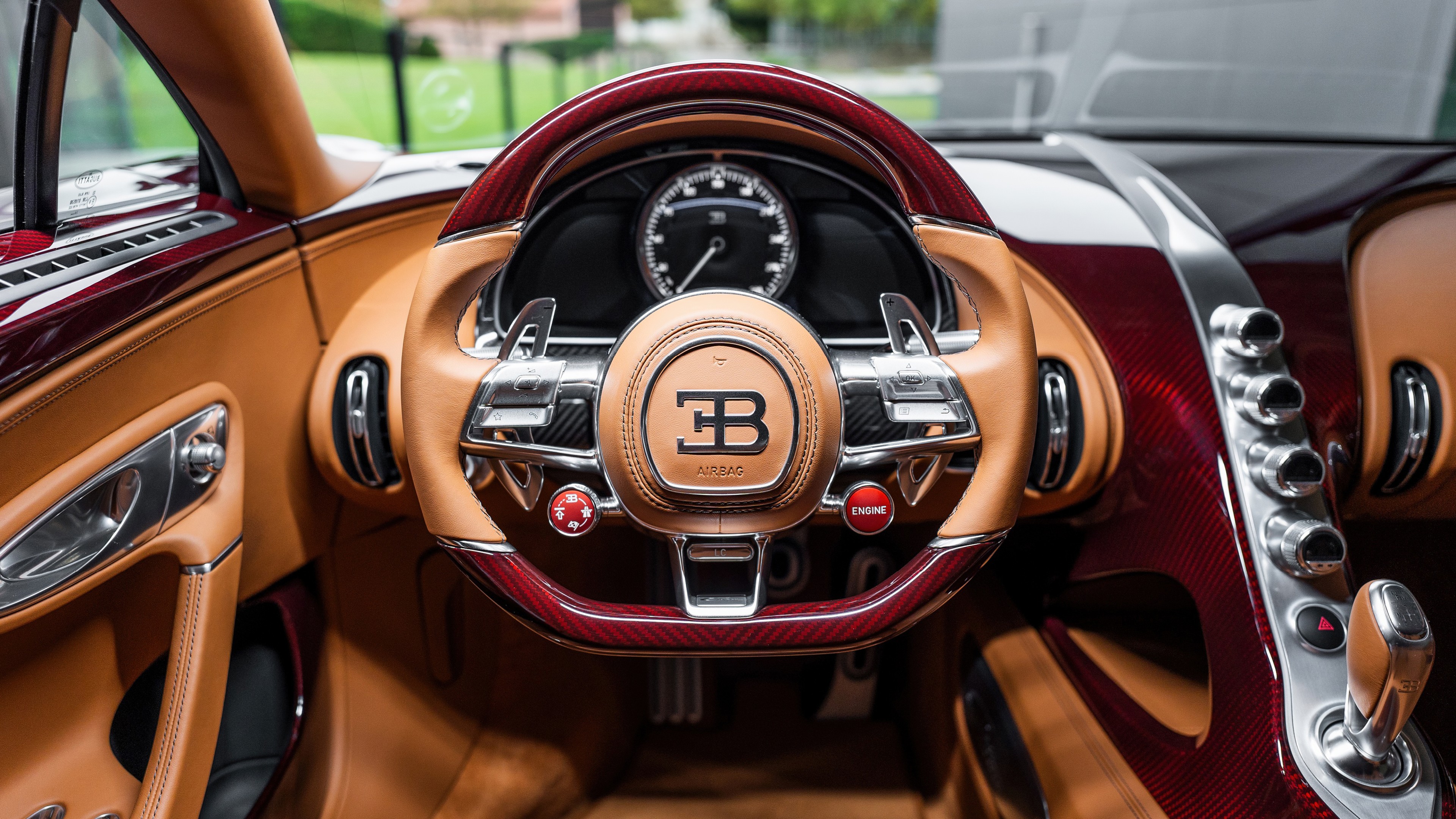
Open the door of almost any flagship sedan today and the scent of hand-stitched leather is gone. In its place: a wall of glass. Screens have colonised the dashboard, the centre console, even the passenger side, sold to us as progress, connectivity, the very definition of the contemporary. Bugatti has quietly positioned itself against this orthodoxy — and in doing so has offered the clearest articulation yet of what luxury actually means.
The company's leadership has been refreshingly blunt. Bugatti's chief executive has publicly urged European manufacturers to abandon their obsession with screen real estate, refocusing instead on genuine luxury rather than chasing the Chinese market's appetite for digital interfaces. It is a striking intervention from a brand that could, if it wished, fill every surface of the Chiron with pixels and call it innovation. Instead, Bugatti treats the screen as an intrusion — a mass-market solution dressed up as a premium one. When everything from a compact hatchback to a budget crossover now offers a widescreen display, the screen ceases to signify anything at all. It becomes the opposite of exclusivity.
The Screen as an Intrusion
Bugatti's argument is not aesthetic nostalgia. It is commercial and philosophical at once. A display is manufactured in identical units by the million; it scales effortlessly, costs relatively little, and appears in rental cars and ride-share fleets alike. True luxury has always been the opposite: scarce, slow, difficult, and resistant to replication. A hypercar costing several million cannot compete on the number of pixels it offers, because it would lose that contest to a mid-range electric saloon. It can only compete on what cannot be copied.
That distinction sits at the heart of everything the marque builds — and everything it refuses to build.
Craft You Can Touch
This philosophy is not merely rhetorical. It is embedded in the physical objects Bugatti produces. Consider the Black Bess, one of the rarest Veyrons ever built, limited to just three examples and adorned with 24-karat gold accents and leather artwork painted by hand, each commission unique to its owner. One of these cars recently changed hands for a record $5.4 million — a figure that has almost nothing to do with its 1,184 horsepower and everything to do with the sheer density of human craft invested in it.
No touchscreen, however crisp, can replicate that. A hand-painted leather panel exists once.
Mechanical Honesty Over Digital Veneer
The same conviction runs through the wider world Bugatti now inhabits. The marque has extended its name to branded residences, including a Miami skyscraper that marks its first such venture in the United States, operated in partnership with Rhodium. It has inspired objets d'art of extraordinary specificity, such as the one-of-a-kind $1.65 million Jacob & Co. timepiece owned by Cristiano Ronaldo, complete with a miniature W16 engine. Even the recent concept work of designer Jenphy Zheng Jianhui, who reimagined Bugatti's iconic line with an exposed engine design, speaks to a hunger for mechanical honesty over digital veneer.
The through-line is unmistakable: luxury is what can be seen, touched, and understood as the product of human hands.
The Business of Scarcity
There is a commercial logic beneath the aesthetic argument. Bugatti has completed its ownership transition under Bugatti Rimac, confirming a new leadership team, and it has watched a generation of its most experienced craftspeople — including the man responsible for quality across 24 years — depart. These transitions sharpen the question of what the brand must protect. Chasing screen-led interiors would be the easiest possible route to relevance, and the surest route to irrelevance. The European brands that have rushed to fill their cabins with glass in pursuit of volume have, in Bugatti's implicit assessment, confused feature count with worth.
The screen, after all, is a democratising technology. Bugatti understands that a hypercar costing several million pounds cannot win a specification war against a mid-range electric saloon. It can only win on the quad-turbo engineering, the gold inlay, the leather painted by a single artisan's hand.
So when Bugatti says screens are killing luxury cars, it is not making a nostalgic complaint. It is drawing a line. The brands that blur it will build competent, connected, forgettable machines. The ones that hold it will build heirlooms — cars defined not by what glows on the dashboard, but by what was made, slowly and singularly, by hand.