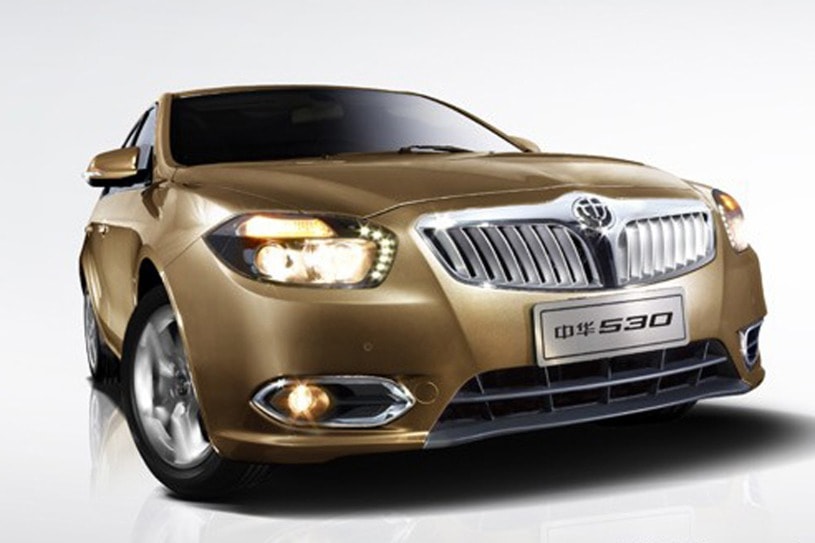
There was a time when Brilliance Auto stood for something genuinely aspirational in the Chinese automotive imagination. Founded in 2002 in Shenyang, the company built its reputation on the Zhonghua sedan — a name that literally translates to "China" — positioning itself as a national champion capable of trading blows with the global giants. In 2009, it became the first Chinese automaker to exhibit at the Detroit Auto Show, a moment freighted with symbolic weight. Today, that ambition reads less like a coming-of-age story and more like an epitaph.
The news emerging from Beijing over the past several months has been unambiguous. Eight established automakers have seen their vehicle production qualifications permanently frozen, part of a broader state-orchestrated campaign to end what Chinese regulators euphemistically call the "linger" of zombie automotive brands. Brilliance Auto sits at the very front of that queue — the first major sedan manufacturer to be formally dismantled under a policy regime that has shifted from nurturing domestic champions to ruthlessly culling them.
The Bond That Broke
The financial unravelling was not sudden, but it was decisive. Brilliance entered restructuring in 2020 after failing to repay a 1 billion yuan bond, and the lawsuits that followed — including claims exceeding $457 million — merely confirmed what the market had already priced in. Here was a company that had spent two decades building sedans, and it could not service a single bond. The Zhonghua badge, once a modest point of national pride, had become a liability on a balance sheet nobody wanted to inherit.
What makes Brilliance's fate instructive is how completely it was tethered to a single, asymmetrical partnership. Its joint venture with BMW was, for two decades, the financial engine that kept the Zhonghua line alive. When BMW announced in 2018 that it would pay €3.6 billion to take control of the JV — raising its stake to 75 percent — Brilliance's shares collapsed by 30 percent in a single session. The signal was unmistakable: the junior partner in China's most celebrated automotive marriage had just been told, in the most public way possible, that its usefulness was at an end. Reports that Brilliance subsequently sought to sell down a further 25 percent stake in the venture only underscored the desperation.
A Purge, Not a Panic
The broader context matters here. China's automotive purge is not indiscriminate — it is strategic. Regulators are consolidating production capacity behind a smaller cohort of state-backed winners, particularly in the electric vehicle space, while allowing legacy combustion-era also-rans to be shut down, merged, or restructured out of existence. Brilliance, with its aging sedan lineup, its crushing debt load, and its dependence on a foreign partner that no longer needed it, was the archetypal candidate. Even the company's diversification attempts — a strategic cooperation agreement with Renault signed with Liaoning province — proved insufficient to arrest the decline; that joint venture, too, is now heading into restructuring.
The End of the Apprentice Model
There is a particular poignancy in the fact that Brilliance's name was always aspirational rather than descriptive. The company never quite achieved the brilliance it advertised, but for a while it embodied a plausible version of China's automotive future: domestic brands learning from foreign partners, moving upmarket, and eventually competing on their own terms. That model has now been abandoned in favor of a more Darwinian approach. The state has decided that not every brand deserves to survive, and the resources poured into marginal players like Brilliance are better redirected toward the BYDs and NIOs of the world. The apprentice has been dismissed. The masters are now expected to fight alone.
For observers of the Chinese auto industry, Brilliance Auto will serve as the reference case — the first sedan brand to be extinguished by the purge, and almost certainly not the last. Its Zhonghua sedans, once a modest point of national pride, are now destined to become footnotes in a consolidation story that is only just beginning. The elimination race has begun in earnest, and the starting gun was fired in Shenyang.