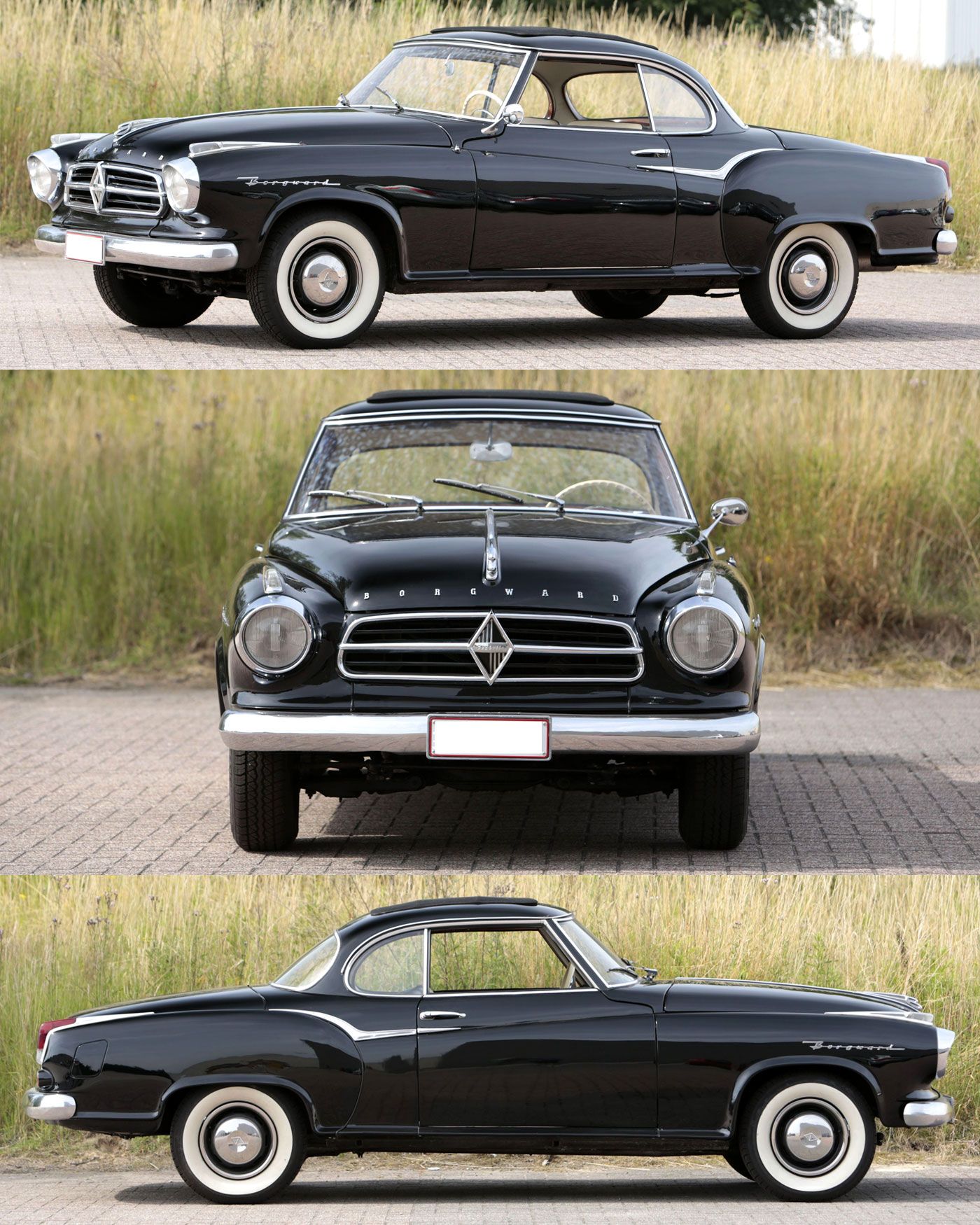
Few names in automotive history carry tragedy quite like Borgward—a marque that died twice. Bankrupt in 1961, resurrected with Chinese capital in 2015, and dead again by summer 2022 after a seven-year struggle that never found traction. The financial obituaries write themselves. But they miss the real story. While the boardroom floundered, the Isabella—Borgward’s most beautiful creation—achieved something far more permanent. It became a ghost that shaped the industry’s understanding of elegance long after its maker was gone.
The Isabella was never just a car. It was a philosophy of proportion, restraint, and sweeping metal that rendered its creator obsolete before the accountants caught up. And today, its influence lingers in every clean shoulder line and fastback roofline you see on the road.
A Masterpiece of Contradiction
The original Isabella, launched in 1954, was a study in opposites. A mass-market sedan with the visual confidence of a grand tourer. Its gently curved flanks and knife-edged chrome accents made contemporaries like the Opel Rekord look like agricultural equipment. But it was the Isabella Coupé of 1957 that cemented the design's immortality.
That two-door fastback dropped its roofline in one uninterrupted gesture from windshield to rear bumper—a silhouette that seemed to move even when parked. The pillarless greenhouse was delicate, the tailfins subtle, hinting at American influence without ever succumbing to it. It remains one of the most photographed and fetishized German designs of the postwar era.
Enthusiasts have spent decades restoring these cars to concours perfection. Pristine examples now trade in six-figure territory at auction—an extraordinary fate for a brand that couldn't survive its own success.
The Design DNA That Leaked Everywhere
What makes Borgward's legacy so potent is how thoroughly its visual vocabulary infiltrated luxury motoring. When Mercedes-Benz introduced the iconic Pagoda SL in 1963, observers noted its clean, uninterrupted shoulder line and deeply recessed cabin—proportions that echoed the Isabella's disciplined surfacing. Even later Porsche 356 variants, with their softened fenders and more generous glass areas, seemed to absorb lessons from Bremen.
This wasn't about copying. It was about demonstration. The Isabella proved that a mid-priced German sedan could carry itself with the poise of a coachbuilt special—a lesson every subsequent luxury marque internalized. The cabin set its own benchmark: a two-spoke steering wheel, round gauges clustered in a symmetrical pod, and a dashboard that wrapped around the driver in a gesture of cockpit intimacy. That language would later define the BMW 2002 and, eventually, the entire sports sedan genre.
The Second Act That Ignored the Ghost
Then came the resurrection. In 2015, Borgward returned with Chinese backing, and the new management committed the cardinal sin: they ignored their own ghost. The BX7 SUV and its stablemates were competent, anonymous crossovers that wore the Borgward diamond badge like a borrowed suit. No traces of the Isabella's flowing fenders. No hint of that fastback silhouette. Not even a nod to the original's restrained chrome detailing.
The Stuttgart design studio produced vehicles that could have come from any of a dozen Chinese joint ventures. The motoring press responded with polite indifference. The money ran out by 2022, and the brand died a second time—its last models sitting unsold in dealership lots across the Middle East.
The irony is exquisite. Borgward's modern failure stemmed not from building cars too radical, but from abandoning the very design DNA that made the name worth reviving. The Isabella was never about horsepower or technology. It was about making a statement with line and light, about convincing buyers they were acquiring something sculptural rather than merely functional.
A Ghost That Refuses to Fade
That's a luxury proposition that transcends price points. It's why the original cars continue to command devoted followings at events like Pebble Beach Concours d'Elegance and the Goodwood Revival, where Borgward owners gather to celebrate what their marque could have been.
The brand's second death was a foregone conclusion. But the Isabella's aesthetic afterlife remains untroubled—a reminder that true design outlives its corporate parent. Every time a modern designer sketches a fastback roofline or sculpts a clean shoulder line, they're unknowingly drawing in the shadow of that little German car from Bremen.
Borgward taught the industry something profound: that elegance isn't a feature list, it's a point of view. The company that built the Isabella may be history, twice over. But the ghost of that beautiful fastback still shapes what we drive today—and that's a legacy no bankruptcy can erase.