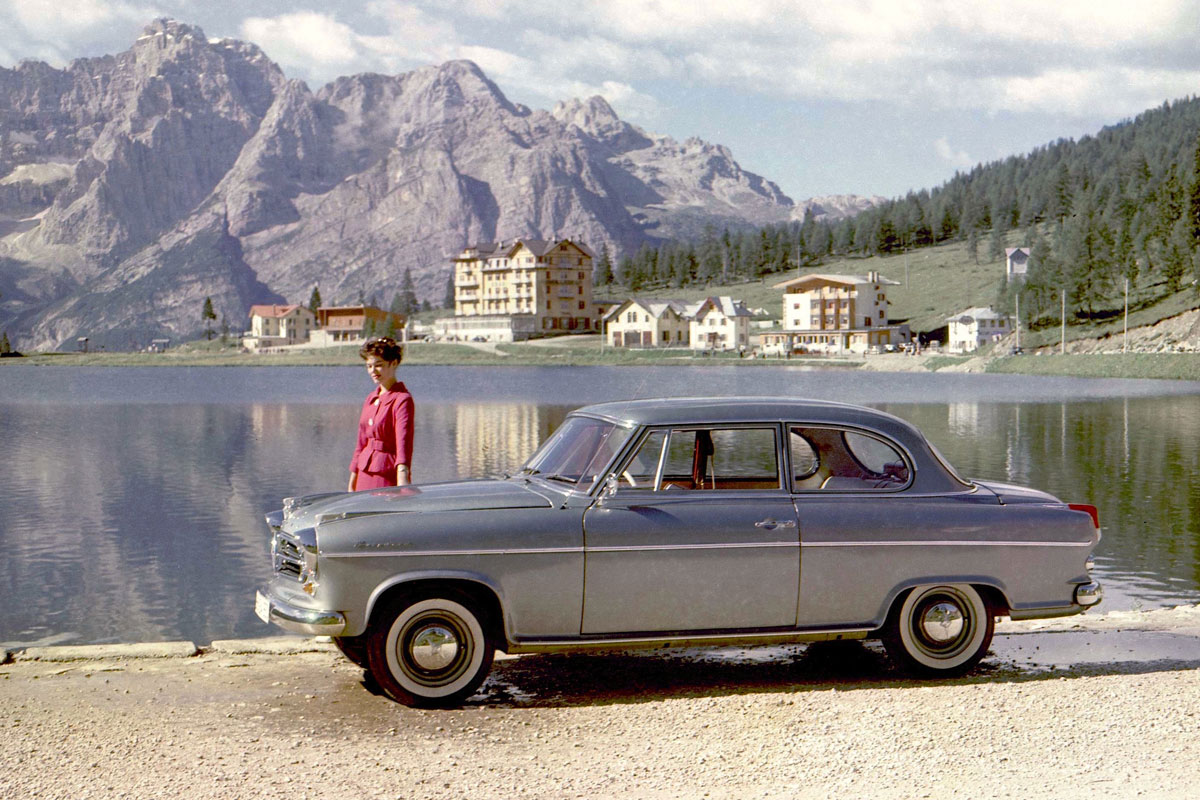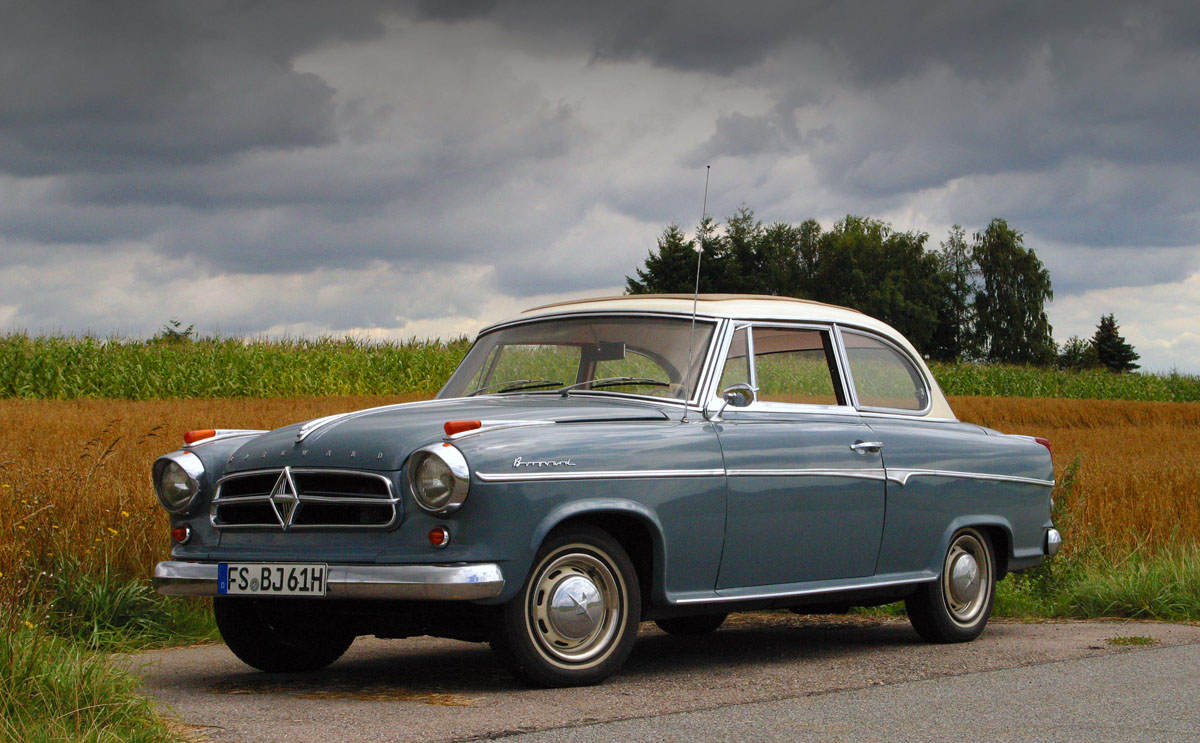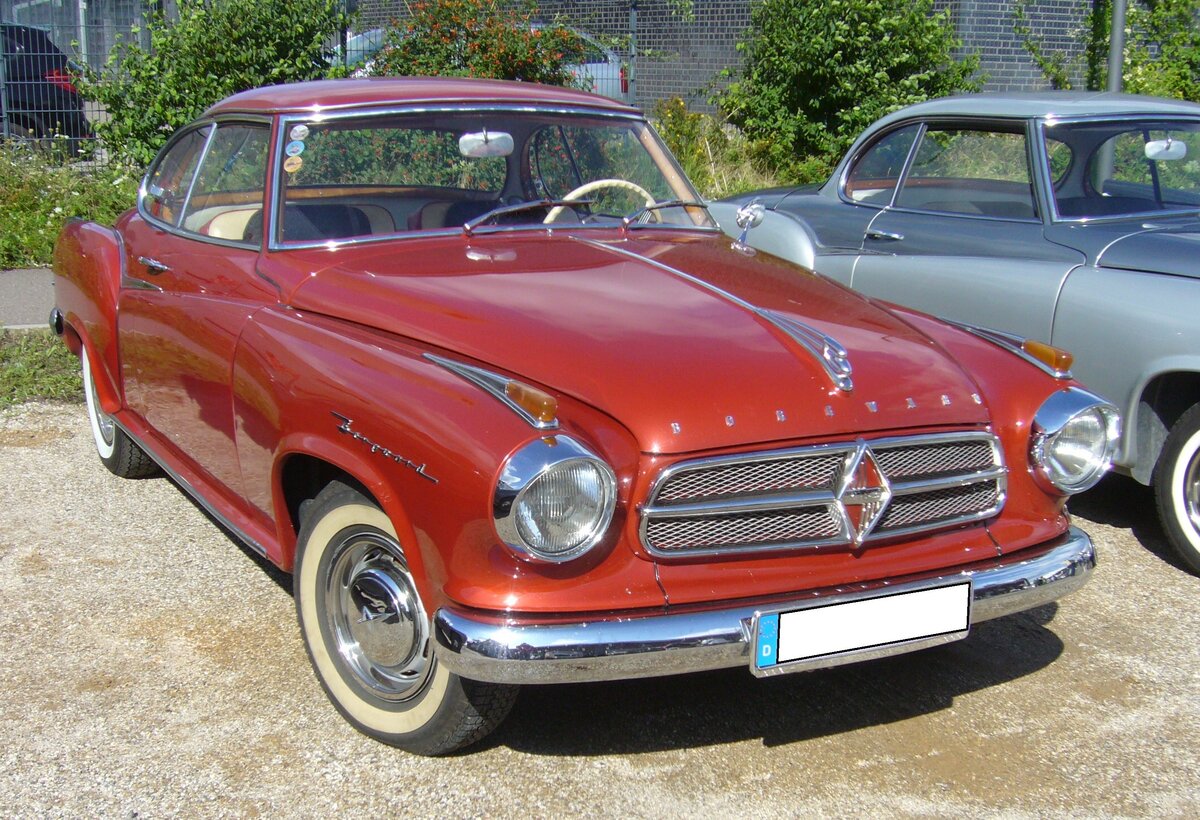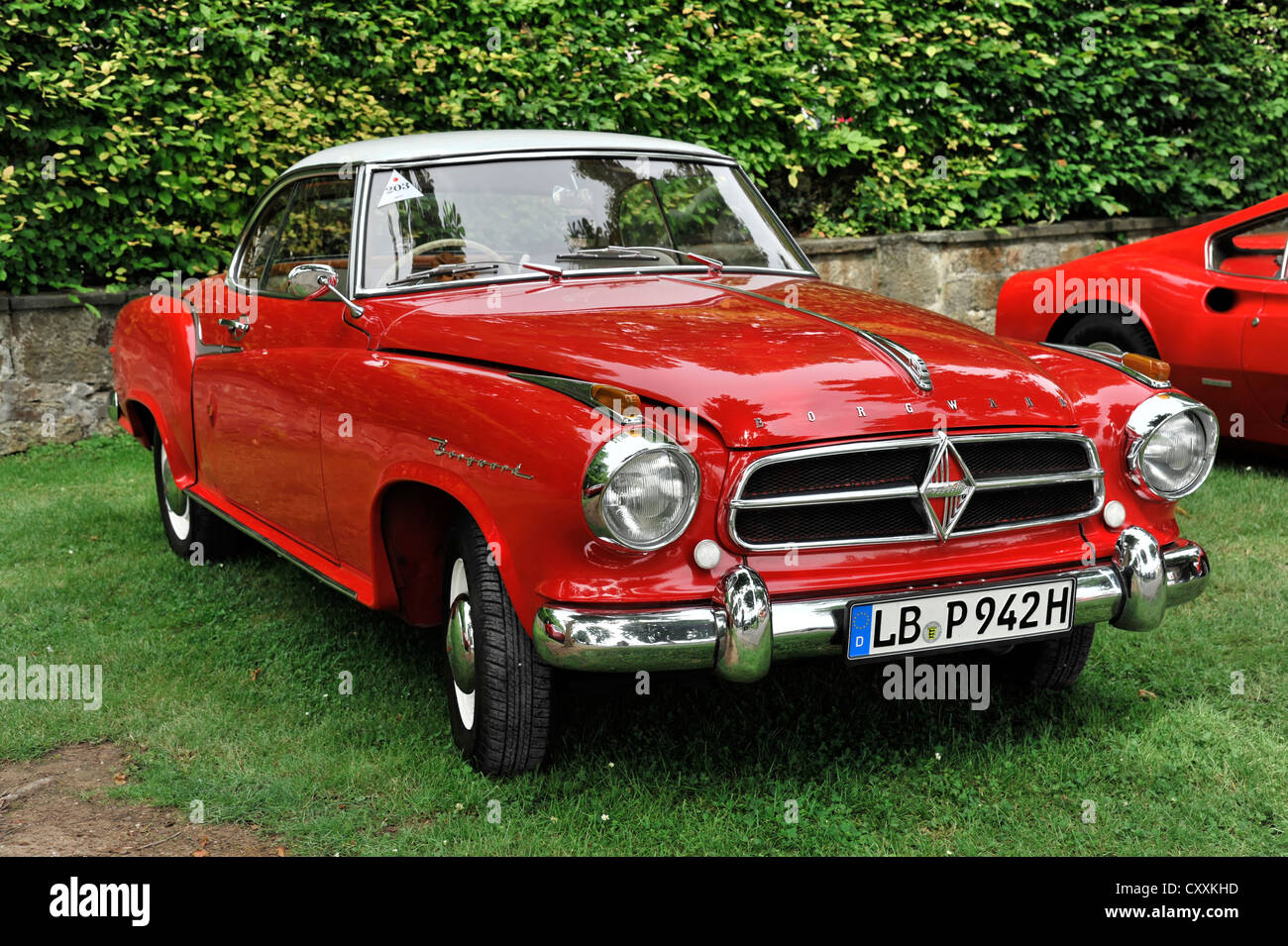
Some rivalries are built on lap times. Others are built on ideology. The one that never happened—between the Borgward Isabella and the Trabant 601—is the most instructive non-event in German motoring history. One was a bourgeois grand tourer from Bremen with coachwork that still stops traffic at Goodwood. The other was a socialist sardine can stamped from Duroplast and stubbornness in Zwickau. They never shared a grid, a showroom, or a marketing brochure. But their phantom collision tells us more about how brands live and die than any spec sheet ever could.
Consider the symmetry. Both were swallowed by forces larger than themselves. Carl F. W. Borgward built an empire across four marques—Borgward, Goliath, Lloyd, and Hansa—before an artificial insolvency engineered by the Bremen Senate in 1961 snuffed it out mid-stride. The Trabant was never really a company at all, but a state assignment churned out by VEB Sachsenring for nearly three decades with almost no meaningful change. One died of politics disguised as economics. The other survived on politics disguised as production.
The Race That Wasn't
Had they met on track—a 1959 Isabella Coupé against a late-model Trabant 601—the result would have been less a race than a morality play. The Borgward carried a 1.5-litre four making roughly 75 horsepower, four-wheel independent suspension, and bodywork that Goodwood still celebrates as an "unlikely racer." The Trabant made 26 horsepower from a two-stroke engine it never stopped apologising for, wrapped in a body that took twenty years to biodegrade. The Isabella would have lapped it. Twice.
And yet both ended up in the same place: the scrapheap of history, remembered more fondly than they were ever sold. That's the strange arithmetic of car culture. Performance figures fade. Affection doesn't.
Borgward Refused to Stay Dead
What makes the phantom crash so compelling is that Borgward, unlike Trabant, refused to stay buried. The brand was resurrected in 2015 with Chinese backing—Foton Motor money, Stuttgart design offices, a BX7 SUV and later a BX3 subcompact crossover aimed at buyers who had never heard the name. Geneva debuts followed. Plug-in hybrids were promised. For a moment, the ghost wore a crisp new suit.
Then the Autoweek headline arrived—"The Borgward experiment hits a rough patch"—and shortly after, Motor1 delivered the obituary: bankrupt, again. The brand that failed once in 1961 had now failed twice, a feat Top Gear rightly filed under "Epic Fail." The lesson wasn't subtle. A great name is not a business model.
The Trabant Knew What It Was
The Trabant, by contrast, never pretended to come back. It simply became a novelty—a Cold War souvenir, a wedding-car curiosity, a punchline with a cult following. It knew exactly what it was. Borgward never did.
That is the real collision: not metal against metal, but nostalgia against arithmetic. The Isabella Coupé is genuinely gorgeous—Hagerty found one in a "Final Parking Space," HotCars listed ten reasons enthusiasts adore it, and Car Design News still reviews the modern Isabella concept with reverence. But reverence doesn't pay for a factory. The BX7 was competent. The BX3 was sensible. Neither moved the needle, because the market for resurrected mid-century German marques with Chinese ownership is roughly the size of a village fête.
Making Do as a Business Strategy
The Trabant's secret was never engineering. It was honesty. It promised almost nothing and delivered exactly that, for decades, without apology. The two-stroke clatter, the cotton-waste body panels, the utter absence of development—all of it was transparent. Buyers knew the deal. And in knowing it, they forgave everything.
Borgward promised beauty, heritage, and a triumphant return. It delivered a crossover. The gap between those two things is where the brand died its second death.
So the crash never happened. The Trabant trundled on, unbothered, a monument to making do. The Borgward died, rose, and died again. If they had ever met at speed, the Isabella would have won the race and lost the war—because the Trabant understood something Borgward never learned. Longevity isn't about beauty, horsepower, or heritage. It's about knowing exactly how little you can promise and still be loved. That's not a performance metric. It's a philosophy. And in the end, it's the only one that ever kept a badge alive.