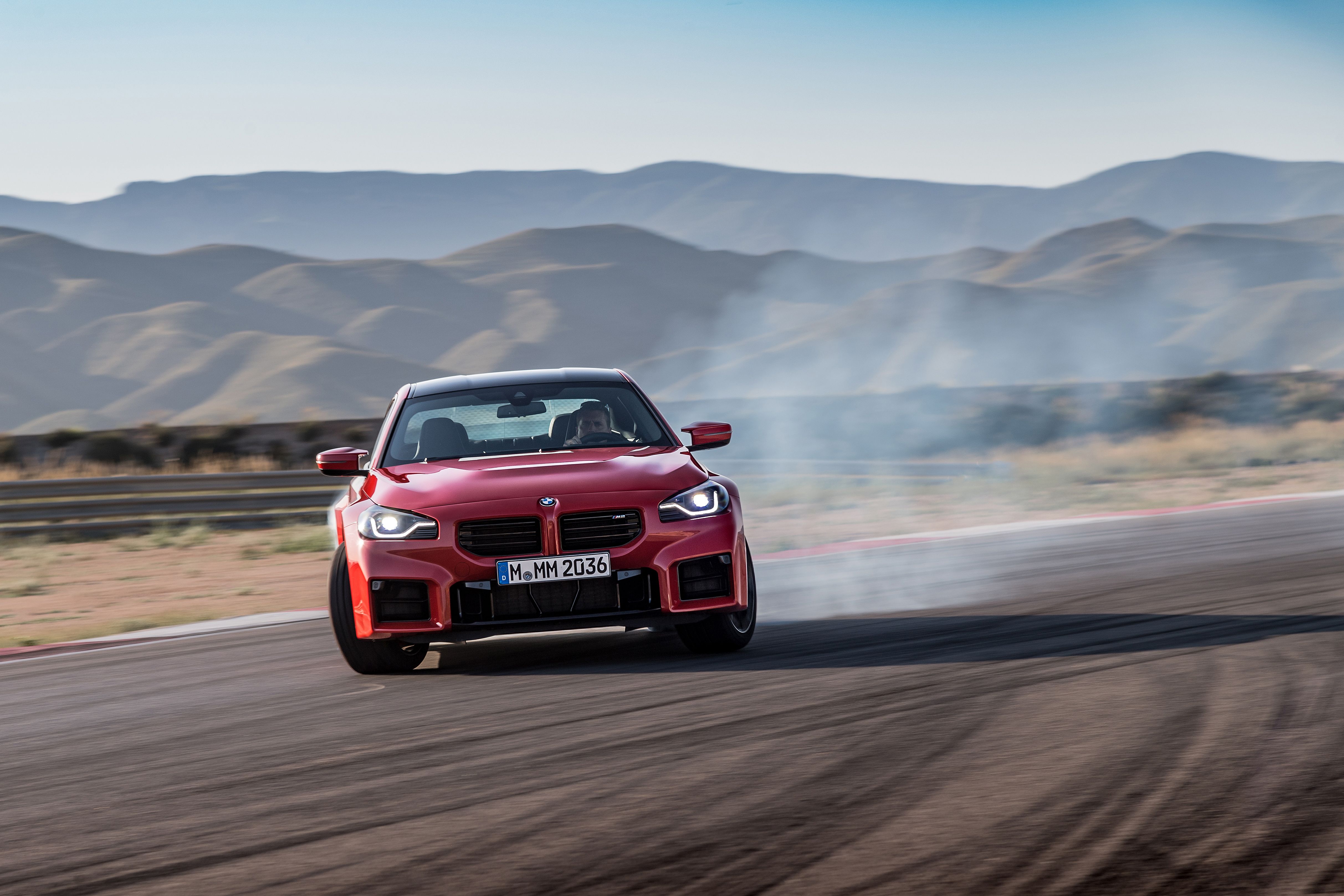
There is a sacred, unspoken covenant between a driver and a rear-wheel-drive machine. It’s a relationship built on throttle modulation, weight transfer, and the quiet terror of knowing that one clumsy input will spin you into a ditch. Drifting, in its purest form, isn’t a party trick; it’s a discipline—a mastery of physics that demands hours of practice, a willingness to destroy tires, and the humility to accept that you’re not as talented as you think. BMW, however, has apparently decided that this rite of passage is too burdensome for the modern customer. A newly published patent from the Bavarian automaker describes a suspension system designed to make drifting almost effortless, effectively automating the one skill that separates a mere owner from a true driver.
Does that sound like progress? Or does it sound like a surrender of everything that made BMW’s rear-drive icons worth chasing? Let’s dig into what this patent actually proposes—and why it might be the most misguided engineering idea to emerge from Munich in years.
The Patent: Oversteer on Demand
The patent, which surfaced through recent filings, outlines a clever piece of engineering that manipulates the rear suspension geometry to induce oversteer on command. Instead of relying on the driver to initiate a slide through a delicate balance of steering angle and power, BMW’s system would actively alter the suspension’s kinematic properties—perhaps by adjusting toe or camber in real time—to destabilize the rear axle when the driver requests a drift. In theory, this would allow even a novice to hold a perfect, smoky arc around a corner with minimal countersteering skill. On paper, it sounds like a technological marvel, the kind of innovation that makes BMW’s M division feel futuristic. In practice, it’s a betrayal of everything the brand’s enthusiasts have cherished for decades.
Let’s be clear about what this isn’t. This isn’t traction control quietly saving your bacon on a damp roundabout. This isn’t a stability program stepping in when you’ve overcooked entry speed. This is a system that actively destabilizes the car to create a slide *for you*. It’s the automotive equivalent of a bowling alley installing gutter guards—except the gutters here are guardrails, and the skill being removed is the very essence of car control.
The Feedback Loop That Defines Driving
Consider what makes drifting genuinely rewarding. It’s not the smoke or the spectacle; it’s the *feedback loop* between human and machine. You feel the rear tires scrub for grip through the seat of your pants, you hear the engine note rise as you modulate the throttle, and you instinctively correct the steering before your conscious brain even registers the slide. That conversation—fraught, sweaty, and occasionally destructive—is the entire point. BMW’s proposed system would interrupt that dialogue, inserting a layer of software between your inputs and the car’s behavior. The result would be a sanitized, choreographed imitation of drift, stripped of its danger and its glory. You wouldn’t be sliding the car; the car would be sliding you.
This is not an isolated misstep; it’s part of a broader pattern. BMW has spent the last decade gradually eroding the driver engagement that once defined its identity. Hydraulic steering gave way to electrically assisted systems that filter out road texture. The beloved manual transmission is now a rarity, preserved only in the most hardcore M models. And now, the company wants to patent a system that removes the final bastion of skill. The irony is profound: as competitors like Porsche and even Hyundai lean into analog purity with limited-slip differentials and rear-wheel-drive platforms, BMW is chasing a future where the driver is little more than a passenger with a steering wheel.
The Hollow Promise of Convenience
Proponents will argue that this technology democratizes drifting, allowing more people to experience the thrill of sliding a car sideways without the steep learning curve. That argument misses the point entirely. The learning curve is not a barrier; it *is* the experience. If you can drift on your first attempt because a computer recalibrated your suspension, the achievement is hollow. You haven’t learned car control; you’ve simply pressed a button. Worse, this technology could breed a dangerous overconfidence. A driver who relies on BMW’s patent to hold a slide on a skidpad might expect the same assistance on a public mountain road—where the margins are measured in feet, not feet of tire smoke.
BMW’s own history argues against this direction. The original M3 and M5 became legends not because they were easy to drive, but because they demanded respect. Their chassis communicated every nuance of grip, and their engines rewarded smooth, deliberate inputs. The skill required to extract their potential was part of their appeal. A generation of drivers grew up learning to heel-toe downshift and catch the tail of an E46 because that was the price of admission. BMW is now proposing to waive that fee, and in doing so, it risks devaluing the very currency that made its performance cars desirable.
A Philosophical Crossroads
There is still time for BMW to abandon this idea, to recognize that some skills should remain hard-won. The patent may never reach production, relegated to the same graveyard as other overengineered concepts that were quietly shelved. But the fact that BMW is even exploring this territory reveals a troubling mindset. The company seems convinced that technology can replace talent, that convenience is the ultimate luxury. Yet the most passionate BMW owners aren’t looking for convenience; they’re looking for connection. A drift assist feature would sever that connection, reducing the driving experience to a series of automated maneuvers.
That isn’t progress. It’s surrender. And for a brand that built its reputation on the *Ultimate Driving Machine*, the ultimate act of respect isn’t making the drive easier—it’s trusting the driver enough to let them earn it.